


KUALA LUMPUR, April 17 — The West Asia conflict has brought the world into an energy crisis with several sectors in Malaysia already feeling the impact, particularly the agricultural and logistics sectors.
Prime Minister Datuk Seri Anwar Ibrahim previously said that despite Malaysia remaining in a relatively stable economic position, the prolonged conflict is expected to require a lengthy recovery period.
Meanwhile, Home Minister Datuk Seri Saifuddin Nasution Ismail recently reminded Malaysians to prepare for possible economic and supply disruptions if the ongoing geopolitical conflict in West Asia continues.
As the conflict continues to drive global oil prices, with diesel prices now at RM5.97 per litre, some Malaysians are already bracing themselves for the looming economic ripple effect that could result in price hikes on household items and goods.
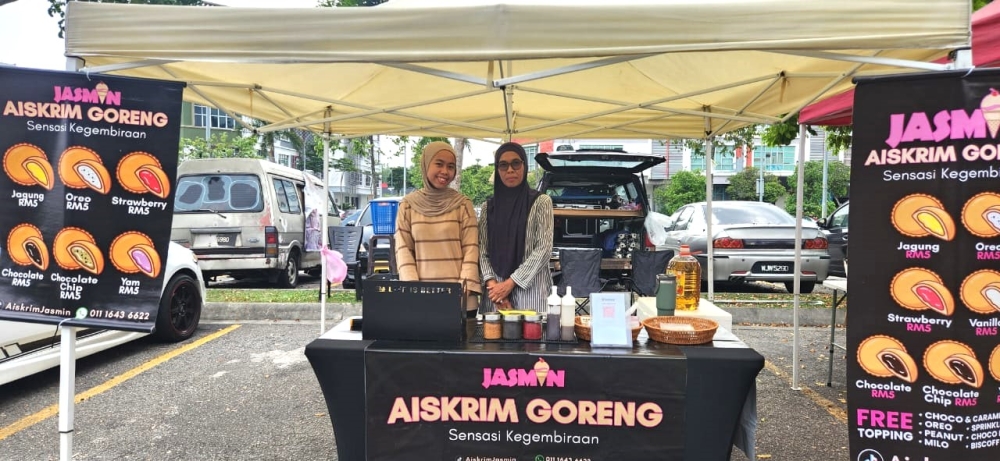
Fifty-four-year-old ice cream seller Rodzita Muyup has been providing homemade ice-cream catering services for 10 years and just opened her own Ice Cream Goreng (Fried Ice Cream) stall in Subang Bestari, Shah Alam earlier this year as a means to diversify her family’s income.
Although she hasn’t experienced any price hikes on any of her ice cream supplies and ingredients so far, her concern about impending price hikes remains.
“I usually buy my ingredients in bulk and I’m concerned because most of these ingredients are supplied using lorries which use diesel.
“And whenever there’s a rise in fuel prices, usually prices for other goods would get affected too and which is why we have to be on standby mode now,” Rodzita said.
Even if the cost of ingredients for her ice cream does go up in the future, and if it’s within the RM3 to RM5 margin, the mother of four said she would still maintain her current pricing as she is still able to cope despite getting less profit in return.
Besides that, looking at the current global situation, Rodzita and her family have begun taking proactive steps by cutting down on dining out at fancy restaurants for the time being.
Rodzita noted that the current climate mirrors the early days of the Covid-19 pandemic, when the Movement Control Order halted her business.
However, the pandemic also instilled a disciplined savings habit that she now relies on to endure the current economic shifts.
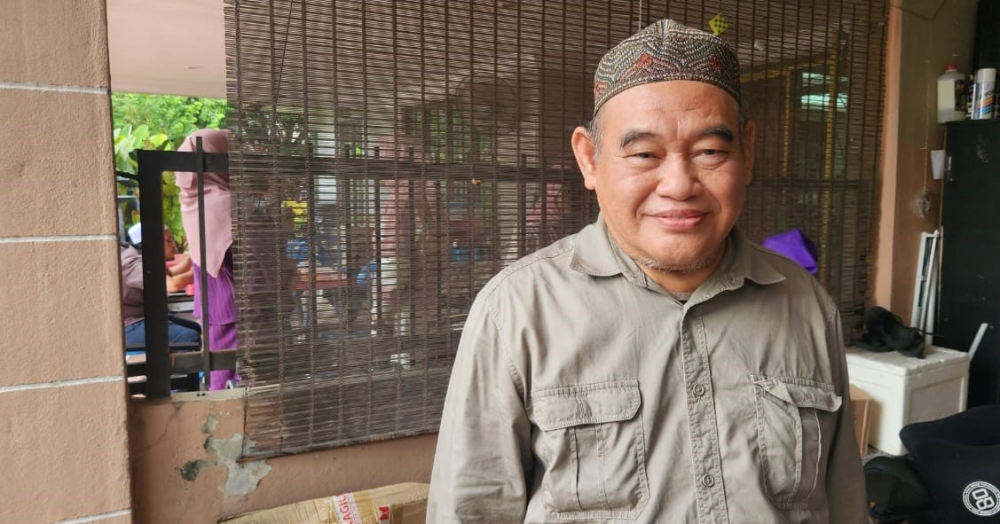
Meanwhile, Nor’Ihsan Mohd Sharif, a 64-year-old retired teacher from Klang, has weathered several economic storms, including the 1997 Asian Financial Crisis.
He noted that the current situation feels far more “drastic” than those of the past.
“In previous crises, fuel prices were high, but the spikes weren’t as sudden as what we see now, where prices can jump practically overnight,” Nor’Ihsan said.
The father of three would usually drive his 11-seater diesel multipurpose vehicle (MPV) every once in a while – mostly to bring his eldest son who is afflicted with Transverse Myelitis, an inflammatory neurological disorder that affects the spinal cord, to his medical appointments.
He noted that prior to the energy crisis, he normally spent around RM150 on diesel for his MPV every month and now, with prices more than doubling, he spends nearly RM450 for the same amount of diesel.
“Even when it comes to grocery shopping, we are strictly buying basic necessities, whereas we used to be able to afford a few extras.
“We can no longer spend like we used to. In the past, a trip to the market meant we could buy shrimp, fish, and chicken; now, we can only afford the chicken.
“We are spending only on what we need to endure this situation. Everything else has to be put on KIV for now,” he said.

Nor’Ihsan’s second son, 32-year-old Ahmad Baihaqi, has always been vigilant about his spending, especially after getting married two years ago.
“We would often opt for lower priced brands and usually spend only on what we need.
“In reality, I’m also quite frugal when it comes to picking brands — as long as it suits the purpose, I don’t mind what brand it is,” said the data management executive who is currently living in Setia Alam with his wife.
On a positive note, Baihaqi said that the recent Overnight Policy Rate (OPR) reduction to 2.75 per cent which was set by Bank Negara Malaysia (BNM) in July last year is looking more and more like a win nowadays for homeowners like himself.
“When they (BNM) reduced the OPR rate from 3 per cent last year, it helped in taking some burdens off our shoulders.
“I don’t think they would raise it again in the future but who knows right?
“That’s the thing with this current situation, regardless of what’s happening, everything seems uncertain,” Baihaqi said.

Meanwhile, 42-year-old Linda D’cruz, who has lived in Canada with her husband and children for the past 15 years, noted that travelling is becoming increasingly difficult.
The mother of two, originally from Terengganu, recently returned to Malaysia to visit her mother, who had broken her ankle in a fall.
D’cruz found this trip significantly more challenging than previous ones.
“Luckily, I wasn’t among those stranded at the airport due to cancellations and delays. We managed to avoid the Middle East by flying with Philippine Airlines, which took a different route,” she said.
D’cruz noted that a one-way ticket from Canada to Malaysia costs around RM1,800 last December; however, a recent check on the Malaysia Airlines website showed that a one-way flight to Toronto has nearly doubled to RM3,617 now.
Addressing the current energy crisis, D’cruz said her family has started spending more conservatively, emphasising the importance of an emergency fund.
“It’s obvious we have to be more economical with all these economic uncertainties. Job security is also a concern; anything can happen.
“We don’t travel much unless it’s to visit family because we have to tighten our belts — especially for unexpected medical expenses.
“My mother is getting older, and we need to save for future emergencies,” she said, adding that her mother is recovering well.
Joanne Shum, a 56-year-old shopkeeper in SS2, Petaling Jaya, doesn’t usually follow geopolitics in West Asia.
However, she admits the current crisis has her deeply concerned about looming price hikes.
Surprisingly, Shum fears the rising cost of daily essentials more than she feared the Covid-19 pandemic. To her, the lockdown era was almost a period of self-improvement.
“Covid-19 was nothing (in terms of stress),” she recalled.
“I actually lost weight because I was at home with nothing to do but exercise.
“Now that I’m back at work, I’ve actually been gaining weight.”
She noted that the lockdown was quiet for her household.
“My husband and I aren’t very tech-savvy, so during the pandemic, we just spent our time at home together without much internet to distract us,” she said.
While she hasn’t experienced any direct price spikes yet, Shum is already bracing for the worst.
She is prepared to cut back on spending and, if the situation deteriorates further, she is even ready to begin rationing food in her household.
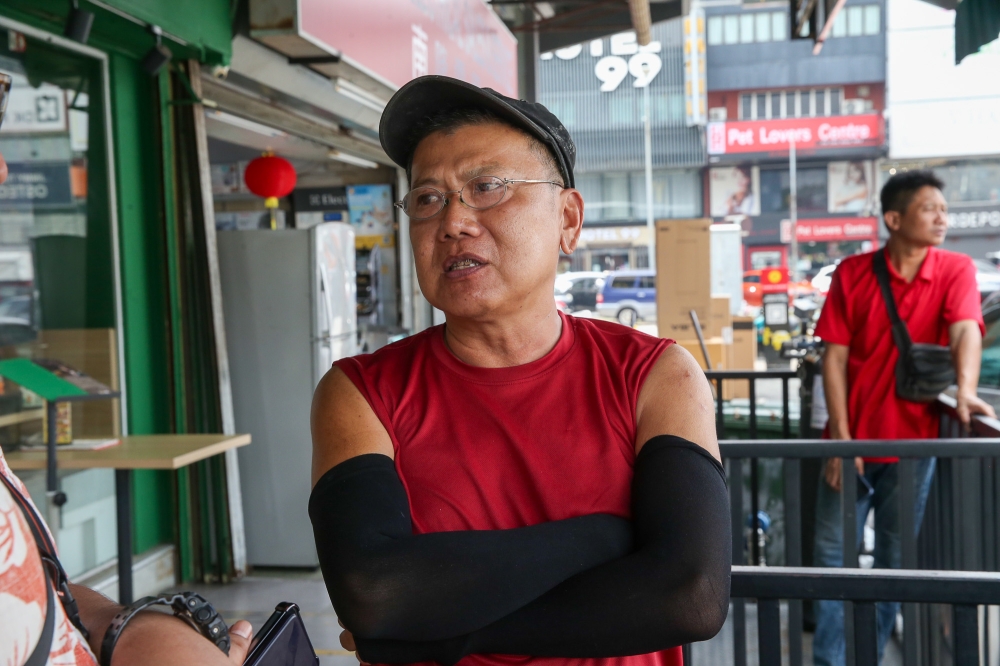
Meanwhile, it is a very concerning time for 61-year-old cempedak goreng hawker, Calvin Soong, who not only has to face the high diesel price but also the increase in plastic packaging prices which has gone up by between 15 per cent and 40 per cent recently.
Despite having to face these hikes, Soong is still hesitant in raising the price of his cempedak goreng.
“I wish I could (raise the price).
“Cempedak goreng is just like a dessert or a snack, so for most people, it doesn’t matter to them whether they buy it or not — it’s not a must buy product such as rice or vegetables.
“So if I raise my price, I’m worried that people will just stop buying,” he said.
Soong who has been selling cempedak goreng at pasar malam around Klang Valley for 20 years now also shared that since the recent diesel price hike announcement, he has been driving his van without turning on its air-conditioning (AC) as a means to save up on fuel usage.
A full tank for his van which would cost him around RM500 to RM600 now, could last around two weeks maximum if he drives it without turning on the AC.
“I’m really feeling the pain now.
“Nowadays, every time my fuel meter dropped slightly, I would go to the petrol station and fill it up again, you know why? Because the price would appear cheaper (compared to filling up a full tank).
“So seeing a small figure at the petrol pump helps in distracting my mind from the reality a bit,” he said.
Despite his predicament, Soong remained resilient and would continue his day-to-day operations adding that “like it or not, this is something that we must now face”.


