


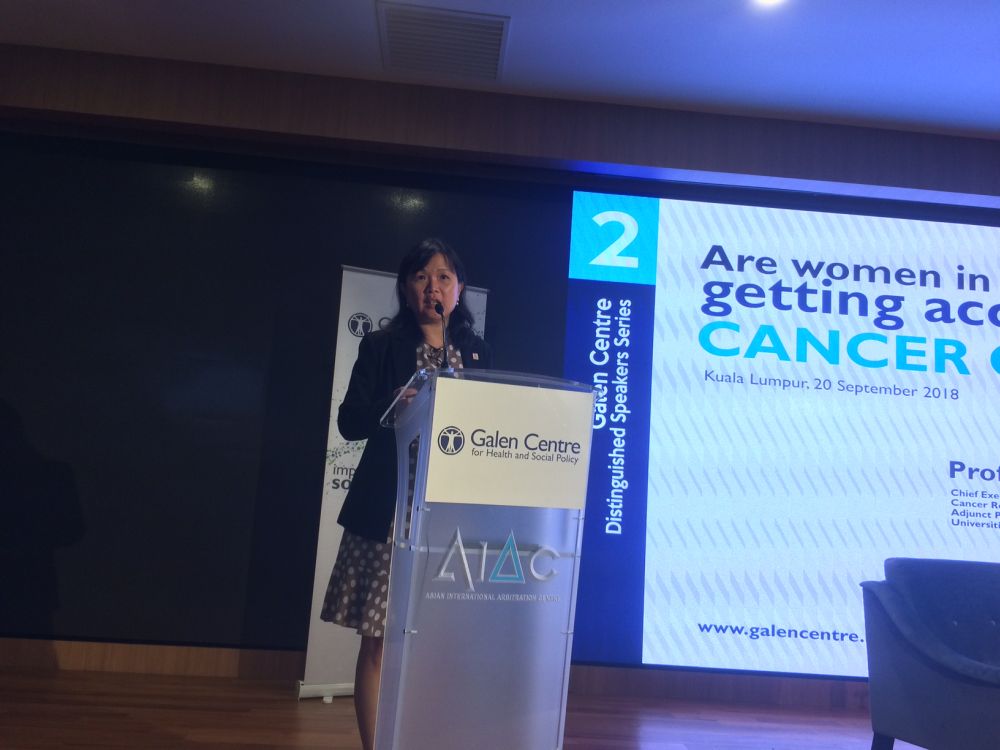
KUALA LUMPUR, Sept 20 — Up to half of Malaysian women may not benefit from breast cancer screening because they have low risk of getting the disease, a researcher said today.
Cancer Research Malaysia CEO Professor Teo Soo-Hwang — who is currently conducting a study on breast cancer on 16,000 women in Malaysia and Singapore together with two local and seven Singaporean hospitals — said Malaysia had a lower risk profile than the United Kingdom, whose female citizens are generally at risk of breast cancer at age 50.
“In the UK, it shows that if you hit a 2 per cent chance of developing breast cancer in 10 years, that’s the point mammograms benefit you in terms of screening.
“Up to 50 per cent of the Malaysian population never hit that 2 per cent 10-year risk,” she said in a talk organised by the Galen Centre for Health and Social Policy here today.
Teo said even though Malaysian women risk developing breast cancer at different ages, women are generally advised to start doing mammograms when they turn 50.
“We’re wasting money by not targeting screening to those who need the most,” she said. “We don’t know how to stratify the risk.”
The cancer researcher said indiscriminate screening of breast and prostate cancer resulted in overdiagnosis, as early-stage cancer that would not otherwise be fatal would have been diagnosed.
Not all cancers grow aggressively; some are not fatal because they are very slow and take 30 years to develop, according to Teo.
“You label a lot of people who are not cancer patients,” she said. “Screening can’t distinguish between slow-growing and fast-growing cancers.”
Teo noted the catch-22 situation, as failure to do preventive screening meant late-stage detection, but screening also caused overdiagnosis.
“So I think the solution is to target screening to individuals who need it the most. Work out who is at risk and offer screening to those individuals and appropriate treatment.”
Teo said breast cancer risk was currently assessed based on how many children a woman had, menstruation, and menopause, but claimed these were not as accurate as genetic testing, which her study is currently examining.
According to Teo’s study, 5 per cent of breast cancer patients had high-risk genes, while another 5 per cent had a two to four-fold higher risk based on other genes. Thirty per cent had a combination of genetic factors, while the rest was due to lifestyle factors.
She stressed, however, that women should continue to screen for breast cancer from age 50 based on available evidence.
Teo also highlighted the importance of follow-up and behavioural change besides screening, citing anecdotal evidence of women not picking up reports of their screening or skipping further treatment if cancer was detected.
“If we want to improve access, think about how we should screen, how to follow up, and how to change behaviors. It’s not as simple as driving a bus offering mammogram services.”


