















KUALA LUMPUR, Sept 2 ― The Malaysian Anti Corruption Commission (MACC) said it wants to have the power to hire and fire its own staff, in a bid to boost their independence and expertise in tackling graft.
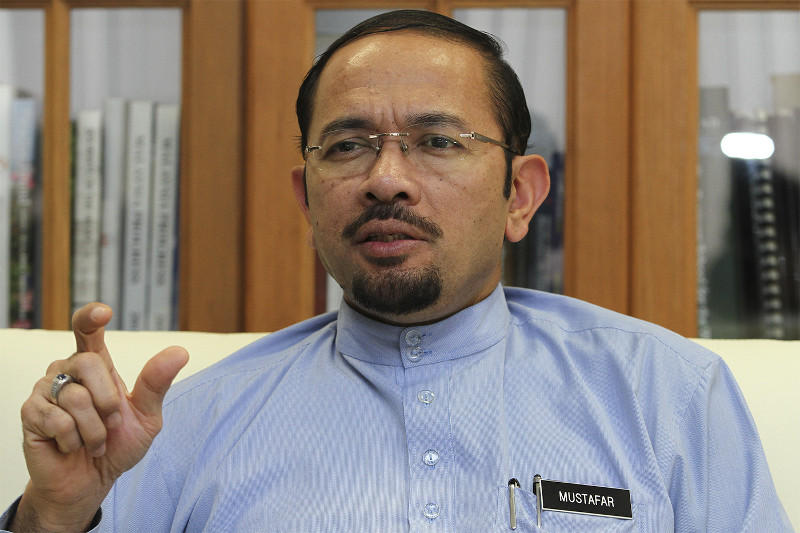
The MACC’s deputy commissioner in charge of prevention, Datuk Mustafar Ali said they should have their own services commission, similar to the federal government’s public services commission (SPA), to protect the security of tenure of its officers, especially that of its chief commissioner from any politically-motivated interference in its investigations.
Mustafar said that the exclusive commission would also allow the commission to recruit its own experts in fields it deems necessary in the fight against graft.
“You see, by having our own services commission, we are going to have a different kind of power… meaning to say, we can have the hiring and firing power,” he told Malay Mail Online in a recent interview.
“What’s more important is the security of tenure of the chief commissioner. Meaning to say, his appointment and more importantly his dismissal as it is now, is something like any other public officer and so that does not really show the independence of the MACC,” he added.
Mustafar said it is important that any decision to hire or fire an MACC officer be made by a tribunal managed by the proposed services commission, as the current system leaves them at the mercy of the federal government.
He said as it is, officers in the anti-graft agency “can be terminated as it is or be transferred” by “whoever is not happy with the work that we carry out”.
Mustafar said the idea was mooted years ago but they have yet to receive any news of approval by the government.
The police recently cracked down on the MACC, arresting several senior officers and raiding their homes and offices, on suspicion of leaking documents on its probe on former 1Malaysia Development Berhad (1MDB) subsidiary, SRC International Sdn Bhd.
On August 7, two directors from the MACC ― special operations division director Datuk Bahri Mohamad Zin and strategic communications director Datuk Rohaizad Yaakob ― were transferred to the Prime Minister’s Department with immediate effect, following “disciplinary issues”.
The duo were however reinstated back to their original positions in the commission after their explanation to Chief Secretary to the Government, Tan Sri Ali Hamsa.
Bahri had earlier that week, lashed out at the apparent crackdown on MACC amid its ongoing probe on 1Malaysia Development Berhad (1MDB), raising the suspicion of “hidden hands” behind the order to arrest and question his men.
The police have however denied the allegations.
Apart from hauling up seven MACC officers over the alleged leak of classified information on the 1MDB investigation, two of whom were also arrested and released after several hours, the police have also conducted two raids on the anti-graft agency’s offices over the span of two weeks.
Attorney-General Tan Sri Apandi Ali had also recently disbanded a special four-agency taskforce that had been investigating allegations that almost US$700 million was funnelled through companies linked to the state-owned 1MDB and also ended up in Najib’s personal bank accounts, two months before the 13th general election in May 2013.
Apandi later announced the set-up of another team, consisting of eight federal agencies this time, would investigate loss of revenue, with one key difference ― it would not have anything to do with 1MDB.
Claims of the money trail were first reported in US-based paper Wall Street Journal on July 2.
Najib has since denied using public funds for personal gain and the MACC had declared that the funds were a donation from Middle Eastern donors.
Mustafar, who is a trained accountant, said the commission is also in need of more expertise to tackle the growing complexity of corruption cases that typically use high technology, both locally and internationally.
He said the kind of expertise needed in MACC is also very specific, making it all the more important for the commission to be able to hire its own people.
He added that the type of expertise MACC needs come at a high cost, even beyond the paygrade of top senior civil servants.
“In MACC, we want to hire people with experience… with a category of expertise. Take for an example to have forensic accounting experts, forensic engineering, forensic technology. It’s not cheap. We want lawyers, we want accountants, it’s not cheap.
“Here you can only employ by grade B, 44, 48, 52, 54 even Jusa level but outside, there are those being paid more than even those of the Jusa A position salaries say between RM 14,000 and RM 18,000. But in MACC you are only paid about say RM 10,000 or RM 12,000. So where is the capacity now, without the funding?
“By looking at the present situation, we can’t have that kind of capacity because it is the Public Services Department and the SPA that chooses for us,” Mustafar said.