


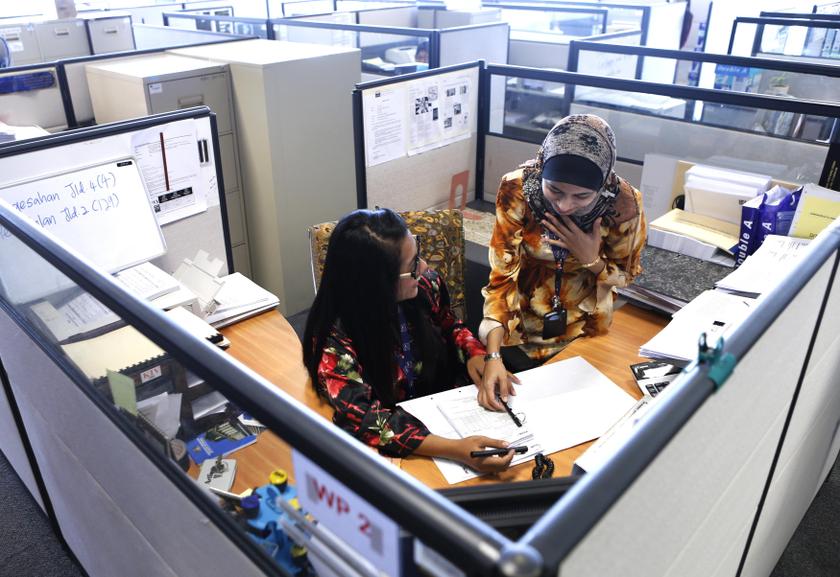


SINGAPORE, Dec 12 — Leadership talent is key to ensuring the success of Malaysian organisations in today’s innovation economy, according to 37 per cent of Malaysian business leaders whilst 58 per cent believe women will play a critical role.
These were among the findings of Game-Changer #2 of the 2013/2014 Randstad World of Work Report released today.
The report, which surveyed more than 14,000 employers and professionals across the Asia Pacific, revealed that Malaysia is more advanced than some of its neighbours in promoting women in the workplace, with fewer employers in Hong Kong (47 per cent), India (57 per cent) and New Zealand (55 per cent) believing that female leaders are critical to their future success.
Randstad Malaysia Director Jasmin Kaur said in today’s economy where organisations across the region are innovating in consumer electronics, energy, food production and life sciences, a new style of leadership is vital.
“Female leaders are often known for possessing important people skills such as the ability to foster strong teams, build trusted relationships, leverage emotional intelligence and pick-up on non-verbal cues,” Kaur added.
The report also found that employers are increasingly looking for leaders who inspire, motivate, and are able to adapt to changing business demands.
The new generation are known to appreciate a more collaborative and less hierarchical management style in the workplace, and leaders who lead by example can encourage increased productivity at work and stronger business performance, she said.
However, employer confidence in the education sector for delivering these skills is low, with 78 per cent of Malaysian organisations saying they have little or no confidence in the education sector – a figure that is the highest in the region.
In preparation for an innovative and high-income economy by 2020, Kaur said employers need to start looking further afield and invest in talent gate-keepers such as universities and recruitment partners to find leadership talent.
“Malaysian employers can also attract top talent from returning foreign-educated professionals, who can access significant government tax incentives for relocating back to Malaysia,” she added.
The report also highlights that 43 per cent of Malaysian employers rate their organisation’s leadership capabilities as average or poor and that 54 per cent of Malaysian employees rank leadership development as one of the top three most important employee benefits.
Six in 10 employers in Malaysia are using talent management programmes to build their leadership pipeline, whilst 44 per cent of employers will recruit more people from culturally diverse backgrounds in the next five years to address the brain drain in Malaysia.
The report, now in its eighth year, covers Malaysia, Singapore, China, Hong Kong, India, Australia and New Zealand. — Bernama


