


IPOH, Oct 12 — A worrying aspect of Malaysia’s ageing demographic is that only about 600,000 out of 4.2 million Malaysians aged 60 and above meet the Ministry of Health’s five criteria for ‘healthy ageing’.
They are considered to be ageing healthily as they have strong social support, no cognitive impairment, are free from depression, and can live independently and carry out daily activities.
They are also either free from chronic diseases or have their conditions under control.
More concerning is data from the National Health and Morbidity Survey (NHMS) 2025, which found that 18.8 per cent, or about 770,800 senior citizens in the country, live alone — a threefold increase from 6.3 per cent in 2018.
Inevitably, many of them may not meet the criteria for ‘healthy ageing’, putting them at greater risk of dying alone.
Incidents of lonely deaths appear to be on the rise in Malaysia, with most cases, according to media reports, only discovered after members of the public complained about foul odour.
While lonely deaths can occur among people of all ages, Malaysia’s transition into an ageing nation, and its projected status as an aged nation by 2048, points to the likelihood of more such incidents involving older people, taking into account the increasing number of people living alone.
Media reports quoting Associate Prof Dr Rahimah Ibrahim, director of the Malaysian Research Institute on Ageing at Universiti Putra Malaysia, estimated that around 3,500 cases of people dying alone occur annually in Malaysia.
She based the estimate on microdata, citing Perlis, which has a population of about 300,000, as an example.
The state recorded 80 cases of sudden deaths involving people living alone between 2022 and August 2024.
Technology, smart gadgets
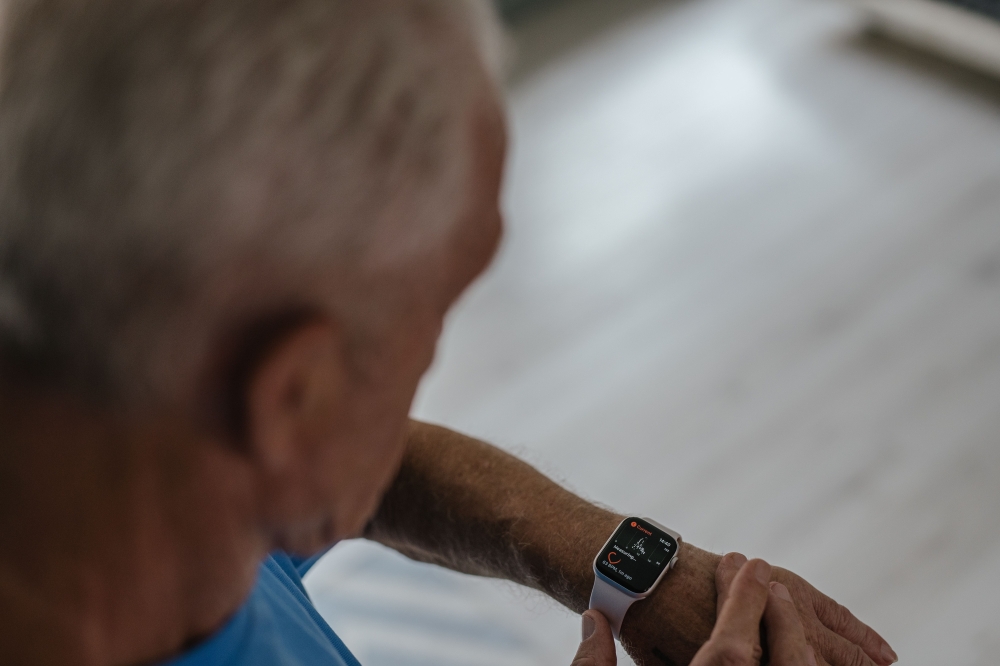
To address this issue, experts suggest the use of smart devices equipped with health monitoring and emergency detection features, alongside the development of an integrated inter-agency database, which can serve as an early safeguard against the risk of elderly people living alone dying unnoticed.
Senior lecturer at the Department of Guidance and Counselling at the Faculty of Human Development, Universiti Pendidikan Sultan Idris (UPSI), Dr Hapsah Md Yusof said Malaysia could emulate Japan, which has long adopted various approaches to safeguard the welfare of its older population, including efforts to address lonely deaths.
“Japan’s experience in addressing kodokushi, or ‘lonely death’, shows that technology needs to go hand in hand with community care systems, regular visits and the registration of senior citizens at the local authority level,” she told Bernama.
In Japan, advanced devices are attached to the bodies of senior citizens in care facilities to monitor their health and daily activities.
In Malaysia, while smartwatches capable of monitoring heart rate and blood pressure are already available on the market, a dedicated technology should be developed with features to detect incidents such as falls, loss of consciousness or unusual movements, she said.
“Such devices should also be linked to applications that enable family members, caregivers, care facilities or emergency personnel to receive immediate alerts if there are sudden changes
in an older person’s health condition or movements,” she said.
Fall-detection features are particularly important as local public health studies have recorded fall rates ranging from 4.07 to 14.1 per cent among elderly Malaysians, with those living alone facing more than twice the risk compared with those living with their families.
A study conducted at a local medical centre also found that nearly one-quarter, or 24 per cent, of their older patients who suffered falls died within a year due to related complications.
Integrated database
Hapsah, who is an expert in gerontological counselling, also proposed the establishment of an integrated database for senior citizens living alone, involving the Social Welfare Department, police, Fire and Rescue Department, local authorities and community leaders.
She said information on elderly people found dead alone is currently maintained in separate records according to the respective jurisdictions of each agency, making it difficult to coordinate follow-up action.
“Through this (proposed) integrated database, when the system detects a critical level of risk involving either a caregiver or an elderly person living alone, an automated mechanism could check eligibility for assistance, generate a referral summary and ensure the relevant authorities follow up with the individual within a specified timeframe,” she said.
She said the approach could be expanded in line with the government’s National Senior Citizens Action Plan 2026–2030.
However, Hapsah acknowledged that the successful adoption of such technology would depend on several factors.
Local studies on digital gerontology have identified financial constraints, low digital literacy, privacy concerns, language barriers and limited Internet access as among the key obstacles, particularly for older people living in rural areas.
Hence, the implementation of smart devices and an integrated database should be supported by connectivity subsidies, age-friendly interfaces, digital literacy programmes and intergenerational training to ensure that those most at risk are not left out of the system.
Smart ageing township
Meanwhile, Department of Town and Country Planning (PLANMalaysia) director-general Datuk Dr Alias Rameli said the time has come for Malaysia’s Smart City agenda to be strengthened with a more comprehensive Smart Ageing concept to meet the needs of the country’s increasingly ageing population.
He said Smart Ageing need not be developed as a standalone system, but integrated into the broader concepts of smart living, smart society, smart governance and digital infrastructure, so that technological advances in cities also encompass the well-being of senior citizens.
“The Draft Physical Planning Guidelines for the Elderly (GPP EMAS) 2026 outlines the concept of supportive ageing, which takes into account the use of technologies such as smart homes, emergency buttons, fall detectors, motion sensors, early warning systems, telehealth, medication reminders and communication platforms connecting the elderly with their families, caregivers or response centres,” he told Bernama.
(Smart Ageing refers to a holistic approach that combines technology, innovation and age-friendly planning to improve the quality of life, health and well-being of senior citizens.)
“PLANMalaysia also believes that Malaysia’s Smart City concept should be expanded to include Smart Ageing Cities by integrating emergency response systems, telehealth, age-friendly applications and spatial data to identify areas with high concentrations of elderly people and plan facilities more accurately,” he said.
He said Perak has a strong basis to be considered as a pilot location for the development of a Smart Ageing Township, given that it recorded the highest proportion of residents aged 65 and above in Malaysia in 2025.
“To realise this aspiration, development needs to be supported by integrated spatial planning, housing that supports ‘ageing in place’ (staying in one’s own home as one gets older), technology linked to local response centres, and a network of services involving local authorities, health and welfare agencies and the community.
“A truly smart city should not only be capable of detecting emergencies but also create an environment that enables people to age safely and be active and independent while remaining an integral part of the community,” he said.
He added that the successful adoption of technology would depend on strong support from families and the community. — Bernama


