


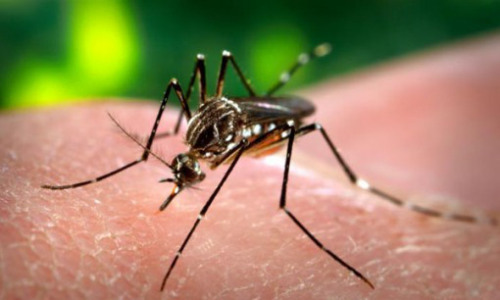


PETALING JAYA, Dec 12 ― The public is often reminded that dengue fever should not be taken lightly as it could quickly turn into a death threat.
However, if going by the number of dengue cases and death toll, it appears that many have failed to understand the repercussions of a bite from the Aedes mosquito.
This year alone, 31,170 dengue cases have been reported nationwide from January through November 9.
This is a 67 per cent increase from the 18,679 cases reported in the corresponding period last year, while the number of fatalities has nearly doubled to 63 from 32 last year.
This is in spite of the frustratingly simple prevention method of ridding the Aedes mosquito’s breeding grounds.
Until today, a cure has yet to be found for the fever which first case was recorded in Malaysia in 1901.
What is dengue?
Besides Malaysia acute dengue fever cases have also risen drastically in several other nations said Dr Mohammed Fauzi Abdul Rani, a consultant on Respiratory and Internal Medicine at the Tropicana Medical Centre.
It used to be the disease plaguing tropical and sub-tropical countries, but today, dengue fever has traveled to countries of other climates as well.
The World Health Organisation (WHO) estimates some 2.5 billion people or over 40 per cent of the world’s population have been exposed to the risk of dengue.
“The chronic disease is caused by the four types of flavivirus (DEN1, 2, 3 and 4) which spreads via Aedes bites.
“The breeding rate of Aedes mosquito is typically higher during the rainy season because stagnant water pools serve as the vector's habitat,” he explained to Bernama.
Those who have been infected from one of the virus strains may develop immunity against that particular strain but not the other three.
Those who have been bitten by the Aedes mosquito and infected with the dengue virus may develop dengue fever. However, the more worrying possibility is being infected with the life-threatening dengue haemorrhagic fever and going into dengue shock syndrome.
Three phases
The dengue fever is spread via the female Aedes mosquito, whether of the albopictus or the aegypti species. The fever is divided into three phases, the febrile, critical and the recovery phase.
“During the febrile phase, the patient usually develops a high temperature (acute fever), between two to seven days of the infection. Their face and skin would become flushed with the possibility of a measle-like rash.
“Lethargy and joint pains would set in, along with a headache, sore throat, diminishing appetite, nausea and vomiting. The febrile phase is two – dengue with a warning fever and dengue without the fever,” he said.
In the critical phase, which typically takes place from the third through the seventh day, the body temperature of the patient would drop from 39 degrees Celsius to 38 and 37.5 degrees Celsius. Some plasma leakage will occur for 24 to 48 hours.
If the plasma leakage is not severe, the patient can recover suddenly or after receiving fluid intravenously or electrolyte therapy.
However, in more serious cases, severe plasma leakage can cause profuse sweating, difficulty in resting, severe chills and even death.
“A critical loss of plasma volume can cause the patient to experience shock. Prolonged shock can deprive the organs of oxygen and compromise its functions.
“This in turn can lead to serious haemmorhaging,” he explained.
Some patients may go on to develop complications such as inflammation of the liver (hepatitis), brain membrane (encephalitis) and heart tissue (myocarditis).
Meanwhile, during the recovery phase, the patient’s overall condition would improve. The appetite would increase while the blood pressure, heartbeat and pulse would stabilise.
Treatment
A patient with a confirmed dengue diagnosis will have to undergo rehydration to prevent him from going into shock.
This is because there has yet to be a vaccine or medicine developed to treat the disease. However, early treatment can save lives.
Therefore, Dr Mohammed Fauzi recommended those experiencing a fever higher than 39 degrees Celsius to immediately get themselves tested at a nearby clinic.
Usually, the strength of a person’s immune system helps them get through the infection. However, that does not mean the young are not at risk of complications from the virus that can lead to fatality.
The most vulnerable group is the elderly, children and pregnant people.
Apathy
It is sad to note that although some have suffered badly of the disease, they still adopt a lackadaisical attitude when it comes to dengue prevention measures.
They fail to see the importance of clearing out potential Aedes breeding grounds and think that an infection can be treated with a hospital stay, said Dr Mazrura Sahani, a Public Healthcare Specialist from Universiti Kebangsaan Malaysia.
“Some of those who have recovered take the disease lightly because they survived. This is the kind of thinking that can lead to a second, more serious infection, which could lead to death,” she said. ― Bernama


