


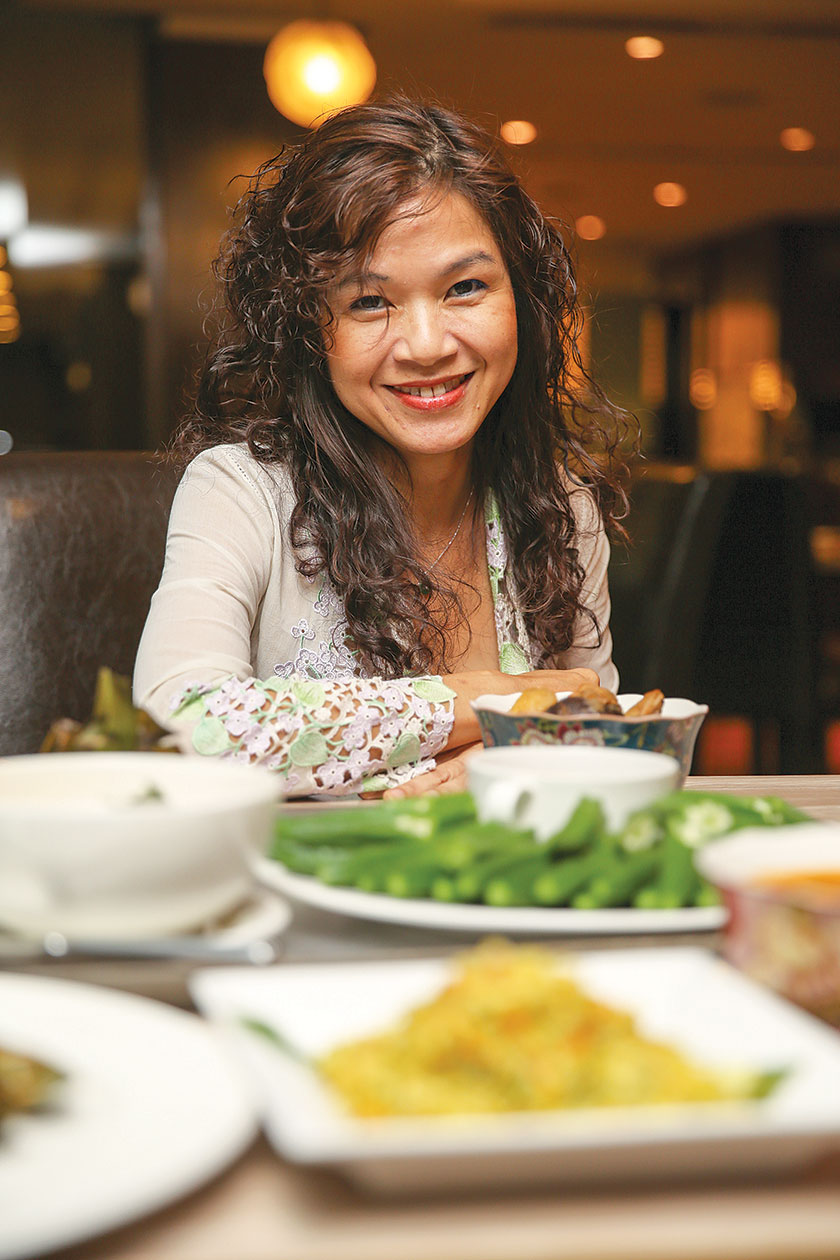
KUALA LUMPUR, Aug 17 – Diehard Nyonya food aficionados are in for a treat. Well-loved for her authentic Nyonya fare, Debbie Teoh will be cooking at Chatz Brasserie, Parkroyal Kuala Lumpur from September 5 to October 12. The weekend-only promotion is available for high tea and dinner.
True-blue Peranakans can attest to the fact that it’s hard to replicate the taste of Nyonya dishes in restaurants since it involves a lot of preparation work and high quality ingredients.
Proud of her heritage, Debbie takes the pains to ensure that her Nyonya food is authentic and packed with flavour, just like the real deal. This will satisfy any fussy Nyonya matriach.
Since Debbie has a mixed Peranakan parentage - Malaccan Baba father and Penang Nyonya mother – expect a mix of Penang and Malacca Nyonya favourites at the promotion. A rare treat, for sure.
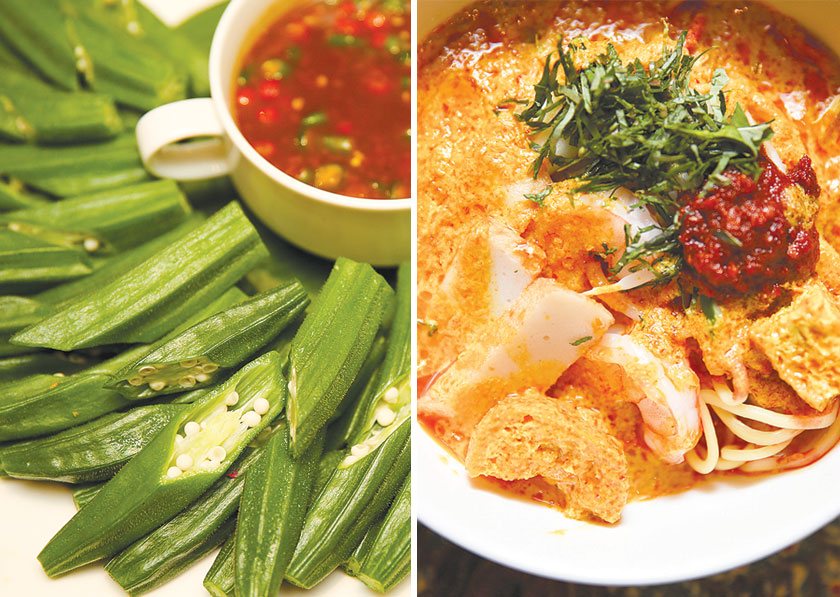
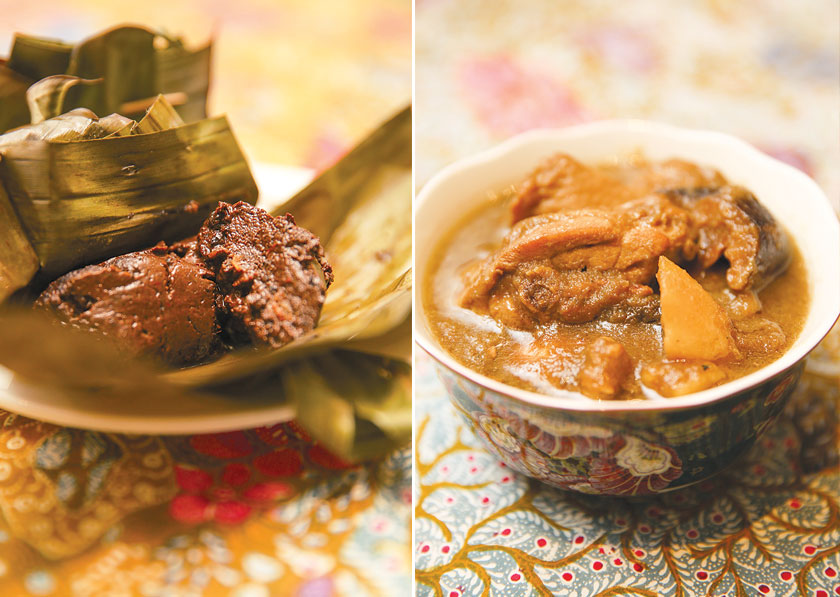
Those familiar with Malaccan Nyonya food will relish the comforting ayam pongteh with its thick sweet soybean paste gravy cooked with chicken, potatoes and mushrooms. Debbie insists on using the “Lembu” brand of fermented soybean paste and dark soy sauce favoured by the Malaccans for the dish. Another Malaccan favourite is the rich laksa lemak served with noodles, tofu puffs, prawns and fish cakes. It’s a creamy version that is so tasty, you’ll leave your bowl so clean “even a piece of bread will have nothing to soak up.” That was how a friend aptly described the dish.
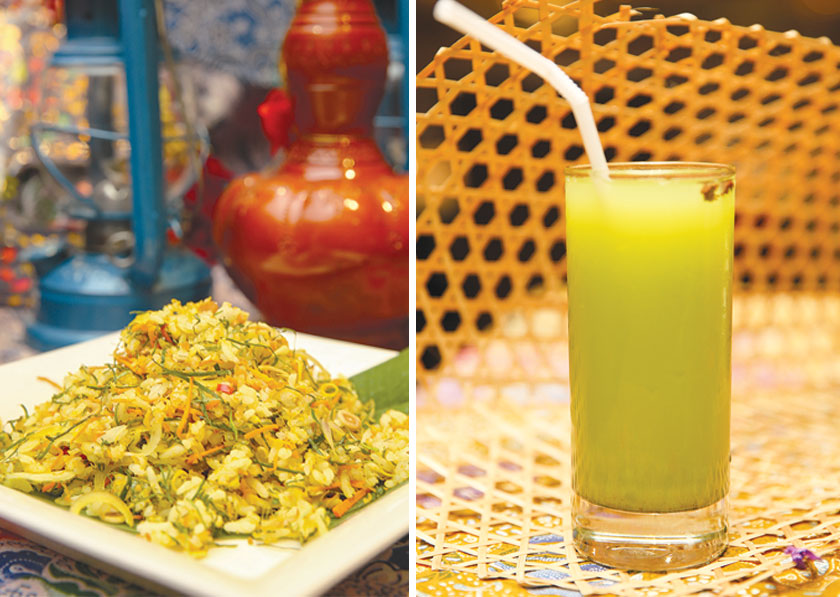
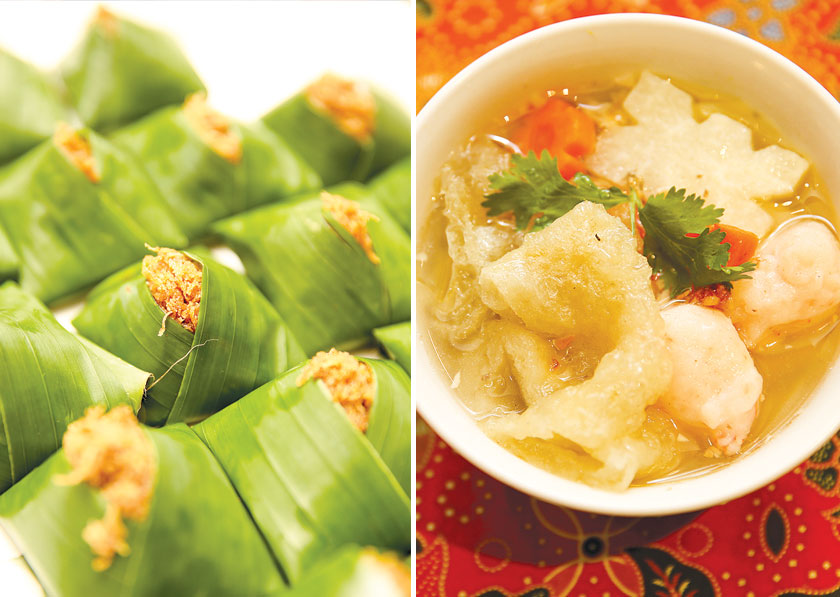
Expect Penang items like the fragrant nasi ulam, a mix of more than eight types of fresh herbs and dried prawns. There is also the classic ju hu char and the hu pio soup with fish maw and prawn balls. Debbie will also alternate a Malaccan version of the soup that uses egg pancakes stuffed with fish paste instead of prawn balls.
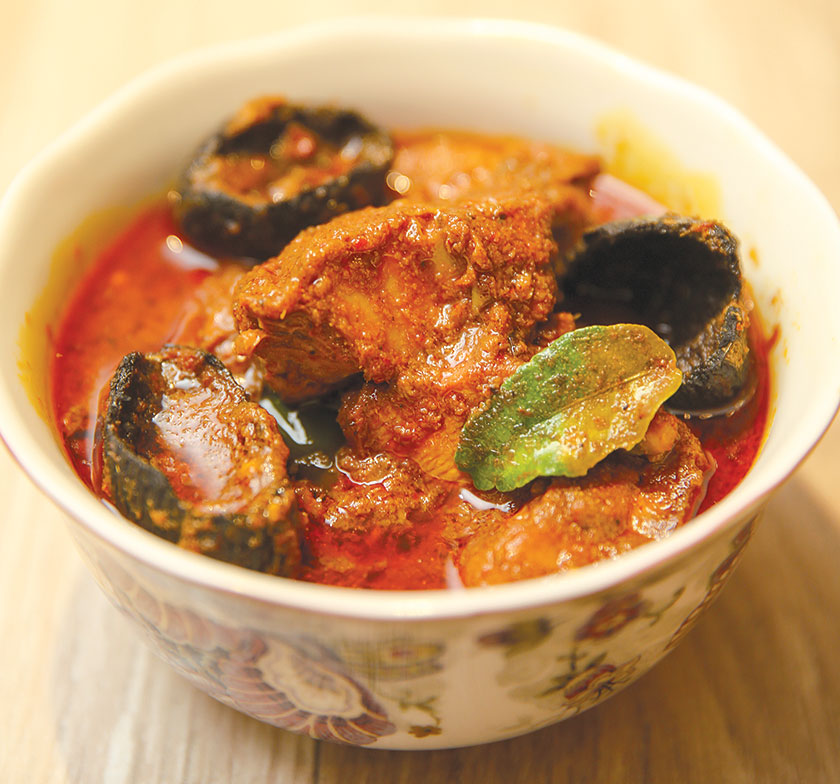
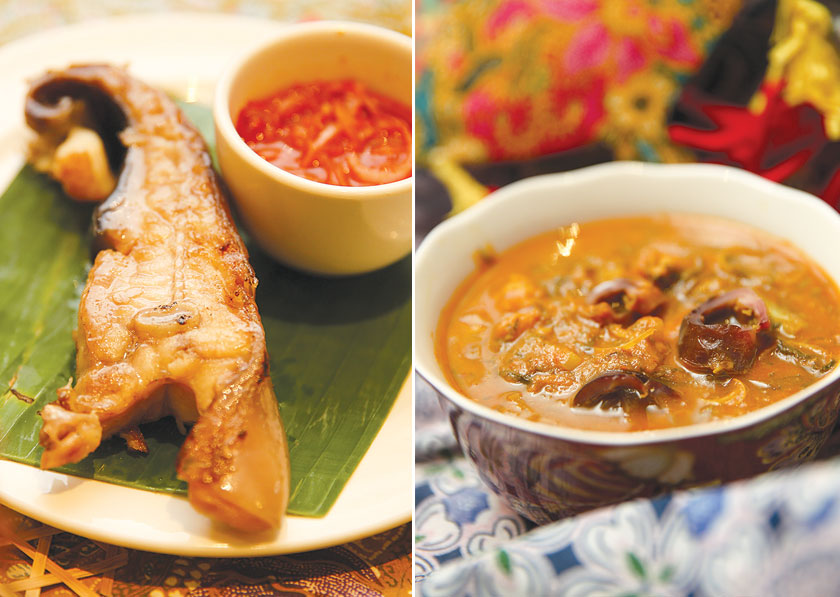
The buffet spread will feature 10 hot Peranakan dishes and 10 desserts together with other Western and local delights. In addition, Debbie will also be cooking up two hard-to-get dishes, available by order from their a la carte menu. The first is the Penang Nyonya dish gulai perut ikan, sought after for its appetising taste. It is priced at RM35 nett per bowl with steamed rice. The main ingredient is the pickled fish stomach. Debbie prefers the larger and thicker fish entrails for their texture, which is a rarity and quite pricey. “It’s very hard to get and my fishmonger keeps them for me as he sells big sized fishes like ikan jenahak and grouper.” Once she gets the cleaned fish stomach, she preserves it with salt like cincaluk for one week. This method firms up their texture.
The dish is a fragrant one with about 10 herbs like daun kaduk or betel leaf, limau purut or kaffir lime, kunyit or tumeric, kesom and eggplants. Pineapple is also added to give it a hint of sourness. Debbie also uses small prawns to infuse the dish with a sweet taste. Like all Nyonya food, it is all about the balance of sweet, sour and spicy that makes it so appealing.
Another not-often seen dish that Debbie will be preparing is pais buah keluak. It’s available for RM30 nett for two pieces. According to Debbie it’s a very old traditional dish that many have forgotten about. “People do not do it anymore, as it’s very costly to prepare and a lot of work.” Pains will be taken to extract the nutty chocolate-like black paste from the keluak nut. Unlike the ayam buah keluak that will be served in the buffet, this dish means you don’t need to get your hands dirty to dig out the paste from the nuts. Each banana leaf wrapped parcel is full of the aromatic keluak paste, estimated to be extracted from about 7-10 pieces of keluak nuts depending on their sizes. It’s subsequently pounded with herbs, spices and mixed with coconut milk and flaked fish to create this otak-like dish. “You get a balance of creaminess with some assam.” One could possibly rename this superb dish as a decadent Asian pate to be eaten with hot white rice or even slathered over toast.
The keluak nut has been likened to an Asian truffle and has been a major draw for the previous two Nyonya food promotions, when Debbie’s ayam buah keluak was served. One particular customer just came specially to relish the keluak nuts on its own. Extracting the nut’s paste is a tedious process that is carried out by Debbie’s mother and Indonesian helper. The long process requires you to soak the hard nuts to soften its shell, crack it to remove the paste. The paste is mixed with egg white and seasoning before it’s stuffed back into the shells to be cooked in the curry.
Cooking enthusiasts can also look forward to Debbie’s new cookbook titled Debbie’s Favourite Recipes. The cookbook will be launched during the promotion and available for purchase. The compilation of around 50 recipes by publisher Marshall & Cavendish is extracted from Debbie’s previous published books: Underwraps and Asian Tidbits. Throughout the years, Debbie has improvised with her family’s recipes tweaking them to work and sharing them in her cookbooks. The compilation also includes her own innovative creations that she has cooked up throughout her career as a recipe developer, like the unusual mango wraps with peanut sauce. “It’s very fast, easy to make and tasty.”
One item that is close to Debbie’s heart is an often-forgotten kuih: the simple white kuih bongkong. Unlike its more colourful cousins favoured for their brighter red or yellow hues, this white rice flour kuih in popular with Malaccans. “It’s a simple recipe with few ingredients but they must be premium for the good taste.” For instance, the coconut milk must be rich, creamy and freshly squeezed. Even the rice flour must be fresh with none of what Debbie terms, a slight “cockroach smell.” The gula Melaka must also be the high grade variant, for its fragrance. You will also get a chance to eat this rarely seen kuih bongkong during the promotion.
KUIH BONGKONG
70g rice flour
50g cornflour
30g tapioca flour
750ml fresh coconut milk, squeezed from 2 grated coconuts with sufficient water added
2 pandan leaves, knotted
1 tablespoon caster sugar
1 teaspoon salt
2 banana leaves, cut to 20cm x 17cm rectangle, scalded in hot water or over an open flame to soften
100g gula Melaka, chopped
bamboo skewers or cocktail sticks
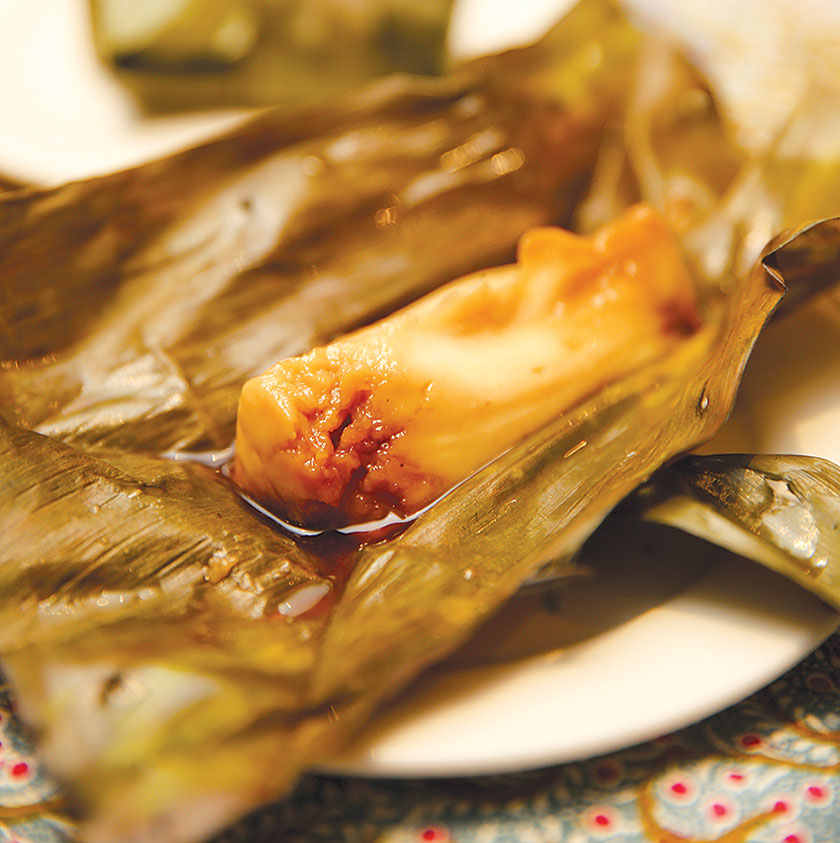
Combine the flours and coconut milk in a mixing bowl. Blend with a balloon whisk. Strain the batter into a saucepan. Add pandan leaves, caster sugar and salt. Cook over low heat, stirring continously, until the batter thickens. Remove from heat and set aside.
Place a piece of banana leaf on a flat surface. Spoon 1 tablespoon of batter onto the centre of the banana leaf. Top with 1 teaspoon of chopped gula Melaka, then cover filling with 1 tablespoon of batter. Wrap up into a parcel shape. Secure parcel with a bamboo skewer or cocktail stick. Steam parcels over rapidly boiling water for 10 minutes or until cooked. Remove from heat and leave to cool. Serve kuih as a tea-time snack.
Debbie’s tip: Use the highest grade gula Melaka for a fragrant filling. The highest grade of the palm sugar will be soft and easily pinched. It also easily melts when exposed to the hot sun.
SWEET POTATO KUIH KU
Filling
200g skinned green (mung) beans, soaked in water for 1 hour if steaming
2-3 pandan leaves
120g caster suger
¼ teaspoon salt
90-100ml cooking oil
200g sweet potatoes, peeled and steamed for 20 minutes or until soft
1 teaspoon caster sugar
250g glutinous rice flour
100ml hot water
120-150ml cooking oil
Kuih ku mould
banana leaves, cut into 6cm squares or circles, brushed with oil and scalded to soften
cooking oil for brushing
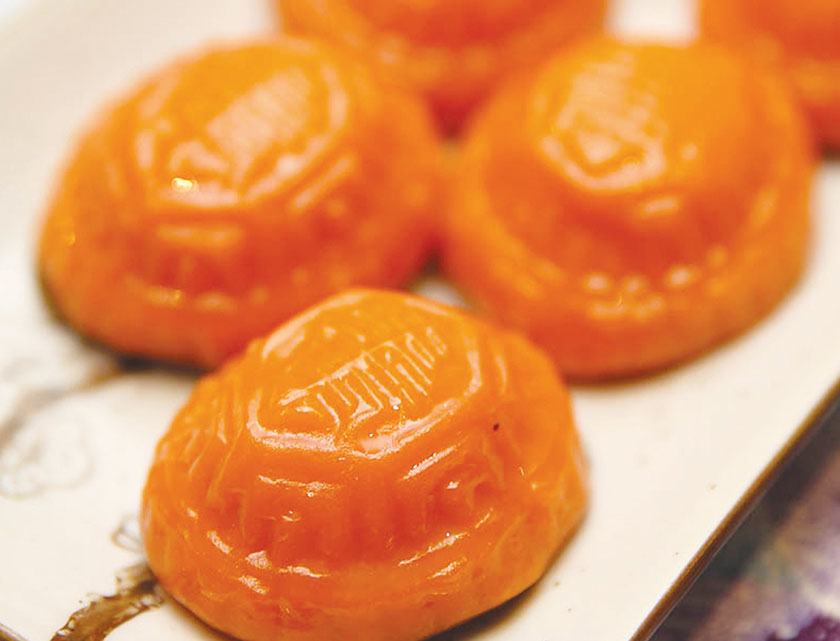
To prepare filling: Pressure cook the green beans and pandan leaves for 10 minutes. Alternatively, steam pre-soaked green beans for 20 minutes or until soft. Discard pandan leaves. Combine the soft green beans, sugar, salt and oil in a blender until it forms a smooth paste. Shape the paste into balls the size of limes and set aside on a plate. Refrigerate.
To prepare kuih skin: Mash steamed sweet potatoes with sugar, then gradually mix in glutinous rice flour until mixture resembles breadcrumbs. Add hot water and oil, mixing with a spatula until a soft dough forms. Divide dough into balls large enough to fit snugly into the kuih ku mould.
To assemble: First form a well in each portion of dough. Place a ball of filling inside, then wrap dough around it and reseal. If the dough is a little sticky, lightly dust the mould with some glutinous rice flour before pressing in the filled dough. Knock mould gently against the work surface on each side to dislodge the kuih and turn it out onto a piece of greased banana leaf. Repeat until all ingredients are used up.
Steam prepared kuih over medium heat for 8-10 minutes. Lightly grease cooked kuih with some oil and serve.
Note: Use orange flesh sweet potatoes for orange kuih ku skins and correspondingly, purple flesh sweet potatoes for purple skin.
The Best of Malaysia: Nyonya Cuisine by Chef Debbie Teoh buffet promotion at Parkroyal Kuala Lumpur is available for weekends only from September 5 to October 12. The high tea for Saturday and Sunday (12.30pm to 4pm) is available for RM78 nett per adult and RM39 nett per child. The buffet dinner is available for Friday and Saturday from 6.30pm to 10.30pm for RM125 nett per adult and RM62.50 nett per child. During this promotion, Parkroyal Kuala Lumpur will also be offering a promotional rate of RM85 per adult for dinner. Reservations are necessary since limited seats are available, so please contact 03-21470088 or email [email protected] to book your seat.
Specially for Malay Mail Online and Crave readers, we will also be offering you a chance to attend a cooking class with Debbie Teoh on September 6, from 10am to 12pm (Registration is 9.30am). The two-hour class will cover two dishes that Debbie will demonstrate. To qualify for the limited 20 spaces, you need to be a paying diner for the high tea on September 6 and answer this question correctly: “What is the forgotten dish that Debbie Teoh will offer on the a la carte menu?” Email your answer and personal details to [email protected] to qualify.


