


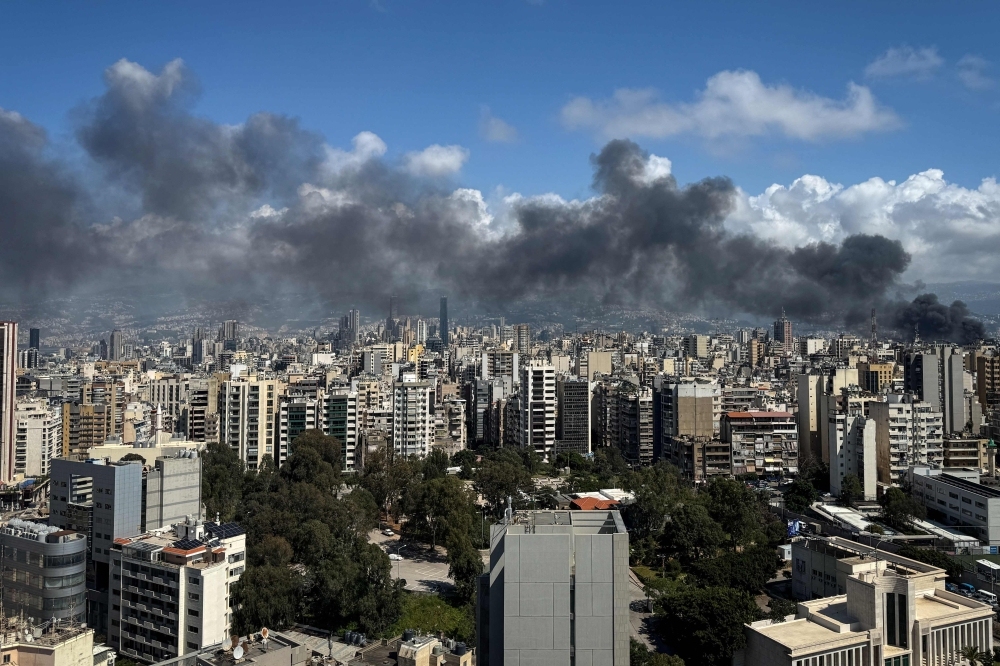


BEIRUT, April 9 — Israel carried out its heaviest attacks on Lebanon since the conflict with Hezbollah began last month, killing more than 250 people and wounding over 1,100 on Wednesday, while the Iran-aligned group launched rockets into northern Israel following a brief pause under the US-Iran two-week ceasefire.
According to Reuters, Lebanon’s civil defence reported 254 fatalities, with 91 in the capital, Beirut. The Lebanese health ministry recorded 182 deaths nationwide, noting the figures were preliminary.
The strikes, described by the Israeli military as the largest coordinated assault of the war, targeted over 100 Hezbollah command centres and military sites across Beirut, the Bekaa Valley, and southern Lebanon within ten minutes. Residents said some areas were hit without the usual civilian warnings.
Hezbollah responded early Thursday with rocket fire on northern Israel, calling it retaliation for what it described as Israeli violations of the ceasefire.
“This response will continue until the Israeli-American aggression against our country and our people ceases,” the group said.
The attacks mark the deadliest day since fighting escalated on March 2, after Hezbollah fired into Israel in support of Tehran following a US-Israeli strike on Iran. Israel has since launched an extensive air and ground campaign.
Civil defence teams in Beirut were seen evacuating residents from partially destroyed buildings, while hospitals struggled to manage the influx of wounded. One major medical centre appealed for donations of all blood types.
United Nations High Commissioner for Human Rights Volker Türk condemned the killings, calling the scale of death and destruction “horrific” and warning that the attacks, occurring just hours after a ceasefire agreement with Iran, placed enormous pressure on fragile peace.
Israeli Prime Minister Benjamin Netanyahu stressed that Lebanon was not part of the ceasefire, with the military continuing operations against Hezbollah. US officials echoed that Lebanon remained outside the truce.
Iran’s Revolutionary Guards warned of a “regret-inducing response” if attacks did not stop, while Lebanese President Joseph Aoun said French President Emmanuel Macron was ready to mediate to include Lebanon in any ceasefire.
Thousands of civilians in southern Lebanon have been displaced, with Israel issuing evacuation orders covering roughly 15 per cent of Lebanese territory. Essential infrastructure, including hospitals, bridges, and power stations, has been hit, leaving many residents without food, medicine, or shelter.
Ahmed Harm, a 54-year-old displaced from Beirut’s southern suburbs, said: “Hopefully a ceasefire will be reached. Lebanon can’t take it anymore.”


