


PARIS, March 22 — Here are the latest developments in the Middle East war:
48-hour Hormuz deadline
US President Donald Trump yesterday gave Iran a 48-hour deadline to open the Strait of Hormuz to shipping traffic or face the destruction of its energy infrastructure.
“If Iran doesn’t FULLY OPEN, WITHOUT THREAT, the Strait of Hormuz, within 48 HOURS from this exact point in time, the United States of America will hit and obliterate their various POWER PLANTS, STARTING WITH THE BIGGEST ONE FIRST!” Trump posted on his Truth Social platform.
Iran’s de facto closure of the strait has slashed Gulf oil and gas supplies, sending prices skyrocketing and countries scrambling for alternatives.
In response, Iran’s military said it would retaliate by targeting “all energy, information technology and desalination infrastructure belonging to the US and the regime in the region.”
Israel strikes Tehran
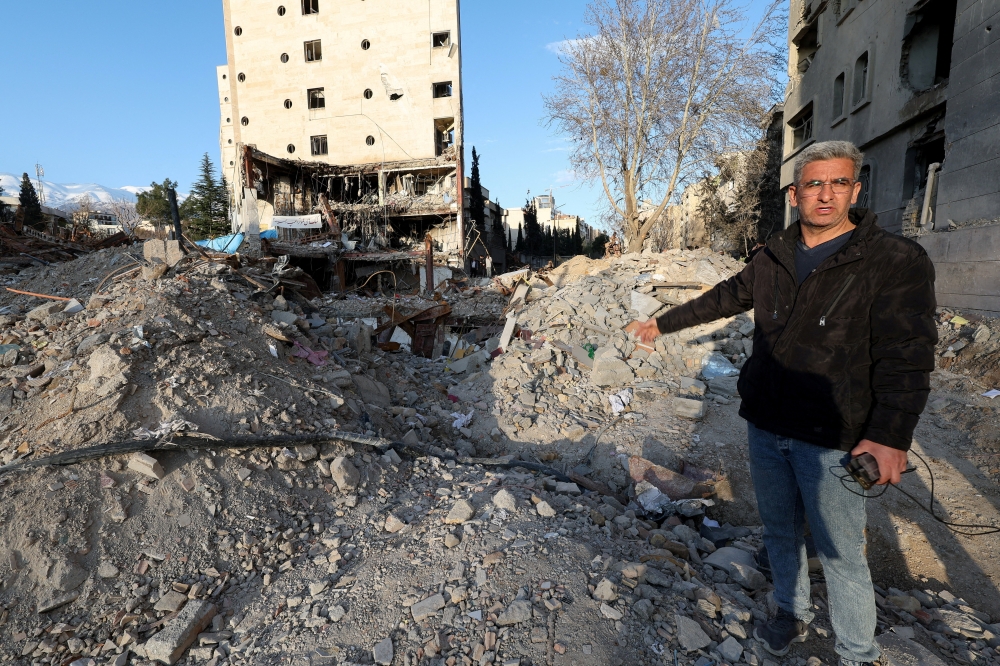
The Israeli military said its forces launched a wave of strikes on Tehran early today, hours after Iranian missile fire hit two cities in southern Israel.
Israeli forces were “currently conducting strikes on Iranian terror regime targets in the heart of Tehran”, a statement said.
Israeli towns hit
Iranian missile strikes on two southern Israeli towns wounded more than 100 people yesterday after Israeli air defence systems failed to intercept the projectiles.
First responders said 84 people were injured in the town of Arad, 10 of them seriously, hours after 33 were wounded in nearby Dimona.
Iranian state TV said the missile attack on Dimona, which houses a nuclear facility, was a “response” to an earlier strike on its own nuclear site at Natanz.
UAE targeted after islands warning
The United Arab Emirates said it faced aerial attacks from Iran after the Islamic republic warned its neighbour against allowing strikes from disputed islands near the strategic Strait of Hormuz.
The islands of Abu Musa and Greater Tunb, which are controlled by Iran but claimed by the UAE, have long been a source of dispute between the two countries.
G7 demands end to Iran attacks
Top envoys for the Group of Seven advanced economies and the European Union urged an “immediate and unconditional” end to Iran attacks against allies in the Middle East.
“We call for the immediate and unconditional cessation of all attacks by the Iranian regime,” the foreign ministers of Canada, France, Germany, Italy, Japan, Britain and the United States as well as the EU foreign policy chief said in a statement.
“We support the right of the countries unjustifiably attacked by Iran or by Iranian proxies to defend their territories and protect their citizens,” it said.
WHO aid to Beirut
The World Health Organisation has sent a first overland convoy of 22 tonnes of medicines and medical equipment to Beirut from its global emergency logistics hub in Dubai.
Lebanon was pulled into the war when Hezbollah began firing rockets into Israel to avenge the killing of Iran’s supreme leader Ali Khamenei in the Israeli-US attacks.
Israel has responded with heavy strikes across Lebanon and ground incursions in the border area, killing more than 1,000 people, according to Lebanese authorities.
UAE closes hospital
UAE authorities have ordered an Iranian state-linked hospital in Dubai to close, three employees told AFP, another sign of the deteriorating ties between the Gulf neighbours.
Iran claims Israeli F-16 hit
The Revolutionary Guards said they “struck” an Israeli F-16 over central Iran.
Israel’s military said earlier a surface-to-air missile was launched at one of its warplanes in Iran, but it was not clear if the statements referred to the same incident.
Israel also said its forces struck Iranian factories making components for ballistic missiles.
Iran sites ‘degraded’
The head of US Central Command, Admiral Brad Cooper, said bunker-busting bombs were dropped on an underground Iranian coastal facility this week, and “Iran’s ability to threaten freedom of navigation in and around the Strait of Hormuz is degraded as a result”.
Hormuz closure condemned
Twenty-two countries, including Australia, Britain, France, Germany, Japan and South Korea, jointly condemned Iran’s attacks on ships in the Gulf and effective closure of the Strait of Hormuz.
In a statement, the countries, which also included Gulf nations Bahrain and the United Arab Emirates, expressed “our readiness to contribute to appropriate efforts to ensure safe passage through the Strait”.
The United States was not among the signatories.
Nuclear site hit
Iran’s atomic energy body said US-Israeli strikes hit the Natanz nuclear facility previously used for uranium enrichment, but “no leakage of radioactive materials” was reported.
The head of the UN nuclear watchdog, the IAEA, called for “military restraint to avoid any risk of a nuclear accident”, while Russia condemned the strikes, saying they risked “catastrophe” in the Middle East. — AFP


