

















CAIRO, July 4 — The Muslim Brotherhood’s move to a multistory headquarters on a hill overlooking Cairo was supposed to be a symbol of the Islamist group’s triumph over decades of secular, military-led regimes. A year later, it was set on fire and the premier it backed was deposed.
The army suspended the Brotherhood-backed constitution late yesterday and removed President Mohamed Mursi as the group that had been a dominant force in Egyptian politics after the 2011 uprising against Hosni Mubarak became a target of anger against cronyism and economic hardship.
The backlash has undone in months a rise to power that took 85 years. It also risks reverberating across the Middle East, undermining gains by Islamist groups inspired by the Brotherhood’s journey from prison to the presidency.
“The collapse of the Muslim Brotherhood will lead to dangerous consequences for this region, creating despair among young Islamists who could be radicalized,” Khalil al-Anani, a political analyst at Durham University in the U.K. and author of a 2007 book on the group, said from Cairo before Mursi’s ouster. Losing power in Egypt, “would have a significant impact on political Islam movements in the Arab world,” he said.
Defense Minister Abdelfatah al-Seesi, who was promoted to the post by Mursi in August, announced in a televised broadcast that an early presidential election would be held after Mursi failed to meet the demands of the military’s 48-hour ultimatum announced on July 1. Mursi called it a coup.
Still Active
Even as the Brotherhood retreats, it will remain a “powerful player” in Egyptian politics, according to Shadi Hamid, director of research at the Brookings Doha Center.
“You can still have parliamentary elections in which the Freedom and Justice Party wins a plurality,” he said earlier yesterday, referring to the group’s political wing.
The group, already a loose collection of organizations with a range of Islamic ideologies, may splinter with some factions becoming more extreme, said Firas Abi Ali, a Middle East analyst at research firm IHS in London.
“Political Islam isn’t going to go away,” he said. “Some groups probably will think that violence is the only way to establish Islamic rule, and others will continue to participate in electoral politics.”
Nasser’s Coup
Formed in 1928 by Hassan El-Banna, a schoolteacher who preached the adoption of Islamic law and principles as the way to end Western domination, the Egyptian Brotherhood helped spawn similar movements from the Gaza Strip to Jordan and Syria.
The struggle between the generals and the Islamist group has been a prominent feature since the 1952 military coup that toppled Egypt’s constitutional monarchy.
President Gamal Abdel Nasser, who championed unity under the Arab rather than Muslim banner, clamped down on the Brotherhood after accusing it of an assassination attempt in Alexandria. Successive governments at times tolerated the group and at times cracked down on its leaders, sending them to prison and confiscating their financial assets.
Decades of suppression left the Brotherhood suspicious of institutions such as the military, judiciary and the police, contributing to their failure to build alliances, said Hamid of the Brookings Doha Center.
“Making the transition from opposition to power was difficult for them,” Hamid said from the Qatari capital. “Brotherhood officials were saying they were in the opposition even after they won several elections.”
Inheritance
Moving from opposition to power in Egypt, the group inherited institutions reeling under decades of mismanagement and corruption and a population in which one in five lived in poverty and the unemployment rate was rising.
Instead of “building consensus” to revive the economy, though, the Brotherhood moved too quickly to consolidate political power, according to opposition groups and analysts.
“Now economic unrest is occurring with political unrest, and together they made Mursi’s position untenable,” said Abi Ali. “He failed politically before he failed economically.”
Unlike Turkish Prime Minister Recep Tayyip Erdogan, who waited until his second term to start purging the military of his opponents, Mursi fired Mubarak’s defense chiefs two months into his presidency, ignored opposition to the Islamist-backed constitution and failed to rally the judiciary to support him.
Qatari Aid
His government also has struggled to conclude a $4.8 billion loan agreement with the International Monetary Fund that Mursi said was needed to restore investor confidence. Instead, the authorities relied on stop-gap grants and deposits from countries including Qatar, which extended $8 billion in aid to Egypt’s finance ministry and the central bank.
The result was that youth groups, opposition parties and army supporters united behind the single goal of removing the Muslim Brotherhood from power. Protesters stormed the group’s building on July 1 and fought street battles with members.
The Islamists “created many enemies and were fighting battles on different fronts at the same time,” said Al-Anani, the Durham academic. “They don’t have any friends.”
Mursi, 61, and the Brotherhood say they won the presidency and a parliamentary majority democratically. They blame Egypt’s ills on mass protests and conspiracies by their enemies.
The now former president rejected the army’s ultimatum as his supporters poured into the streets by the thousands. While not capitulating to demands for him to step down, Mursi proposed a power-sharing arrangement until new elections, calling it a “clear and safe” road map to end the turmoil.
Tahrir Crowds
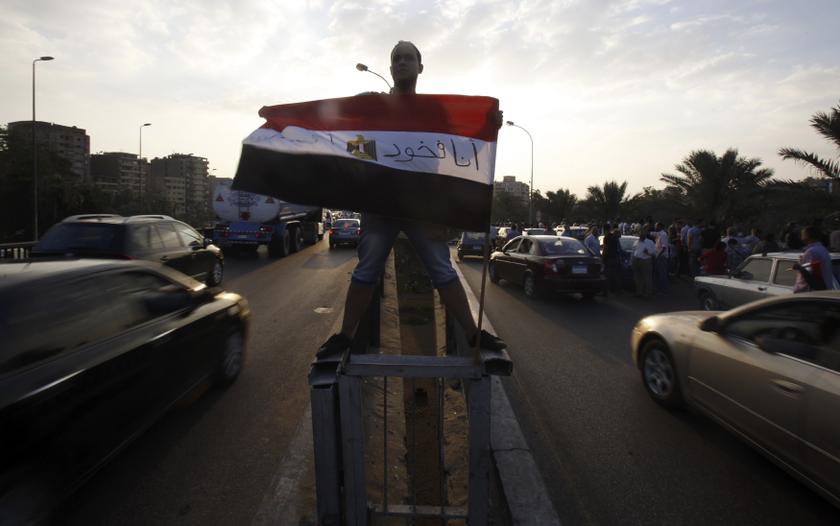
Crowds in Cairo’s Tahrir Square, the focal point of the revolution against Mubarak, set off fireworks when the defense minister declared an end to Mursi’s time in office.
It’s a world away from the group’s standing after the 2011 uprising, when bankers and investors from the US to Australia courted its leaders and their vision for Egypt’s economy. Fifty- seven per cent of Egyptians saw Mursi’s election as positive.
That support plunged to 28 per cent, according to a poll by Washington-based Zogby Research Services on June 17. More than 90 per cent said they had confidence in the army.
The plunging popularity has been greeted with a mix of relief and satisfaction in some Gulf Cooperation Countries wary of the Brotherhood’s influence over other Islamist movements.
“Two things that don’t mix: the Brotherhood and prosperity,” Dubai Police Commander Dhahi Khalfan said on Twitter to his 463,195 followers before Mursi was removed.
The United Arab Emirates, a federation of seven sheikhdoms including Dubai, handed down jail sentences to 69 people on July 2 after finding them guilty of setting up a secret cell the country said was linked to the Brotherhood.
“Other Islamist groups are watching very closely,” research director Hamid said. “Everyone looks at Egypt as a bellwether for regional trends.” – Bloomberg