









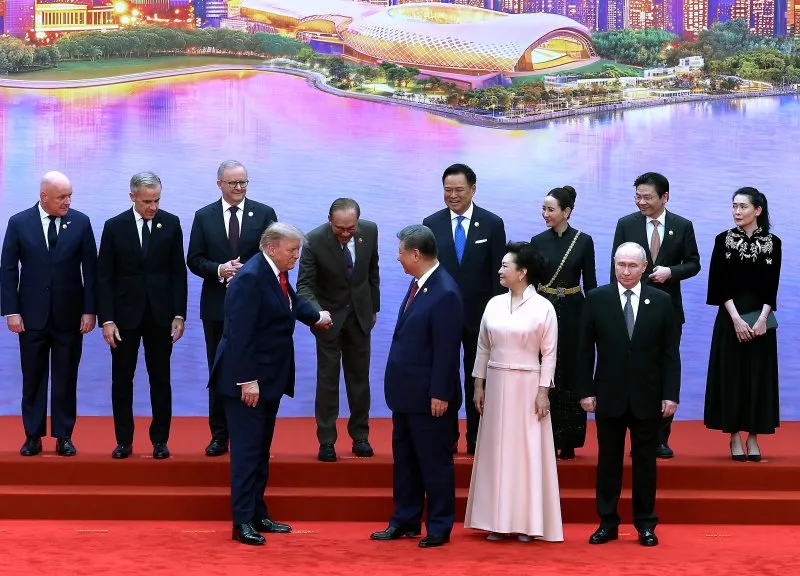





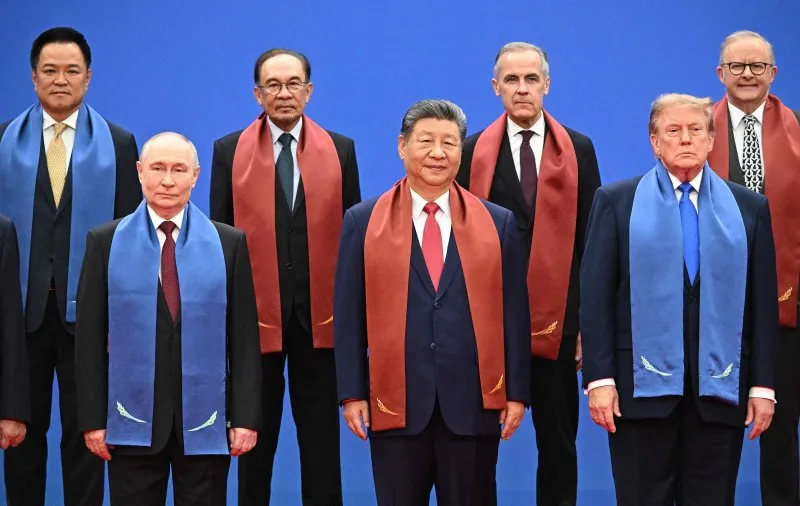
NOVEMBER 19 — When the Asia-Pacific Economic Cooperation (Apec) forum was established in 1989, Malaysia under then Prime Minister Dr Mahathir Mohamad was deeply sceptical of its strategic intentions.Malaysia feared that Apec could become an instrument through which larger Pacific powers, especially the United States, Australia and Japan, would exercise disproportionate influence over the economic destiny of Southeast Asia.There were also concerns that Apec could dilute the centrality of Asean, which Malaysia had helped establish in 1967.Thirty-seven years later, the strategic landscape has changed dramatically.Malaysia has not merely participated in Apec. It has learned to derive considerable diplomatic, commercial and strategic benefits from the forum.Indeed, the latest exchanges between United States President Donald Trump and Chinese President Xi Jinping at Apec demonstrate why Malaysia must continue to broaden and deepen its engagement with all major powers.From scepticism to strategic engagementAt the outset, Malaysia’s objections to Apec were not without justification.The Cold War was ending.The United States was emerging as the world’s predominant superpower. Japan remained an economic powerhouse, while China had only begun its remarkable economic transformation.Asean countries feared that their collective interests could be overwhelmed by the economic weight of the larger Pacific economies.Mahathir subsequently championed the East Asia Economic Grouping in 1990, later reformulated as the East Asia Economic Caucus, to strengthen regional economic cooperation.His concern was straightforward: Asian countries should possess sufficient collective agency to determine their own economic future.Yet Malaysia did not reject economic cooperation with the wider Pacific.It became a founding participant in Apec in 1989, even while maintaining reservations about the forum’s direction and institutional development.This distinction is important.Malaysia was not opposed to international economic engagement.It was opposed to arrangements that could compromise the autonomy of smaller and medium sized powers.Today, that concern remains relevant, although the opportunities presented by Apec have expanded enormously.Trump’s praise of Xi Jinping is strategically significantAt the latest Apec gathering, Trump publicly thanked Xi Jinping for hosting him.He described China as an incredible country and praised Xi as an extraordinary leader.Trump declared:“This is an incredible country. You’ve done an unbelievable job and you’re an incredible leader. Thank you very much.”Earlier, Trump had also highlighted the elaborate reception accorded to him upon his arrival in China.The ceremonial treatment evidently made an impression on the American president.Yet the significance of these exchanges goes beyond diplomatic pomp.Trump has repeatedly portrayed China as America’s foremost economic and strategic competitor.His administration has maintained pressure on Beijing through tariffs, technological restrictions and competition over critical minerals and advanced semiconductors.Nevertheless, his praise of Xi illustrates an enduring reality of international relations.Even the world’s most powerful countries cannot afford perpetual confrontation.They must communicate, negotiate and occasionally acknowledge one another’s achievements.If Washington and Beijing can maintain channels of engagement despite their profound differences, Malaysia has every reason to pursue constructive relations with both.Malaysia benefits from both economic giantsMalaysia’s economic transformation has been closely associated with investment, trade and technological cooperation involving the United States, Japan, China and other Apec economies.The United States remains a crucial market for Malaysian electrical and electronic products.American semiconductor companies have maintained a substantial manufacturing presence in Malaysia for decades, particularly in Penang.This relationship has helped Malaysia develop one of Southeast Asia’s most important semiconductor ecosystems.China, meanwhile, has emerged as Malaysia’s largest trading partner, supporting investment in manufacturing, infrastructure, logistics and renewable energy.Chinese enterprises have also become increasingly involved in Malaysia’s industrial development.Japan continues to contribute technological expertise, investment and manufacturing capabilities.South Korea, Australia and other Apec economies similarly provide important commercial and educational opportunities.These relationships are not mutually exclusive.Malaysia does not need to choose between Washington and Beijing to benefit from either.Its national interest lies in maintaining the confidence of both while protecting its economic sovereignty.This is precisely where Apec becomes indispensable.Apec is more than an economic forumApec is frequently described as a platform for trade liberalisation and investment facilitation.That description is accurate but incomplete.Its greatest value may lie in its ability to bring together leaders whose countries otherwise confront one another across multiple geopolitical fault lines.The United States and China disagree over Taiwan, technological supremacy, export controls and maritime security.Japan and China remain divided over historical and territorial questions.Russia’s relations with several Western economies remain deeply strained.Yet Apec provides a setting where economic dialogue can continue despite these differences.For Malaysia, such engagement is invaluable.A country situated along the Strait of Malacca, with vital interests in the South China Sea, cannot afford an international order dominated entirely by confrontation.Malaysia’s prosperity depends on open sea lanes, stable supply chains and predictable commercial relations.Apec strengthens the possibility of maintaining these conditions.It does not eliminate geopolitical rivalry. But it can prevent rivalry from completely overwhelming economic cooperation.Asean must remain centralMalaysia’s original concerns about Apec should not be forgotten.Indeed, they provide a useful reminder that engagement with major powers must never come at the expense of Asean’s collective interests.Asean has developed into a regional organisation of considerable diplomatic and economic significance.Its ability to convene major powers through Asean-led mechanisms remains one of its principal strengths.Apec should therefore complement Asean rather than compete with it.Under Singapore’s chairmanship of Asean in 2027, the region will have further opportunities to demonstrate that economic openness and strategic autonomy can reinforce one another.Malaysia should support these efforts.The Asean Will must be sufficiently strong to ensure that regional countries are not reduced to passive observers of decisions made in Washington, Beijing or Moscow.Smaller and medium sized powers must possess meaningful influence over the rules governing trade, investment and regional security.Malaysia’s experience offers an important lessonMalaysia hosted Apec in 1998 during the Asian financial crisis.It hosted the forum again in 2020, when the COVID-19 pandemic severely disrupted international economic activity.Both occasions demonstrated Malaysia’s ability to contribute to regional economic diplomacy under difficult circumstances.They also revealed how much the country’s approach to international cooperation had evolved since 1989.Malaysia has learned that strategic engagement does not necessarily mean strategic subordination.Participation in international institutions can strengthen national sovereignty when accompanied by competent diplomacy, economic resilience and clear national priorities.The challenge is to ensure that Malaysia does not become overly dependent on any single economic partner.This requires continued investment in education, research, advanced manufacturing, artificial intelligence and technological capabilities.Malaysia must also improve its capacity to negotiate complex trade and investment agreements.Diplomatic engagement produces lasting benefits only when supported by domestic institutional excellence.From opposition to opportunityThe contrast between Malaysia’s initial scepticism towards Apec and its present engagement is striking.In 1989, Malaysia worried that Apec might become a vehicle for domination by larger economies.In 2026, the forum offers Malaysia opportunities to engage those very economies while strengthening its own position.Trump’s praise of Xi Jinping demonstrates that even bitter strategic competitors recognise the necessity of diplomacy.Their exchanges should not be mistaken for the disappearance of US-China rivalry.Rather, they show that engagement remains possible even when competition is intense.Malaysia should draw confidence from this development.It has spent decades cultivating relationships with countries whose political systems, economic structures and strategic interests differ considerably.This diversity is an asset.Malaysia’s location between the Indian and Pacific Oceans, its role in global semiconductor supply chains and its membership in Asean provide it with substantial diplomatic advantages.But geography alone does not guarantee prosperity.Malaysia must continually transform its strategic position into economic opportunity.The greatest lesson of Apec is that countries need not agree on everything to cooperate on matters of common interest.What Malaysia once viewed with suspicion has become an important avenue for expanding its diplomatic influence and economic partnerships.The task now is not merely to remain engaged in Apec.It is to ensure that Malaysia, together with Asean, helps shape the future of Asia-Pacific cooperation.After all, the true measure of strategic maturity is not the ability to oppose great powers indefinitely.It is the ability to engage them confidently, preserve national autonomy and convert international cooperation into lasting benefits for the Malaysian people.* Phar Kim Beng, PhD is the Professor of Asean Studies at International Islamic University of Malaysia and Director of Institute of International and Asean Studies (IINTAS).** This is the personal opinion of the writer or publication and does not necessarily represent the views of Malay Mail.