


NOVEMBER 15 — On November 19, the International Court of Justice (ICJ) will deliver its judgment in The Gambia v. Myanmar, a case concerning Myanmar’s alleged violations of the Genocide Convention. For our Rohingya community, this is more than a moment in international law. It follows decades of persecution and nearly ten years of waiting for the world to acknowledge what we have known: that we have endured a campaign of destruction because of who we are.
Yet, the conversation is being pulled away from the people whose lives are at stake.
In September, a Wall Street Journal opinion piece by Orde F. Kittrie and Andres B. Munoz-Mosquera warned that the ICJ could lower the legal threshold for establishing genocide in the Rohingya case. The authors connected this possibility to South Africa’s pending genocide case against Israel and potential claims against the United States, Nato members even suggesting sanctions against ICJ judges.
In October, US Ambassador Mike Waltz amplified this argument, warning against lowering the genocide threshold in ways that could affect American and allied soldiers. His remarks alongside Washington’s sanctions against the International Criminal Court, raised concerns about political pressure on international justice
Professor Michael Becker, former ICJ legal officer, explains that the Court’s treatment of genocidal intent could have repercussions for South Africa’s case against Israel particularly on how genocidal intent is inferred from patterns of conduct when states invoke military or counterterrorism operations.
That is a legitimate legal discussion. But the possibility that a judgment concerning the Rohingya could have consequences for another state is not a reason to politically contain the Rohingya case or prejudge the Court’s work.
As Professor John Packer reminds us, there is no adjustable genocide threshold to be lowered according to whose interests are affected. The law to be applied is the Genocide Convention. The question is whether the evidence satisfies its requirements.
International criminal lawyer Shyamala Alagendra shares my concern about the Rohingya proceedings being drawn into debates about other conflicts.
She observed that the Court’s interpretation of the Genocide Convention will be relevant to other proceedings, but relevance is not equivalence. Each case must be determined on its own facts and evidence. The Court must neither shape its reasoning to assist another case nor hesitate to apply the law because of the consequences its judgment may have elsewhere.
Shyamala also distinguished legitimate criticism of the Court from attempts to influence its judgment: “judicial independence is not a privilege of judges, but a safeguard for those seeking justice and all whose rights and responsibilities are before the Court. It demands impartiality, fidelity to the law and the courage to decide without fear or favour.”
And yet, in all this discussion, I find myself asking a much more fundamental question: where are the Rohingya?
Where are the women and girls who survived the 2017 genocidal campaign? Where are the families who watched their homes disappear, their relatives killed and their communities emptied? Where are the children who have spent nearly a decade growing up in refugee camps, without citizenship, security or a meaningful prospect of returning home?
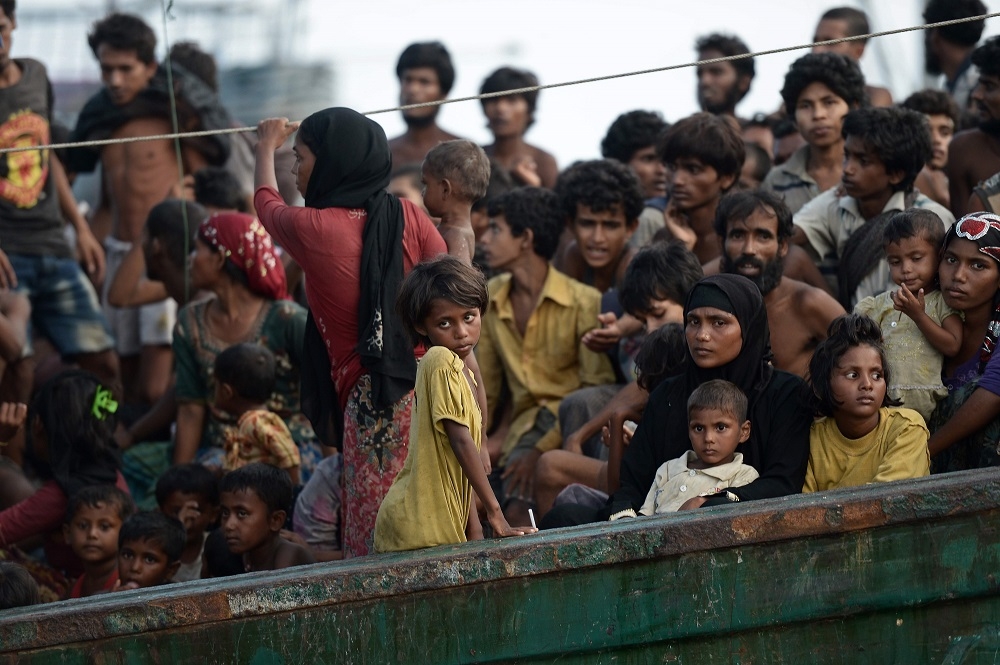
Multiple human rights reports have documented sexual violence against Rohingya women and girls during the 2017 military operations, alongside killings, village destruction and forced displacement. Those women did not leave their trauma behind when they crossed the Naf River into Bangladesh.
They carried it into the refugee camps, through fractured families, pregnancies and motherhood, and years of uncertainty. They have had to rebuild their lives without adequate access to healthcare, psychosocial support, justice or any assurance that they will not be forced to flee again.
The world has become remarkably comfortable discussing the Rohingya as a legal question, a humanitarian burden, a regional security concern or a diplomatic inconvenience. Drawing on her work with survivors of sexual and gender-based violence and crimes against children, Shyamala stressed that survivors must matter beyond their testimony and that the long-term consequences of these crimes can shape individual lives and reverberate across generations, affecting Rohingya everywhere, whether or not their suffering has entered the legal record.
And this is where I struggle with the direction of the current debate. If the concern is whether a finding against Myanmar might create legal exposure for another state, we have already lost sight of why this case exists.
For the Rohingya, this case is not a stepping stone. It is our case. It represents years of community organising, survivor testimony, documentation, advocacy and the determination.
We did not spend decades fighting erasure so that our suffering could become a footnote in somebody else’s legal argument.
Our conversation also turned to what happens after the judgment. Shyamala cautioned against confusing a legal milestone with justice delivered. The Genocide Convention imposes obligations beyond the courtroom in The Hague and states must consider what those obligations require in practice. Shyamala emphasised that even if the Court does not find Myanmar responsible for genocide, the atrocities suffered by the Rohingya remain, as does the possibility of responsibility for other international crimes. Nor should it provide a pretext for countries hosting Rohingya to diminish their protection. “Refugees do not have to establish that they are victims of genocide to deserve safety and dignity,” she observed.
A finding that Myanmar violated the Convention would be a historic step towards accountability. But it would not, by itself, return us home, restore our citizenship, recognise our ethnic identity or dismantle the systems that made genocide possible.
Rohingya-led universal jurisdiction initiatives, including my case as a lead complainant with Themis Indonesia, alongside the work of the Myanmar Accountability Project, demonstrate that our community is not waiting passively for one institution to determine its future.
Whatever the Court decides on November 19, our pursuit of justice will continue. But for now, let the Rohingya have this moment without being made collateral to somebody else’s geopolitical anxieties. When the judgement has been delivered and the legal arguments have moved elsewhere, we will still be here, living with its consequences and continuing our struggle for a place to call home.
* This is the personal opinion of the writer or publication and does not necessarily represent the views of Malay Mail.


