


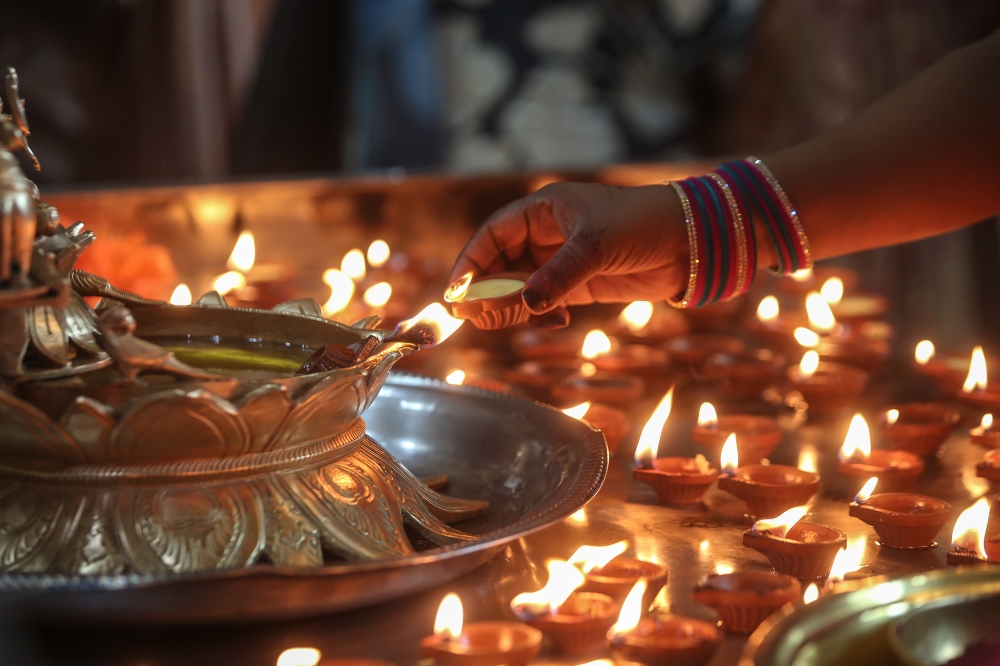
NOVEMBER 6 — As thousands of Malaysian homes prepare to glow with beautiful oil lamps this Deepavali, perhaps we should ask ourselves an uncomfortable question. Are we truly illuminating our society, or have we become content with lighting up our houses while leaving our prejudices untouched?
Deepavali, the Festival of Lights, carries a profound message about the triumph of light over darkness, good over evil and hope over despair. For Hindu Malaysians, it is a deeply meaningful religious and cultural celebration. For the rest of us, it offers an equally valuable opportunity to reflect on the kind of Malaysia we wish to build.
We often proudly describe Malaysia as a multicultural nation. We celebrate Hari Raya, Chinese New Year, Deepavali, Christmas, Gawai and Kaamatan. We exchange greetings, share festive delicacies and upload colourful photographs on social media. Yet, when the celebrations end, how much of that spirit remains?
Are we genuinely comfortable with people who look different, worship differently or hold beliefs different from ours? Or does our unity sometimes exist only during festive seasons? The answer must begin in our classrooms.
Schools and universities have an enormous responsibility to nurture a generation that does not merely tolerate diversity but genuinely values it. Young Malaysians should not grow up believing that unity means everyone must think, behave or believe alike. True unity emerges when differences are respected rather than feared.
Imagine a primary school classroom where children are encouraged to share what Deepavali means to their families. Instead of simply colouring pictures of oil lamps or wearing traditional costumes, pupils could exchange stories about kindness, family traditions and the importance of respecting others. A Malay pupil might discover the significance of a Hindu friend’s celebration, while an Indian pupil might learn that the values of compassion and gratitude are shared across communities. Such conversations may appear simple, but they can challenge stereotypes before they become deeply rooted.
At universities, the approach should be more intellectually challenging. Lecturers should create opportunities for students to discuss religious sensitivity, cultural misunderstandings and the dangers of stereotyping. Students from different backgrounds could collaborate on community projects, visit cultural exhibitions or organise meaningful conversations with people outside their usual social circles.
More importantly, these activities should encourage reflection. What assumptions did students previously hold? What surprised them? How might they respond differently when encountering prejudice in everyday life?
We must also confront the uncomfortable reality of social media. Young Malaysians are constantly exposed to divisive comments, offensive jokes and misleading narratives about race and religion. One thoughtless post can undo years of goodwill. Our classrooms must therefore teach students to question harmful narratives, verify information and challenge prejudice respectfully rather than blindly sharing it.
This year, the Ministry of Higher Education has offered flexible online and hybrid learning arrangements to Hindu students and lecturers around Deepavali. Such consideration is a welcome recognition of religious and cultural diversity. However, genuine inclusion must extend beyond accommodating festive calendars. It must become part of how we teach, learn and treat one another every day.
Perhaps the greatest lesson of Deepavali is that darkness does not disappear simply because we talk about light. It disappears when someone makes the effort to illuminate it.
A truly united Malaysia will not be built through festive banners, ceremonial speeches or beautifully staged multicultural photographs alone. It will be built when a child refuses to laugh at a racist joke, when a university student defends a friend facing discrimination, and when neighbours celebrate one another’s happiness without questioning their differences.
As we wish our Hindu friends and fellow Malaysians a joyful Deepavali, let us remember that the brightest light is not necessarily the one burning in an oil lamp. It is the light of kindness, empathy and respect that we carry into our relationships.
This Deepavali, let us not merely celebrate the Festival of Lights. Let us become the light that makes Malaysia a little kinder, more peaceful and more united.
Happy Deepavali to all Malaysians celebrating this beautiful occasion.
* By Assoc. Prof. Dr. Muhammad Noor Abdul Aziz, School of Education, Universiti Utara Malaysia.
** This is the personal opinion of the writer or publication and does not necessarily represent the views of Malay Mail.


