





NOVEMBER 2 — The decision of the Malaysian Indian People’s Party (MIPP) to boycott the Melaka state election on November 14, 2026, should not be dismissed as a minor disagreement over seat allocations.
Neither should the dissatisfaction of the Malaysian Chinese Association (MCA), which has been reduced to just two seats under Barisan Nasional (BN).
Taken together, these developments reveal something more fundamental about Malaysian politics: the increasing marginalisation of non-Malay component parties within coalitions that continue to proclaim their multiracial credentials.
This is a sobering development. For decades, Malaysia’s political stability rested partly on the ability of different ethnic communities to participate meaningfully in governing coalitions.
That formula was never perfect. But it offered a framework through which Malays, Chinese, Indians and other communities could negotiate their interests.
This does not in any way imply that Pakatan Harapan is necessarily better. Not unlike any coalition, Pakatan Harapan has its problems too.
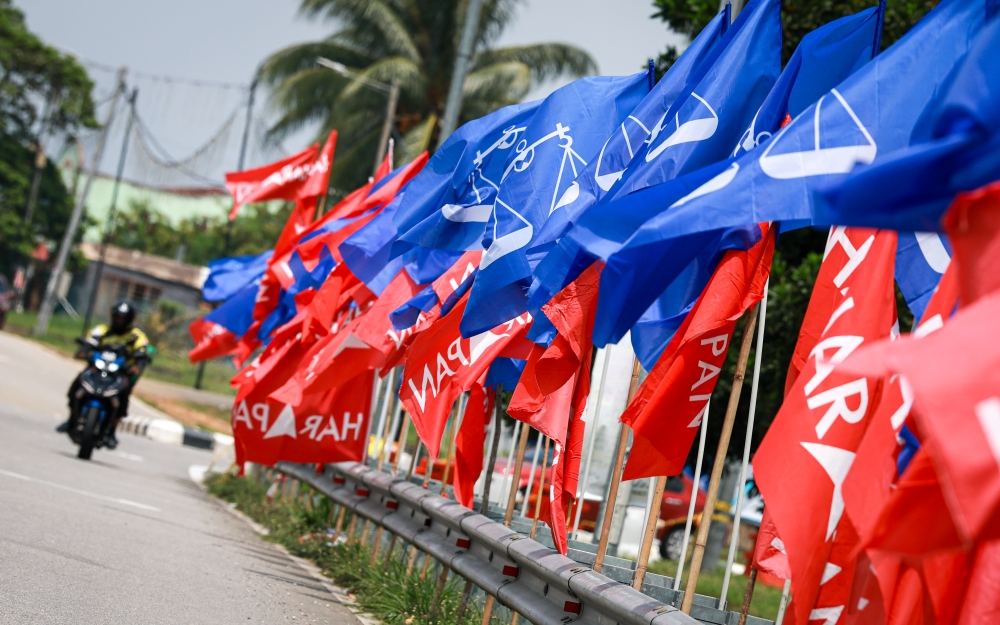
But with PN facing a hail of issues, it is difficult for PN, which has been deregistered pending an appeal, cannot ride on the moral high ground of being a multi racial coalition either.
The Melaka election is now exposing the weaknesses of that framework.
First, MIPP’s boycott represents a rejection of political tokenism.
Its president, P Punithan, has made clear that the party would not sacrifice its dignity merely to secure seats that offered little meaningful political influence.
MIPP subsequently stayed away from Perikatan Nasional’s (PN) candidate announcement.
Such a decision is particularly significant because MIPP has yet to establish a strong electoral record.
In July’s Johor state election, it contested five seats, lost all five and forfeited every deposit.
Its bargaining position is therefore weak.
Yet its refusal to participate in Melaka suggests that even a relatively small party can recognise when its presence is being used primarily to provide the appearance of multiracial legitimacy. PN should take this warning seriously.
Second, MCA’s dissatisfaction reveals a similar problem within BN.
MCA had contested seven seats in the 2021 Melaka state election, winning Machap Jaya and Kelebang.
This time, it has been allocated only those two seats.
Its president, Datuk Seri Wee Ka Siong, initially walked out of BN’s candidate announcement in protest against the redistribution of seats without adequate consultation.
Although MCA subsequently agreed to contest the two constituencies following discussions with BN chairman Datuk Seri Ahmad Zahid Hamidi, the underlying dissatisfaction cannot be erased by a negotiated settlement.
Indeed, MCA has reasons to be particularly unhappy.
In the Johor election in July, MCA captured eight seats, outperforming DAP, which won six.
In Negeri Sembilan, MCA secured another two seats, ending a prolonged absence from the state legislative assembly.
These results suggested that MCA was beginning to recover some of its electoral standing.
Yet in Melaka, its allocation has contracted rather than expanded.
The contradiction is difficult to ignore.
Third, the emerging cooperation between Umno and PAS has further complicated the position of non-Malay parties.
BN intends to contest 21 of Melaka’s 28 constituencies, leaving seven for PAS and its allies.
This arrangement may appear electorally convenient.
Umno can concentrate on constituencies it considers winnable, while PAS and its partners absorb the risks elsewhere.
But the formula also raises an uncomfortable question about the direction of BN.
If cooperation with PAS requires MCA to surrender constituencies it previously contested, the price of Malay political consolidation is being borne partly by a Chinese component party.
MCA cannot be expected to celebrate such an arrangement unconditionally.
Nor should MIPP be expected to provide PN with multiracial legitimacy without meaningful participation.
Fourth, PN’s difficulties extend far beyond MIPP.
The coalition is already confronting an uncertain legal future following its deregistration by the Registrar of Societies.
Although the High Court granted a stay on October 22, allowing PN to continue operating while pursuing judicial review, the underlying dispute remains unresolved.
Its relationship with Bersatu has deteriorated considerably.
PAS has simultaneously developed closer cooperation with Umno, while Wawasan has sought to position itself as a bridge between the competing political formations.
Yet a coalition cannot become coherent merely because its leaders appear together beneath the same flags.
The interests of PAS, Wawasan, Gerakan, MIPP and Bersatu are not necessarily identical.
Indeed, they are increasingly divergent.
MIPP’s boycott is another indication that the political centre of gravity within PN has shifted decisively towards PAS.
Fifth, the weakness of Gerakan compounds this predicament.
Gerakan was once an important multiracial party with substantial influence in Penang.
Today, its electoral strength is considerably diminished.
Its continued participation in PN does not automatically demonstrate that PN enjoys meaningful Chinese support.
Likewise, the presence of MIPP cannot be treated as proof that Indian voters identify with PN.
Multiracialism cannot be measured by the number of party logos appearing on a campaign poster.
It must be demonstrated through actual representation, political influence and the willingness of coalition leaders to accommodate differences.
Sixth, MCA faces a difficult strategic dilemma of its own.
Leaving BN would deprive it of an established coalition machinery.
Remaining within BN, however, risks reinforcing the perception that MCA must accept whatever allocation Umno considers appropriate.
Its recent electoral successes in Johor and Negeri Sembilan suggest that it still possesses organisational capabilities.
But electoral recovery without corresponding bargaining power can become politically frustrating.
MCA must therefore decide whether its long-term revival depends on accepting diminished representation or negotiating a more substantial role within BN.
Seventh, these developments could benefit Pakatan Harapan (PH), but not automatically.
The dissatisfaction of MIPP and MCA does not necessarily translate into additional votes for PH.
Indian and Chinese voters are not politically homogeneous.
Many may abstain, support independent candidates or consider other alternatives.
Nevertheless, PH has an opportunity to demonstrate that multiracial cooperation can be based on more than electoral convenience.
DAP, PKR and Amanah must show that coalition politics can accommodate genuine differences without reducing smaller partners to decorative participants.
Eighth, the Melaka election is becoming a test of political credibility rather than merely coalition arithmetic.
BN may still emerge victorious. Its organisational advantages and historical strength in Melaka remain substantial.
But winning an election and sustaining a credible multiracial coalition are two different achievements.
Similarly, PN may retain pockets of strong Malay-Muslim support without successfully broadening its appeal among Chinese and Indian voters.
An electoral victory cannot conceal every structural weakness.
Ninth, the marginalisation of smaller parties risk creating longer-term political resentment.
Coalitions depend on trust.
When component parties believe that decisions are imposed upon them rather than negotiated collectively, their willingness to mobilise supporters may decline.
Party workers who feel disrespected cannot always be expected to campaign enthusiastically for candidates selected through arrangements they oppose.
This is especially important in marginal constituencies where even modest differences in turnout can determine the outcome.
Finally, Malaysia must distinguish between Malay political cooperation and genuinely national political integration.
There is nothing inherently illegitimate about Umno and PAS seeking common electoral ground.
Nor is there anything improper about political parties negotiating arrangements to maximise their prospects.
But when such arrangements systematically diminish the participation of non-Malay partners, they raise questions about the future direction of Malaysian democracy.
MIPP’s boycott and MCA’s dissatisfaction are therefore not isolated episodes.
They are symptoms of a deeper structural imbalance.
The former has chosen to withdraw rather than accept an arrangement it considers unacceptable.
The latter has agreed to remain, despite securing only two seats. Different responses, certainly.
But both reflect the declining bargaining power of smaller parties in coalitions increasingly dominated by larger Malay-based organisations.
Malaysia cannot afford to treat multiracial politics as an expendable electoral accessory.
The country’s social cohesion requires more than temporary political bargains.
It requires representation, mutual respect and the conviction that every community has a meaningful stake in national governance.
As Melaka approaches polling day, the central lesson is unmistakable.
A coalition may win enough seats to govern while simultaneously losing the confidence of the very communities it claims to represent.
That would be a victory in sheer numbers, but a defeat for Malaysia’s multiracial political future.
* Phar Kim Beng, PhD is the Professor of Asean Studies at International Islamic University of Malaysia and Director of Institute of International and Asean Studies (IINTAS).
** This is the personal opinion of the writer or publication and does not necessarily represent the views of Malay Mail.


