


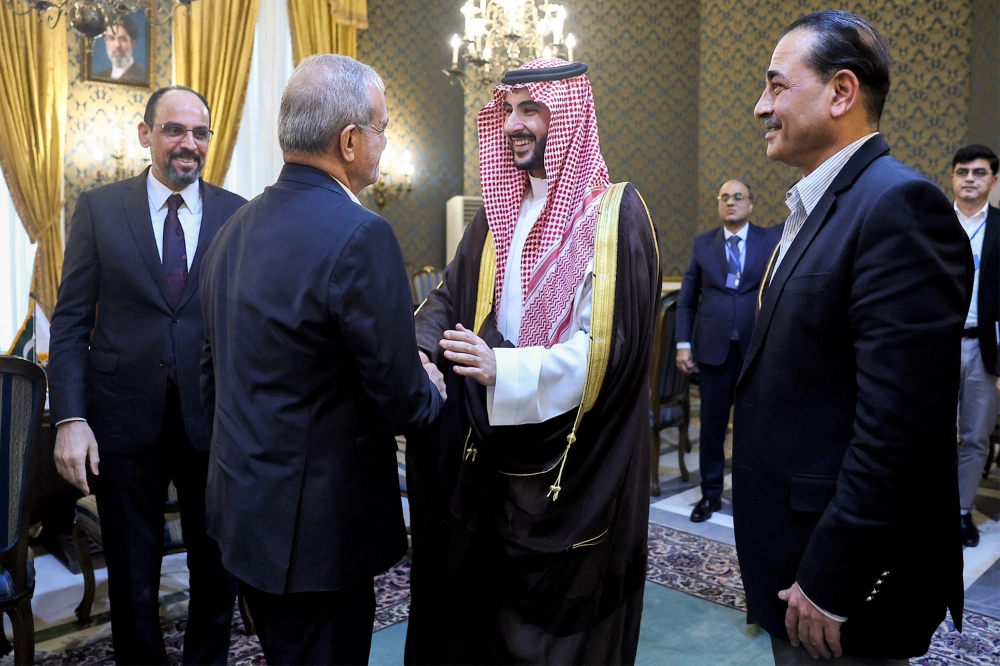
OCTOBER 30 — The ability of Saudi Arabia, Türkiye and Pakistan to meet Iranian leaders in Tehran on October 26, 2026, marks a potentially important turning point in Middle Eastern diplomacy.
It demonstrates that even when military tensions are mounting, the instruments of high diplomacy must never be abandoned.
Indeed, the greater the danger of war, the more indispensable diplomacy becomes.
The Mecca Joint Defence Agreement, established in August 2026, was conceived as a collective security arrangement. An attack against one member would be regarded as an attack against all three.
Yet its significance now extends beyond military deterrence.
By engaging Iran directly, the three countries have demonstrated that collective defence need not become collective confrontation.
This is the essence of high diplomacy: the ability to possess formidable military capabilities while retaining the political wisdom not to use them unnecessarily.
As Kaswar Klasra explained in his recent analysis in Global Asia, the Tehran meeting followed diplomatic consultations in Istanbul involving European and Middle Eastern representatives.
Both initiatives reflected growing recognition that regional security crises cannot be addressed separately.
The Tehran meeting was especially significant because of the seniority of its participants.
Saudi Defence Minister Prince Khalid bin Salman, Pakistan’s army chief Field Marshal Asim Munir and Türkiye’s intelligence chief Ibrahim Kalin represented three countries possessing considerable military, economic and strategic capabilities.
Their presence in Tehran was not merely ceremonial.
It represented a willingness to engage a country with which their strategic interests do not always coincide.
Saudi Arabia has endured repeated attacks from Yemen’s Iran-aligned Houthis. Türkiye remains a major Nato member. Pakistan possesses nuclear weapons and shares a sensitive border with Iran.
Yet all three recognise that military superiority cannot automatically produce political stability.
Military deterrence can prevent aggression. But diplomacy is necessary to prevent deterrence from deteriorating into uncontrolled confrontation.
The willingness of Tehran to receive the delegation is equally important.
Iran has repeatedly warned against renewed American and Israeli military operations.
Nevertheless, by opening its doors to the Mecca Pact representatives, Tehran demonstrated that communication with regional powers remains possible.
That opening must be preserved.
The significance of the meeting also lies in its potential to reshape the regional security architecture.
For decades, Middle Eastern security has been heavily influenced by external powers, especially the United States.
Yet the current conflict has revealed the limitations of relying overwhelmingly on external military guarantees.
Washington remains influential. But American involvement has not prevented the widening of hostilities or the disruption of energy supplies.
The Mecca Pact offers another possibility.
Saudi Arabia brings financial resources, energy influence and religious significance. Türkiye contributes military sophistication, defence technology and diplomatic reach.
Pakistan brings strategic depth, military experience and nuclear deterrence.
Together, these three medium sized powers possess substantial collective influence.
Their willingness to meet Iran suggests that regional powers may increasingly seek to manage their own security disputes.
Discussions surrounding a possible regional non-aggression framework could eventually provide the foundations for a more inclusive security arrangement.
Such an arrangement would not necessarily displace the United States.
Rather, it could broaden and deepen the diplomatic architecture through which regional security is maintained.
The economic implications are equally profound.
The Strait of Hormuz and the Bab el-Mandab are not merely regional waterways. They are indispensable arteries of international commerce.
Disruptions to oil, liquefied natural gas, shipping insurance and maritime transportation affect economies far beyond the Middle East.
Malaysia, Indonesia, Thailand, Japan, South Korea and China all have strong interests in restoring maritime stability.
For Asean, the consequences of continued confrontation are particularly serious.
Higher energy prices increase production costs.
Maritime disruptions affect supply chains. Rising insurance premiums undermine trade competitiveness.
A prolonged conflict could also complicate food security, especially through disruptions to fertiliser production and transportation.
Consequently, high diplomacy between the Mecca Pact and Iran is not a distant geopolitical spectacle.
It is directly relevant to the economic security of Southeast Asia.
Malaysia should therefore welcome the Tehran initiative and encourage its continuation.
Prime Minister Datuk Seri Anwar Ibrahim has consistently emphasised the importance of dialogue, international law and peaceful conflict resolution.
These principles should now translate into stronger diplomatic support for the regional peace initiatives undertaken by Saudi Arabia, Türkiye, Pakistan and Qatar.
Malaysia enjoys constructive relations with these countries while maintaining diplomatic relations with Iran.
This provides Kuala Lumpur with an opportunity to support confidence-building measures without positioning itself against any particular country.
Asean, under the Philippines’ chairmanship in 2026, should similarly recognise that developments in West Asia have direct implications for Southeast Asian prosperity.
The Asean Will must be demonstrated through practical diplomacy rather than expressions of concern alone.
Malaysia could encourage Asean consultations with the Mecca Pact countries, Iran and other relevant regional actors on maritime security, energy resilience and humanitarian protection.
Such engagement would reinforce rather than duplicate existing diplomatic efforts.
Nevertheless, the Tehran meeting should not be romanticised.
Previous diplomatic efforts between Washington and Tehran have failed to produce lasting peace.
Military confrontation has resumed. The Houthis continue to threaten regional security.
Washington and Tehran remain divided over sanctions, maritime restrictions and Iran’s nuclear programme.
High diplomacy must therefore be measured by results rather than ceremonial meetings.
The immediate priorities should include a sustained ceasefire, protection of commercial shipping, restraint against attacks on civilian infrastructure and the restoration of credible negotiations between Washington and Tehran.
There must also be a serious effort to address Yemen’s humanitarian catastrophe.
Without these measures, even the most impressive diplomatic gathering could become another missed opportunity.
Yet diplomacy cannot be judged solely by whether it produces an immediate comprehensive agreement.
Its first achievement may simply be preventing another round of escalation.
That is already valuable when the alternative could involve a much wider regional war.
The deeper lesson of the Tehran meeting is that military strength and diplomatic engagement are not mutually exclusive.
Indeed, military strength becomes more credible when accompanied by political restraint.
The Mecca Pact would diminish its own strategic relevance if it became merely another instrument of confrontation.
Conversely, it could acquire lasting international significance if it helps establish a regional security arrangement capable of preventing wars.
Iran, too, has much to gain from demonstrating that it can negotiate seriously with neighbouring powers.
For President Donald Trump and the Israeli leadership, the emergence of this diplomatic channel should also be recognised as an opportunity rather than an obstacle.
Ultimately, the importance of the Mecca Pact may not be determined by how many soldiers it can deploy or how sophisticated its military capabilities become.
Its greatest achievement could be its ability to prevent those capabilities from ever being used in a devastating regional war.
The meeting in Tehran is therefore more than a diplomatic gesture.
It is an important reminder that the highest expression of strategic power is not the capacity to wage war, but the wisdom to prevent one.
That is precisely why high diplomacy must prevail.
* Phar Kim Beng, PhD, is Professor of Asean Studies at the International Islamic University of Malaysia and Director of the Institute of International and Asean Studies (IINTAS).
** This is the personal opinion of the writer or publication and does not necessarily represent the views of Malay Mail.


