


OCTOBER 23 — Every morning, thousands of Malaysian parents send their children to school with one simple expectation: that they will return home safely. Yet recent incidents have raised an uncomfortable question. Are our schools truly safe, or are we simply waiting for another tragedy before taking action?
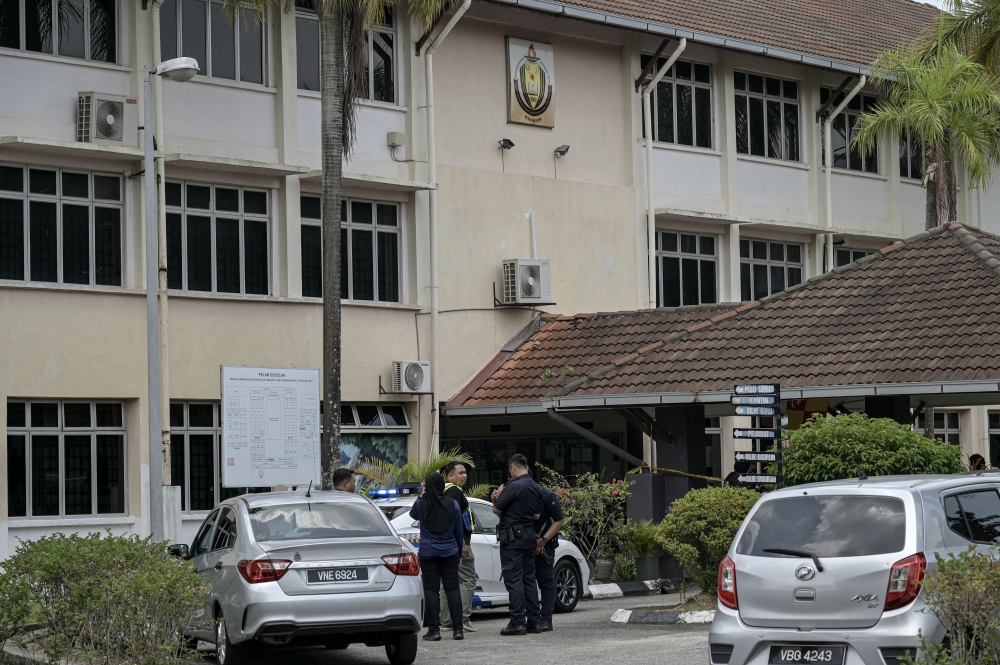
The reported death of a teenage girl at a school in Yong Peng, Johor, and the subsequent murder charge against a 16-year-old schoolmate shocked the nation. As the case remains before the courts, we must avoid speculation about the circumstances or motives. However, the tragedy should force us to examine a wider issue that deserves urgent attention: the emotional well-being of our students.
For too long, school safety has been associated with fences, security guards, CCTV cameras and disciplinary rules. These measures are important, but they cannot address every threat. Sometimes, the greatest danger begins with emotions that students struggle to understand or manage.
Our research reveals a troubling reality
This concern is supported by research we conducted at Universiti Utara Malaysia involving nearly 700 students aged 13 to 16 from 23 secondary schools. Our research found that bullying takes different forms. It is not limited to physical aggression such as kicking or hitting. Students also experience verbal humiliation, rumours and harmful digital messages intended to upset or provoke others. These findings challenge the assumption that a school is safe simply because physical fights are uncommon.
A student may appear cheerful in class while silently experiencing rejection, humiliation or intimidation. Another may use bullying to establish dominance over peers. Our research also highlights that the relationship between self-esteem and bullying is not straightforward. Some students who engage in bullying may feel powerful rather than insecure. This tells us something important. Bullying is not merely a discipline problem. It is also an issue of relationships, emotions, empathy and respect.
We teach students to pass exams, but can they manage rejection? Malaysian schools place considerable emphasis on academic achievement. Students are taught to solve mathematical problems, understand scientific concepts and prepare for examinations. But how often do we teach them to handle anger, jealousy, embarrassment or rejection? These emotions are normal, particularly during adolescence. What matters is how students respond to them. Feeling rejected does not give anyone the right to threaten another person. Being angry does not justify violence. Feeling powerful does not justify humiliation. Emotional control should therefore become an essential part of everyday school life, not merely a topic discussed after something terrible happens.
Values must be practised, not memorised
Moral Education and Islamic Education play important roles in developing students’ values. However, learning about kindness and respect is different from practising them. Schools should make greater use of co-curricular activities, clubs and uniformed bodies to develop emotional awareness and positive relationships. Students could participate in role-playing activities that teach them how to respond to rejection, resolve disagreements and manage anger. Peer mentoring programmes could support younger students, while uniformed bodies could help promote awareness of bullying and encourage safe reporting. More importantly, students must know that speaking up will lead to protection, not further humiliation.
School safety is everyone’s responsibility
The Ministry of Education, state education departments and district education offices must strengthen school safety plans by addressing both physical and emotional risks. Schools need confidential reporting systems, adequate counselling support and teachers who can recognise early warning signs. Parents must also pay attention to changes in their children’s behaviour, friendships and online interactions. Sometimes, a meaningful conversation can reveal what school reports cannot.
Our research reminds us that prevention must begin before bullying becomes normalised or emotional distress goes unnoticed. Malaysia does not need another tragedy to remind us that children deserve protection. A truly safe school is not one where incidents are simply absent from official reports. It is one where every child feels respected, heard and protected. The real measure of school safety is not how quickly we respond after a tragedy, but how seriously we work to prevent one.
* Assoc. Prof. Dr. Nurulwahida Azid@Aziz and Assoc. Prof. Dr. Muhammad Noor Abdul Aziz are academics at the School of Education, Universiti Utara Malaysia. This article draws on their research on bullying among Malaysian adolescents, published in the International Journal of Evaluation and Research in Education (2023) and Perspectives of Science and Education (2022).
** This is the personal opinion of the writer or publication and does not necessarily represent the views of Malay Mail.


