


OCTOBER 15 — Every day, Malaysians throw away about 39,000 tonnes of solid waste, more than our landfills can comfortably absorb. In 2024, the country generated 15.2 million tonnes of solid waste, and that figure is expected to climb to 17.03 million tonnes by 2035. At this rate, our landfills could reach full capacity by 2041. Much of this waste never needed to be buried. SWCorp estimates that nearly 40 per cent of what Malaysians send to landfill has recycling potential. Food waste alone makes up 44.5 per cent of household waste, and instead of being composted, it rots in landfills.
To deal with the pile-up, the government has turned to waste-to-energy (WtE) incinerators. The Jeram plant in Kuala Selangor, for example, can process up to 1,700 tonnes of waste a day and generate 26MW of electricity. But burning waste is only one option, and it should not be the first one.
Safety and procedure
Modern incinerators are far cleaner than older ones. That said, it’s important to note that their safety depends on careful operation. Operators must keep temperatures above 850°C to break down toxic dioxins and furans, and this must be maintained every day for the life of the plant. It is no surprise that residents near proposed sites, such as Rawang, have raised concerns about safety, health, the environment and traffic.
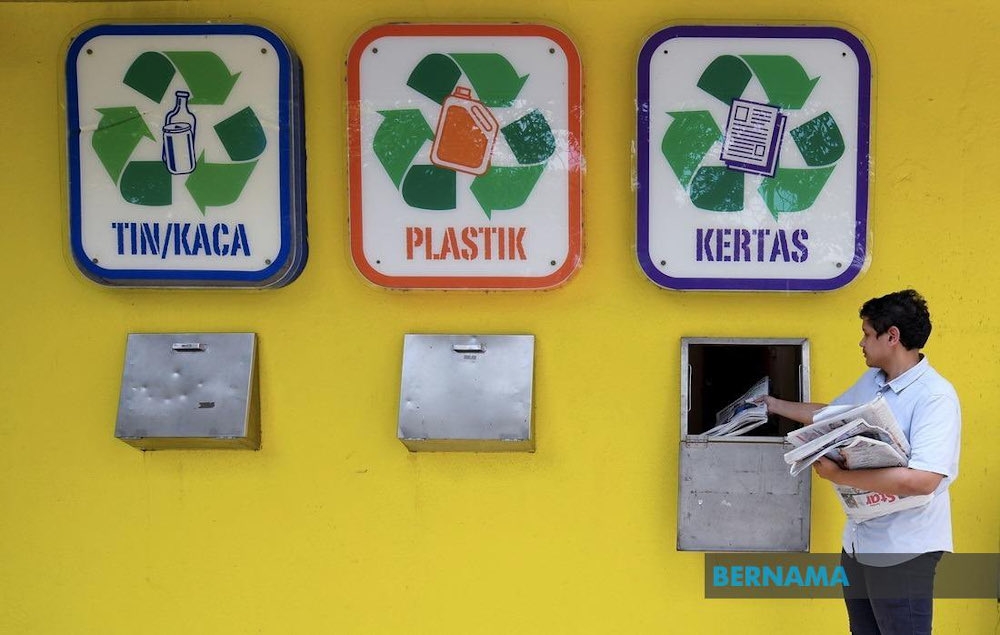
Waste-to-resource approaches carry far less risk. Composting food scraps, sorting paper or turning palm residue into fertiliser does not involve a smokestack. However, they do depend on one basic procedure: separating waste at source. Mixed, wet rubbish is difficult to recycle and difficult to burn. Even at Jeram, household waste must be dried for seven days before it can be incinerated. The government’s decision to make recycling facilities compulsory at shopping malls is a step in the right direction, and the same thinking should be applied to housing areas, wet markets and food courts.
Practical and profitable
The good news is that Malaysia already has a working recycling industry. In 2024, around 2.04 million tonnes of plastic, 1.77 million tonnes of metal and 1.49 million tonnes of paper were collected for recycling.
The bigger opportunity lies in agriculture. Malaysia produces roughly 60 million tonnes of biomass each year, much of it from the palm oil industry. Using fronds, trunks and empty fruit bunches as mulch has been estimated to save plantations up to RM450 per hectare a year in fertiliser costs. Smaller businesses cannot afford processing plants on their own, but they can share facilities through cooperatives, industry associations and universities.
The financial case is just as clear. Incinerators are expensive to build. The proposed Broga incinerator, for instance, was estimated to cost RM1.5 billion for a capacity of 1,500 tonnes a day. Once built, an incinerator needs a steady supply of waste to pay off its debt, which works against efforts to reduce and recycle. Recovered materials, on the other hand, can be sold. A manufacturer losing 5 per cent of RM500,000 worth of raw materials could save RM12,500 a year simply by halving that loss, without making a single extra sale.
What needs to happen
As Malaysia moves towards a circular economy, the question is not whether we need waste-to-energy plants; it’s whether we can afford to burn materials that still have value.
Incineration has a role, but only for residual waste that cannot be reused. Malaysia’s recycling rate reached 37.9 per cent in 2024, still short of the 40 per cent target set for 2025. To close that gap, we must enforce separation at source, support businesses that recover materials, and treat waste as a resource first and fuel last.
Our rubbish is not just a disposal problem. It is a resource we have yet to use properly.
* The author is affiliated with the AGILE Research Group at the Faculty of Business and Communication, Universiti Malaysia Perlis.
** This is the personal opinion of the writer or publication and does not necessarily represent the views of Malay Mail.


