


OCTOBER 2 — Geopolitics was once understood principally through maps. Mountains protected states.
Oceans separated them. Rivers facilitated commerce. Strategic straits determined which powers could project their naval influence and which could not.
These realities have not disappeared. But geopolitics in the twenty-first century has become considerably more systemic.
The central characteristic of the contemporary international order is not merely competition between major powers. It is the extraordinary density of the connections between them.
Energy, semiconductors, artificial intelligence, shipping, undersea cables, satellites, rare earths, financial markets and supply chains now interact continuously.
A disruption in one part of this system can migrate rapidly into another.
This is what makes the contemporary world complex.
The Strait of Hormuz provides the clearest traditional example. It is geographically narrow but economically enormous.
A serious disruption there does not remain a Middle Eastern security problem. It can affect energy supplies, insurance premiums, shipping costs, inflation and ultimately household expenditure thousands of kilometres away.
The Red Sea and Bab al-Mandeb perform a similar function.
When maritime insecurity intensifies there, vessels may have to reconsider routes through the Suez Canal and around the Cape of Good Hope.
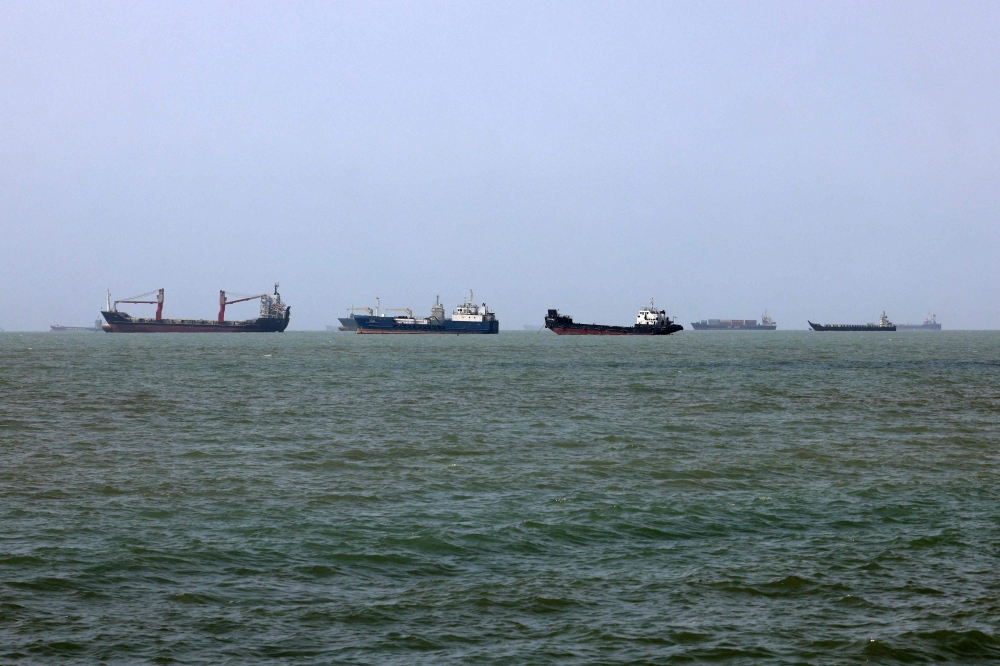
Geography becomes economics almost instantaneously.
But the same principle now applies to the Taiwan Strait.
Taiwan matters strategically because of its geographical position in the Western Pacific.
Yet its significance is magnified by the extraordinary concentration of advanced semiconductor manufacturing there, especially through Taiwan Semiconductor Manufacturing Company (TSMC).
Semiconductors are no longer merely components inside computers.
They are embedded in automobiles, telecommunications equipment, industrial machinery, medical systems, data centres, weapons platforms and increasingly the vast computational infrastructure supporting artificial intelligence.
Consequently, a serious Taiwan Strait crisis would not merely constitute a military confrontation between China, Taiwan and potentially the United States and its allies.
It could become a systemic technological shock.
This is the defining characteristic of modern geopolitics: interdependence has itself become geopolitical.
Supply chains demonstrate the point.
For decades, globalisation was constructed around efficiency.
Companies searched for the cheapest suppliers, fastest transportation networks and most efficient production centres.
Geopolitics is forcing governments and corporations to reconsider this logic.
Efficiency must increasingly coexist with resilience.
Terms such as “friend-shoring”, “near-shoring”, “de-risking” and supply-chain diversification have entered the vocabulary of international economics because governments have rediscovered something strategists have always understood: excessive dependence creates vulnerability.
The Covid-19 pandemic demonstrated this brutally.
The subsequent intensification of US-China technological competition reinforced the lesson.
Artificial intelligence now introduces another dimension.
AI requires enormous computing power. Computing power requires advanced chips. Advanced chips depend upon sophisticated fabrication plants, specialised machinery, enormous electricity supplies and highly skilled engineers.
AI therefore appears virtual but remains profoundly physical.
Behind every powerful AI model lies an infrastructure of semiconductor fabrication, data centres, electricity grids, cooling systems, submarine cables and mineral supply chains.
The geopolitics of AI consequently cannot be separated from the geopolitics of energy and semiconductors.
Neither can it be separated from data.
Countries increasingly recognise that whoever controls computational infrastructure can possess considerable economic and strategic influence.
Questions of AI sovereignty, cybersecurity and data security are therefore moving towards the centre of national security policy.
Yet another layer is financial.
Modern markets react extraordinarily quickly to geopolitical instability.
Expectations about oil shortages, shipping interruptions or semiconductor disruptions can move markets before the physical shortage itself becomes severe.
Geopolitics therefore operates simultaneously across geography, technology, psychology and expectations.
This is why linear thinking is increasingly inadequate.
A conflict does not necessarily produce one consequence. It produces chains of consequences.
A missile attack on energy infrastructure can affect oil markets. Higher energy costs can increase transportation expenses.
Transportation expenses affect food and manufacturing costs.
These pressures can contribute to inflation. Inflation can produce political dissatisfaction.
One geopolitical event can therefore travel through several systems before eventually appearing in domestic politics.
South-east Asia sits directly inside these overlapping networks.
Asean is positioned between the Indian and Pacific Oceans and close to several of the world’s most important maritime routes.
The Strait of Malacca remains one of the great arteries of global commerce. The South China Sea connects major industrial economies.
Singapore is a global financial and maritime centre. Malaysia and Vietnam occupy increasingly important positions in semiconductor and electronics supply chains.
Indonesia possesses critical mineral resources.
Asean therefore cannot regard geopolitics as something occurring elsewhere.
Nor should Asean interpret every development exclusively through the framework of US-China rivalry.
The international system is becoming increasingly polytropous. States are spreading and deepening their strategic options rather than simply choosing one camp.
Medium powers are strengthening relations simultaneously with Washington, Beijing, Tokyo, Brussels, New Delhi, Riyadh and other centres of influence.
This is not necessarily classical hedging.
It reflects recognition that no single relationship can provide economic prosperity, technological security, energy resilience and diplomatic protection simultaneously.
Malaysia and Asean must understand this systemic characteristic of contemporary geopolitics.
The challenge is not to predict every crisis. That is impossible.
The objective should be to build resilience across multiple systems before crises occur.
Energy diversification matters.
Semiconductor capacity matters. Food security matters. Cybersecurity matters. Maritime awareness matters. AI capability matters.
Diplomatic relationships matter. Most importantly, institutional adaptability matters.
Asean’s traditional strength has been its capacity to keep different powers engaged without allowing the region to become completely absorbed into their rivalries.
That principle becomes even more valuable in a complex world.
Centrality, however, cannot simply mean sitting in the middle.
It must mean understanding the connections between systems and possessing sufficient diplomatic, economic and technological capacity to navigate them.
The geopolitics of the twenty-first century is therefore not merely about controlling territory. It is about understanding networks.
Power belongs not only to countries capable of projecting military force, but increasingly to those that can secure energy, manufacture critical technologies, protect data, maintain resilient supply chains and preserve strategic relationships across competing centres of power.
Geography still matters enormously.
But geography has become connected to everything else.
That is what makes the contemporary international system simultaneously more interconnected, more powerful and considerably more fragile.
* Phar Kim Beng is professor of Asean Studies and director at the Institute of International and Asean Studies, International Islamic University Malaysia.
** This is the personal opinion of the writers or publication and does not necessarily represent the views of Malay Mail


