


SEPTEMBER 30 — “How old are you?”
It sounds like a simple question. But when it is directed at an adult, particularly a woman, it is often accompanied by a small disclaimer: “If you don’t mind me asking…”
That little disclaimer says more than we might realise. It suggests that we already understand age can be sensitive.
While some people may hesitate before answering or simply decline to say, others, like me, might turn the question into a joke.
Rather than simply giving a number, I sometimes say that I was born in the same year as Taylor Swift. Go figure!
Why has age become something that some of us feel the need to hide? A number is simply a measure of how many years we have lived.
However, it can carry expectations about how we should look, behave, and even what we should have achieved in life.
In Malaysia, we have a particularly interesting term for older adults: Warga Emas. Literally associated with “golden” people, the expression conveys a sense of value and respect.
Yet, the way we think and talk about ageing does not always reflect this positive idea.
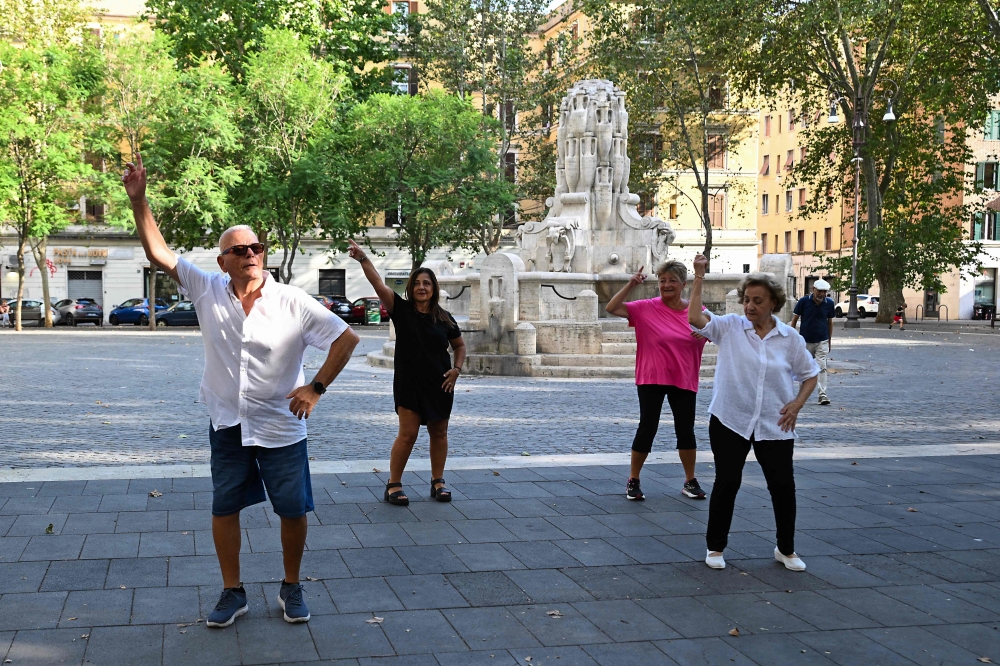
Growing older can still be associated with decline, dependency, reduced attractiveness, or becoming less relevant.
Perhaps, this is also why some people hesitate to reveal their age. They may not be embarrassed by the years they have lived but may simply be uncomfortable with the assumptions society attaches to those years.
I was reminded of this recently when I heard about an older woman’s uncomfortable experience on public transport.
She is in her sixties, which makes her a senior citizen on paper. She is therefore entitled to senior citizen privileges, such as discounted public transport fares and priority seats.
Yet she looks considerably younger than her age. When this woman took a priority seat she was entitled to use, she received uncomfortable attention from other passengers.
A train service worker also checked her identification card and then looked at her twice. It seemed that her appearance did not immediately match their expectations of what a senior citizen should look like, or perhaps what someone receiving senior privileges should look like.
The incident made me realise that we do not merely ask people how old they are. We also expect their appearance to confirm the answer.
So, what does “old” actually look like? We seem to carry an unwritten picture of what an older person is supposed to look like: grey hair, wrinkles, modest clothing, slower movements, hunched back posture, and a walking stick.
These visual cues can become so strongly associated with ageing that when someone does not fit them, we notice.
We may even find ourselves surprised when a person tells us their age because they do not look the way we expect someone of that age to look.
Nevertheless, an older person can dye their hair, wear bright colours, travel independently, or spend hours on social media.
A 68-year-old can run a 15km marathon, while a 75-year-old can be perfectly comfortable with TikTok. None of these things make them less old.
This becomes especially interesting when society encourages people to look younger than they are. “Wow, you don’t look your age! What’s your secret?” is often considered one of the nicest compliments someone can receive. But why is looking younger automatically considered better?
We rarely hear someone say, “You look exactly your age! That’s awesome!”
Here lies a curious contradiction. We encourage people to resist looking old, yet when someone who is genuinely older does not look old enough, we may find it difficult to recognise them as such.
As the United Nations marks October 1 as the International Day of Older Persons, it is a timely reminder to think about what it means to create a more inclusive society for people of different ages.
Inclusivity is not only about providing services or privileges to older people. It also means recognising that a number should not determine how we see a person.
Therefore, the question should not be, “Why doesn’t this person look their age?” But we should ask ourselves: “Why do we expect age to look a certain way?”
* Dr Cherish How is a senior lecturer from the Faculty of Languages and Linguistics, Universiti Malaya, and can be reached at [email protected]
** This is the personal opinion of the writers or publication and does not necessarily represent the views of Malay Mail.


