


SEPT 15 — Every great dream sounds foolish before it sounds inevitable.
In 2001, Tony Fernandes and Kamarudin Meranun bought AirAsia for RM1. It had two aircraft, about RM40 million in debt and no obvious reason to survive. Tony came from the music business, not aviation. The world was still reeling from September 11. Airlines were retreating, investors were frightened, and the sensible advice would have been to walk away.
The naysayers were there from the beginning. They said a low-cost airline would never work here. Southeast Asia was too fragmented, too regulated and too accustomed to flying being a privilege. Ordinary people, they assumed, did not constitute an aviation market.
AirAsia proved that ordinary people were the market.
Its promise — Now Everyone Can Fly — was not merely an advertising slogan. It was a declaration that the sky should not belong only to the wealthy, the corporate traveller or those fortunate enough to live near a major capital.
The red aircraft made distance smaller.
A Sabahan student could study in Kuala Lumpur and still return home for Kaamatan. A young worker could take a job in Singapore. A small trader could reach Bangkok or Jakarta. Grandparents could meet grandchildren without sacrificing months of savings. Young Malaysians who had never imagined leaving the country could suddenly see Bali, Hanoi or Phuket with their own eyes.
By 2024, AirAsia had carried more than 800 million passengers and connected over 130 destinations. Behind that extraordinary number are hundreds of millions of private stories: first flights, first jobs, first holidays, marriages, funerals, reunions and last goodbyes.
AirAsia did not invent aspiration in Asean. It gave aspiration a boarding pass.
Every flight also carries far more than passengers. It carries hotel bookings, restaurant meals, taxi rides, tour guides, market traders, dive instructors and the incomes of small businesses. When a new route opens, a town can become a destination and a destination can become an economy.
The International Air Transport Association estimates that aviation and aviation-enabled tourism support US$14.4 billion in Malaysian GDP and 659,400 jobs. Tourism supported by aviation alone accounts for US$4.7 billion and 311,700 jobs. These are industry-wide figures, not AirAsia’s alone, but it would be absurd to discuss Malaysian aviation without acknowledging the airline that made affordable connectivity its life’s work.
Perhaps AirAsia’s most beautiful legacy, however, is not found in its passenger numbers. It is found in its people.
The company became a place where the uniform you entered with did not necessarily determine the uniform in which you would finish. Its own careers platform proudly points to cabin crew who became captains, executives who became chief executives and ramp agents who became data analysts.
Senior First Officer Kugan Tangiisuran began in dispatch before passing the cadet pilot examination and earning his place in the cockpit. Captain Suwapich Wongwiriyawanich started as cabin crew and rose to become Thailand’s first female captain of an Airbus A330.
That is not corporate jargon about “human capital”. That is a human being standing in an aircraft cabin, looking through the cockpit door and quietly deciding: one day, I will sit there.
And then doing it.
AirAsia welcomed its first female pilot in 2002. Today, women constitute 8.3 per cent of its flight crew, compared with a global industry average of about 5 per cent to 6 per cent. In an industry where girls were once encouraged to serve the coffee but rarely imagined flying the aircraft, AirAsia helped change what a pilot could look like.
Think of what that means to a young girl boarding an aircraft and hearing a woman’s voice from the flight deck. Before a dream can be pursued, it must first become imaginable.
There have always been naysayers.
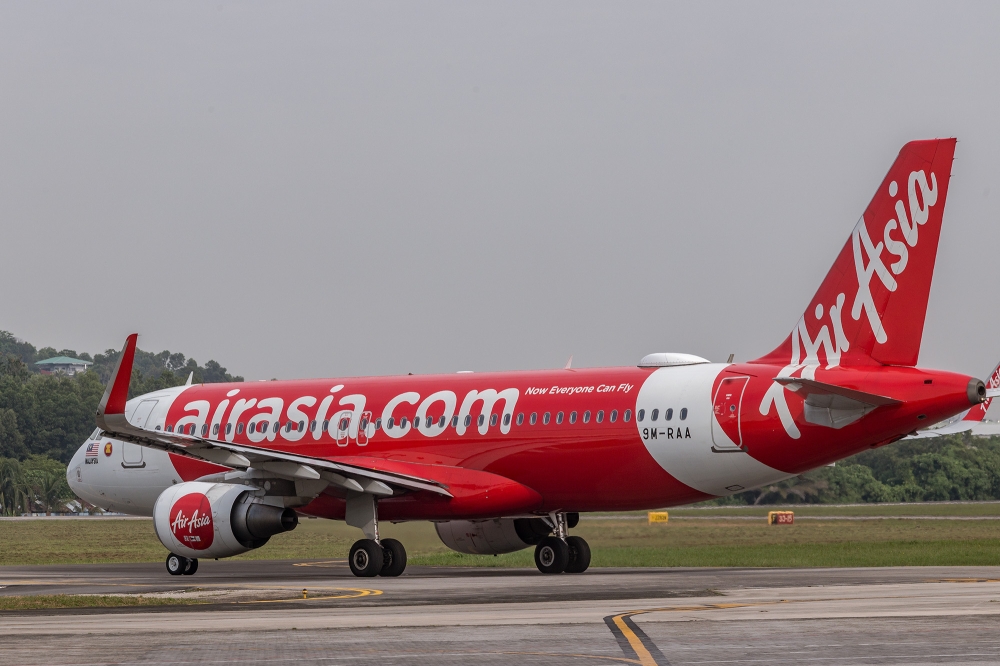
They appeared when AirAsia had two aircraft. They returned whenever fuel prices rose, when new routes were announced, when the group expanded across borders and when critics insisted that a Malaysian company could not build a brand recognised throughout Asia.
Some criticism was lazy. Some of it was justified.
Passengers remember cancellations, confusing fees, chatbots that seemed impossible to escape and pandemic refunds that took far too long. In the first half of 2021, AirAsia accounted for 41.4 per cent of complaints registered with the Malaysian Aviation Commission. People who had paid for flights that never departed were right to be angry. A travel credit was not always an adequate substitute for cash needed during a crisis.
AirAsia must own those failures. Affordable travel should never mean inexpensive empathy. Low fares do not excuse poor communication, and a company built around ordinary people must never make those people feel invisible.
But context is not an excuse, and an excuse is not context. We must be intelligent enough to know the difference.
During the pandemic, governments did not simply weaken demand for aviation. They made flying largely impossible. At one point, approximately 90 per cent of AirAsia’s fleet of more than 200 aircraft was grounded. The passengers disappeared, but aircraft leases, maintenance obligations, systems and salaries did not.
The people inside AirAsia were trying to preserve an airline while its aircraft were forbidden to earn money.
They endured pay cuts, uncertainty, painful retrenchments and the possibility that careers built over decades might vanish. Yet engineers continued maintaining aircraft. Pilots preserved their qualifications. Operations teams planned for skies they could not know would reopen. Thousands kept faith with a dream whose physical manifestation was sitting silently on the tarmac.
When the skies finally reopened, normality did not return with them. Aircraft had to be reactivated, crews retrained and networks rebuilt. Engines and spare parts were constrained, while the debt accumulated during the pandemic remained.
Then came another blow. In the second quarter of 2026, AirAsia said its average jet-fuel price reached US$183 a barrel — 58 per cent higher than a year earlier. Yet it still recorded RM5.1 billion in quarterly revenue and positive earnings before interest, taxes, depreciation and amortisation of RM442.6 million. It recovered approximately 70 per cent of the increased fuel cost through pricing and cost reductions, while non-fuel unit costs fell by 7 per cent. Its Malaysian and Cambodian short-haul operations remained profitable.
The financial danger is nevertheless real. AirAsia is seeking up to US$1 billion in international debt funding and RM700 million in local credit facilities, primarily to refinance and consolidate existing debt. Investors are entitled to demand transparency, discipline, stronger governance and proper influence over how their capital is deployed.
This is not an argument for a blank cheque. AirAsia should not be supported because Tony Fernandes is famous, persuasive or sentimental about the company he built.
It should be judged on whether a valuable operating business is carrying a balance sheet damaged by extraordinary events — and whether it can be repaired on commercially responsible terms.
But those making that judgement must value everything, not merely the liabilities.
They must value the pilots who began as cabin crew, the dispatchers who earned their wings, the women who entered cockpits once closed to them, and the thousands of families whose livelihoods depend upon the red aircraft taking off tomorrow morning.
They must value the competition AirAsia created, the fares it forced down, the destinations it opened and the Malaysian name it carried across the world.
An airline is not kept alive by slogans. It is kept alive at four in the morning by people checking engines, loading bags, studying weather, calming passengers and making hundreds of decisions correctly so that strangers may arrive safely in the arms of those waiting for them.
Those people have fought to keep the dream alive.
We should demand a better AirAsia: more reliable, more accountable, easier to reach and humbler when customers are hurt. But wanting AirAsia to become better is profoundly different from wanting it to fail.
Every red tail in the sky is easy to take for granted until one day it is no longer there. Then its absence appears everywhere: in airport rosters, hotel ledgers, empty restaurant tables, student budgets, small-town businesses and arrival halls where someone was meant to walk through the door.
Dreams require balance sheets. But balance sheets exist to finance dreams.
For nearly a quarter of a century, AirAsia told the people of Asean that everyone could fly. Perhaps, at its most difficult hour, it is our turn to tell the thousands who kept those aircraft flying:
Your work mattered. Your struggle mattered. And your dream still matters.
* This is the personal opinion of the writers or publication and does not necessarily represent the views of Malay Mail.


