


AUGUST 26 — Our jobless rate has never looked better. That is exactly why we are missing what is happening to a generation of graduates. Malaysia’s unemployment rate is 2.9 per cent, our lowest in a decade. As of 2026 Q1, about 1.93 million (or 35.2 per cent) Malaysians with tertiary qualifications were working in jobs that do not require their level of qualification. More than one in three degree or diploma holders are in jobs which don’t need their qualification level. They are underemployed.
Our graduates are not jobless. Graduate unemployment is only around 3 per cent, and universities report enviable employability rates of more than 90 per cent. The harder question is what kind of work they find. Only a quarter of jobs in Malaysia are classified as skilled. The Khazanah Research Institute think tank found about half of graduates overqualified for their jobs, with two-thirds with salaries below RM2,000 a month. We do not have a shortage of graduates. We have a shortage of jobs worth graduating for.
Let’s digress to China’s sobering situation. China will produce 12.7 million graduates this year. Its youth unemployment hit 17.9 per cent last month after peaking at 18.9 per cent last August, when a record cohort graduated at once. One response has been a growing rejection of the competition, reflected in “tang ping” (literally “lying flat”) and the emergence of the “full-time child”, who takes an allowance from parents rather than searching for work. When credentials expand faster than the jobs that reward them, young people eventually stop searching for jobs.
Malaysia’s problem is not yet as severe as China’s, but the same underlying process may be operating, that is, the number of graduates is growing faster than the supply of suitable graduate-level jobs. Ours is probably just better hidden. Our young people may not have given up searching for work. Instead, many may be quietly working in jobs that never required a degree in the first place.
Artificial intelligence could make the entry-level jobs problem even worse. Stanford researchers tracking payroll data found that employment among workers aged 22 to 25 in AI-exposed jobs is 19 per cent below its expected level. The decline appears to come mainly from employers hiring fewer young workers, rather than laying off those already employed. AI is not taking the jobs. It is taking the first rung, i.e. jobs that junior employees once did to become seniors. TalentCorp already counts 620,000 Malaysian jobs as highly impacted.
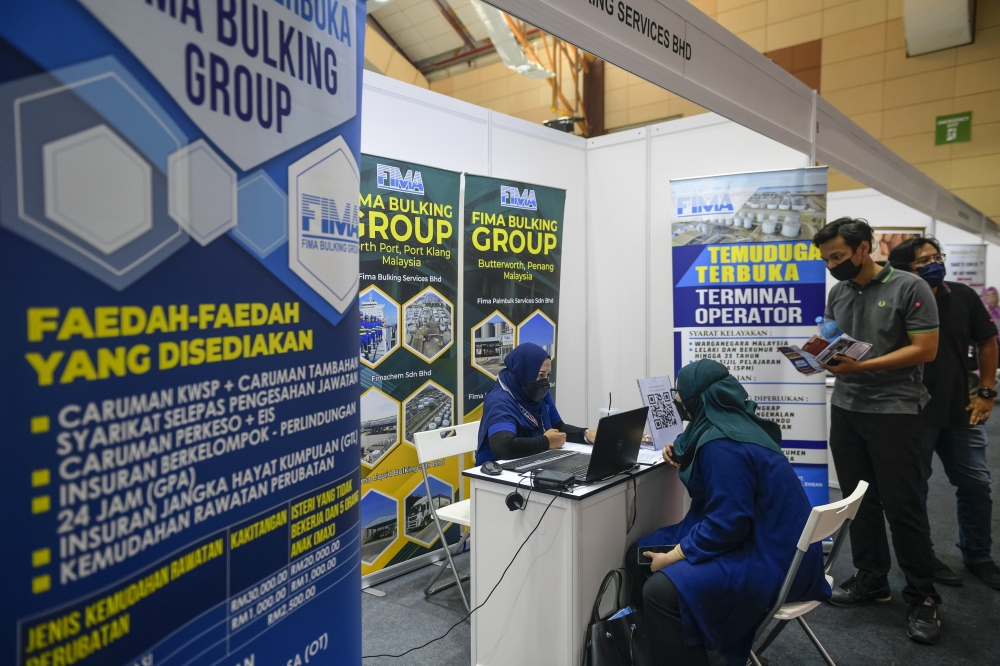
Authorities and policymakers should therefore look beyond the overall employment numbers and pay closer attention to the quality of the jobs being created. The 13th Malaysia Plan promises 1.2 million new jobs, but the more important question is how many of these will be skilled, well-paid positions that make meaningful use of workers’ qualifications. Graduate underemployment deserves the same policy attention as graduate employability. Better data are needed to show which fields and institutions face the most severe qualification — job mismatches.
Universities need to adapt at an even faster pace with a labour market increasingly being reshaped by AI. This means offering shorter, stackable credentials while placing greater emphasis on skills that remain distinctly human, such as judgment, communication and working with people. TVET should likewise be expanded where it provides clear pathways into skilled and well-paid work, rather than simply directing more young people into lower-cost labour. The question is no longer whether our young people can find work. It is whether the work is worth the years they spend preparing for it.
* Soon Jan Jan is a senior research fellow at the Economic and Financial Policy Institute, Universiti Utara Malaysia.
** This is the personal opinion of the writer or publication and does not necessarily represent the views of Malay Mail.


