


OCTOBER 10 — A government that tells people to stay indoors while pollution crosses its borders owes them more than another advisory. It owes them a legal strategy that makes those responsible answer for the damage. Malaysia should begin assembling cases against haze polluters now and put a firm deadline on legislation capable of reaching them.
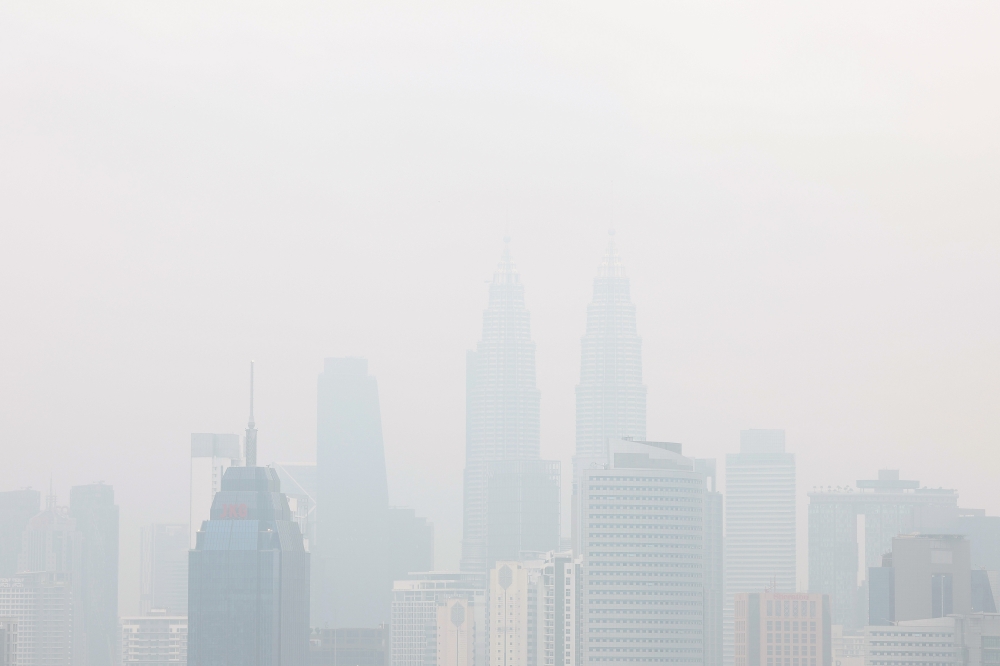
The factual starting point matters. In a statement reported on September 30 and reproduced by Nadma on October 1, 2026, the Department of Environment attributed Malaysia’s haze to smoke from hotspots in Kalimantan and central and southern Sumatra. Kuala Lumpur was among the places reporting unhealthy air quality. That supports investigation of a transboundary source; it does not establish the guilt of any particular company.
The next task is to identify who controlled the affected land, what they did or failed to do, and whether their conduct caused the pollution reaching Malaysia. An accusation against an entire country will never substitute for a properly constructed case against those legally responsible.
Malaysia should insist that Indonesia fulfil its international obligations. It should pursue any Malaysian corporate involvement with equal determination. A Malaysian connection must never become a reason to soften an investigation.
The Asean Agreement on Transboundary Haze Pollution already supplies a legal basis for demanding action. Article 3(1) recognises responsibility for preventing activities within a state’s jurisdiction or control from harming neighbouring environments and human health. Article 4 requires cooperation and domestic implementation. Crucially, Article 4(2) requires a state from which haze originates to respond promptly to affected states’ requests for relevant information or consultations. Article 9 addresses prevention and control of fires.
Putrajaya should invoke these provisions formally, requesting concession maps, operator identities, fire-control records and enforcement outcomes. Each request should specify a proposed response date, followed by a public account of what was supplied and what remains outstanding, subject to legitimate investigative confidentiality. Diplomatic correspondence should produce evidence and corrective action.
International law also reaches beyond the treaty. In Pulp Mills on the River Uruguay in 2010, the International Court of Justice explained the duty of due diligence to prevent significant transboundary environmental damage. This is not automatic state liability whenever smoke crosses a border. The inquiry concerns whether the state took the preventive measures reasonably required of it. That distinction makes scrutiny of regulation and enforcement essential.
Malaysia should ask precise questions. Were known fire risks addressed? Were operators supervised? Were credible warnings acted upon? Where evidence establishes a breach of international obligations and resulting compensable harm, Malaysia should pursue a properly quantified claim for reparation, subject to the applicable rules on bringing that claim.
Domestic legislation must proceed alongside that effort. On September 25, 2026, Bernama reported that the Natural Resources and Environmental Sustainability Ministry was examining mechanisms for a specific transboundary haze law, including Singapore’s approach. That report described a proposal under examination. The public is entitled to a drafting timetable and a parliamentary deadline.
Singapore’s Transboundary Haze Pollution Act 2014 provides a concrete starting point. Section 4 expressly extends to overseas conduct causing or contributing to haze pollution in Singapore. Sections 5 and 6 provide for criminal and civil liability. On conviction for an offence under section 5(1), section 5(2)(a) permits a basic fine of up to S$100,000 for each day or part of a day of qualifying haze pollution. Section 5(5) imposes the applicable S$2 million aggregate ceiling. Sections 9 and 10 provide preventive-notice and information-gathering powers.
Malaysia should design its own law around demonstrable harm within Malaysia, with clearly defined offences, fair defences and effective civil remedies. Penalties should reflect the gravity and duration of the offence and remove its economic advantage. A fine that can be comfortably absorbed as an operating expense offers little deterrence.
Corporate responsibility must extend to the people and entities whose own conduct warrants it. The proposed law should address parent companies that direct or knowingly condone harmful operations, and directors whose consent, connivance or culpable neglect is proved. Liability should follow evidence of responsibility. Share ownership or a position on an organisation chart should not, by itself, establish guilt.
Article 7(1) of the Federal Constitution prohibits punishment for conduct that was not punishable when it occurred, and heavier punishment than the law then prescribed. New haze offences must respect that protection. Current conduct should be assessed under laws already applicable to it. The urgency of the crisis requires disciplined lawmaking and cases capable of surviving judicial scrutiny.
A statute will accomplish little without an enforcement plan. Singapore’s experience is instructive: in a parliamentary reply dated 13 September 2021, its government said legal notices had been issued to six Indonesian companies in connection with the 2015 haze. Two cases had been closed following information supplied; investigations into four remained open at that time. Legislation does not remove the difficulty of obtaining evidence across borders.
Malaysia should therefore establish a permanent investigative team combining environmental scientists, corporate investigators and government lawyers. Its work should connect verified fire locations with land control, operational decisions, smoke movement and harm in Malaysia. Satellite observations must be corroborated. The Department of Environment itself explains that hotspot detection can produce false indications and can be obstructed by cloud cover.
Investigators should preserve relevant records immediately and examine competing explanations, including domestic pollution. They should identify defendants against whom proceedings can realistically be brought and assets against which any judgment could lawfully be enforced. Malaysia should seek cooperation with Indonesian authorities and counsel for evidence and proceedings there. Investigative work in Indonesia should proceed through lawful arrangements that respect its sovereignty.
Compensation must become a central objective. The proposed statute should expressly allow recovery of proven medical expenses, lost earnings and other defined losses caused by the pollution. It should also provide a lawful route for recovering reasonable public expenditure on emergency response and treatment. Collective claims procedures and litigation support should make credible cases affordable for ordinary people.
The government should begin recording those losses now. Hospitals and public agencies should preserve attributable expenditure; affected businesses and individuals should retain evidence of their losses. Every claim must confront causation, competing sources and the danger of double recovery. A defensible account of damage will carry more weight than an inflated headline figure.
Commercial consequences should reinforce liability. Malaysia should legislate proportionate public-procurement exclusions for companies found responsible for serious haze offences, with notice, review and clear conditions for reinstatement. It should require relevant corporate disclosures about overseas fire risks and measures taken to control them. Public money should not reward businesses that repeatedly disregard enforceable environmental duties.
The same seriousness must apply at home. Section 29A of the Environmental Quality Act 1974 prohibits open burning, subject to the statutory framework and exclusions. Malaysia should enforce its domestic controls rigorously while pursuing transboundary sources. Credibility requires both.
ASEAN’s enforcement arrangements also need strengthening. Article 27 of the haze agreement provides for settlement of disputes through consultation or negotiation. It does not itself create a compulsory judicial route. Malaysia should propose an additional binding instrument providing independent fact-finding, compliance deadlines and arbitration accepted by participating states.
Nor should ministers promise an effortless lawsuit at the International Court of Justice. Its jurisdiction in contentious cases rests on state consent. A viable jurisdictional basis must be established. Malaysia should assess that route seriously while pursuing the evidence, domestic proceedings and negotiated remedies available to it.
The government should announce three deadlines: within 14 days, establish the investigative team and issue formal treaty requests; within 30 days, publish a legislative consultation paper and begin systematic loss documentation; within 90 days, table a bill accompanied by an enforcement budget and a plan for international evidence cooperation. These are proposed deadlines for government action, not deadlines found in the existing treaty.
The public should then receive regular progress reports on investigations and legal action, without compromising fair trials. Success must be measured by fires prevented, compliance secured and legally recoverable losses paid.
Malaysia has no obligation to make avoidable pollution politically comfortable. Where evidence supports prosecution, prosecute. Where the law permits recovery, pursue the claim. Where legal powers are missing, Parliament must supply them.
A change in the wind may clear the skyline. It cannot discharge anyone’s responsibility for the damage already done.
* The author is an associate professor with the Faculty of Law, Universiti Kebangsaan Malaysia.
** This is the personal opinion of the writer or publication and does not necessarily represent the views of Malay Mail.


