


AUGUST 26 — “There is no doubt that one of the virtues of procedurally fair decision making is that it is liable to result in better decisions… justice is intuitively understood to require a procedure which pays due respect to persons whose rights are significantly affected by decisions taken in the exercise of administrative or judicial functions.” — Lord Reed, in R (Osborn) v Parole Board [2013] UKSC 61
Due process under scrutiny
Procedural fairness is not a technical obstacle to the administration of justice. It is the very mechanism that helps to ensure that decisions are rational, lawful, and just. When an institution falls short of due process, it not only risks an unsound outcome but may also inflict profound dignitary harm upon those whose rights or interests are affected.
The obligation to act fairly applies across a wide spectrum of decision-making bodies, whether courts, administrative tribunals, domestic committees, or international institutions exercising judicial or quasi-judicial functions. Whether the setting is a workplace disciplinary hearing or proceedings before an international court, the essential requirements of due process remain applicable.
The universal principles of due process have arguably been severely tested in the handling of the serious misconduct allegations against the Prosecutor of the International Criminal Court (‘ICC’), Karim Khan. In a process that has spanned almost two years, the institutions responsible for addressing these allegations appear to have departed in important respects from foundational legal principles of procedural fairness.
Questions have arisen regarding the development of the applicable procedures, the governance framework within which the allegations were addressed, and the manner in which oversight was exercised in relation to matters carrying significant legal consequences. Whether viewed individually or cumulatively, these matters raise legitimate concerns about whether the process has consistently reflected the standards of due process that the ICC seeks to uphold internationally.
Where due process is perceived to have been compromised, the consequences extend beyond the immediate parties. Complainants may be left without timely or transparent resolution, respondents may question the fairness of the process afforded to them, and public confidence in the institution itself may be diminished. Due process exists not to shield individuals from accountability, but to ensure that accountability is achieved fairly, transparently, and consistently.
The procedural history
The handling of the allegations against Karim Khan represents an unusual and closely scrutinised episode in the governance of the ICC. The procedural pathway has involved multiple institutional actors and evolving processes, prompting debate over the extent to which established principles of procedural fairness have been observed.
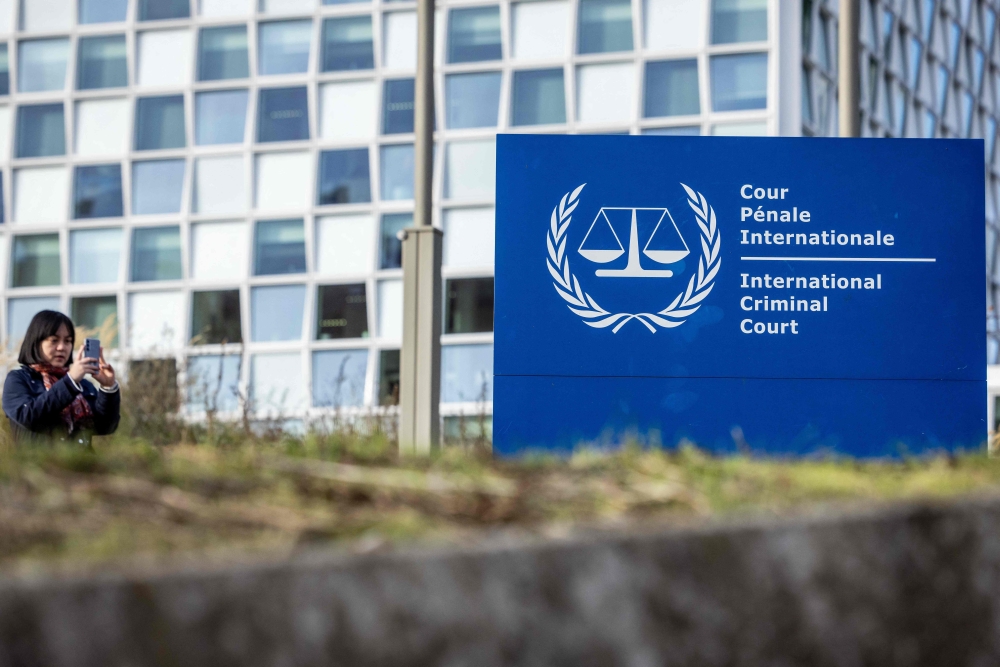
Following the emergence of allegations of workplace misconduct in 2024, the matter was initially referred to the ICC’s Independent Oversight Mechanism (‘IOM’). The investigation was subsequently referred to the United Nations Office of Internal Oversight Services (‘OIOS’) following decisions taken by the Assembly of States Parties (‘ASP’), the Court’s governing and oversight body.
As the process progressed, a number of procedural issues attracted public attention. Although disciplinary investigations are ordinarily expected to be conducted confidentially, the identity of the official became publicly known during the proceedings. Questions were also raised regarding amendments made by the ASP to both its own Rules of Procedure and the ICC’s internal Rules of Procedure and Evidence while the disciplinary process was ongoing, and whether such changes were appropriate in the circumstances.
To obtain an independent legal assessment, the Bureau of the ASP appointed an ad hoc panel comprising three distinguished judicial experts to review the OIOS investigation and advise on the appropriate procedural course. The panel concluded unanimously that the available evidence did not establish misconduct or a breach of duty. The Bureau nevertheless resolved that the matter should proceed through the disciplinary procedure.
On 8 June 2026, the Bureau referred the matter to a full plenary of the ASP while suspending Karim Khan from office with immediate effect pending a final determination. The Bureau concluded that there was a sufficient basis for the ASP to consider whether the threshold for “serious misconduct” under Article 46 of the Rome Statute had been met, thereby triggering consideration by the 125 States Parties.
The process culminated on 24 July 2026, when the ASP convened a special session on disciplinary proceedings in New York to determine whether Karim Khan should be removed from office under Article 46. Following the affirmative vote of 82 States Parties, he became the first Prosecutor of the ICC to be removed from office.
Whether this exercise, in the final analysis, strengthened or weakened public confidence remains open to debate. Critics argue that insufficient weight was accorded to the conclusions of the independent panel and that political considerations may have influenced the ultimate outcome. Others maintain that the ASP acted within the authority conferred upon it by the Rome Statute in addressing allegations involving one of the Court’s elected officials. Whatever view is taken, the proceedings have prompted important questions about the relationship between legal process, institutional governance, and political accountability within the ICC.
Assessing procedural fairness
When analysed through the lens of administrative law and fundamental principles of procedural fairness, the handling of allegations against Karim Khan raises important questions as to whether the process adequately served the interests of all affected.
Firstly, the prolonged nature of the proceedings raises concerns under the principle that justice delayed is justice denied. For the complainant, the lengthy process may have prolonged uncertainty and delayed institutional resolution. For Karim Khan, it meant operating under a persistent cloud of uncertainty, with inevitable consequences for his professional standing before a final determination was reached.
Due process demands not only a fair outcome but also a fair and expeditious process. Institutional delay or inertia serves neither the complainant nor the respondent, while also eroding institutional credibility.
Secondly, the institutional architecture of the decision-making process warrants careful scrutiny. The ICC is a judicial institution, yet responsibility for deciding whether Karim Khan should remain in office ultimately rests with the ASP, a political body comprising diplomats and State representatives.
While the Rome Statute confers that responsibility upon the ASP, where political decision-making intersects with matters carrying significant legal consequences, particular care must be taken to ensure that decisions are, and are seen to be, grounded in legal principle rather than political expediency.
Thirdly, the process has also raised misgivings regarding transparency and procedural clarity. Confidence in any disciplinary process depends upon both parties understanding the case they have to meet, the applicable procedures, how the evidence is assessed, and the reasons for any adverse findings.
Karim Khan has had to defend himself within a procedural framework that evolved during the course of the proceedings, while the complainant has had to navigate a complex institutional process. Both were entitled to a rigorous, stable, and transparent procedure grounded in settled rules and established legal principles.
Above all, public trust depends not only on the correctness of the outcome but also on confidence that the decision-making process has been fair, impartial, rational, and consistent with the rule of law.
International justice in an age of power politics
The governance challenges arising from the handling of the allegations against Karim Khan do not occur in a vacuum. They arise at a historical juncture when international law faces increasing pressure. We live in an era in which geopolitical power is increasingly invoked to defy multilateral agreements, international institutions, and the rule of law. Powerful states have routinely criticised or sought to undermine international courts when decisions do not align with their interests, raising concerns about the primacy of legal norms over political power.
Against this backdrop, if the ICC is to maintain its authority to prosecute international crimes and hold even the most powerful individuals to account, it must demonstrate unwavering adherence to the rule of law within its own walls. An international court whose internal disciplinary processes are perceived as unpredictable or susceptible to political influence risks diminishing its credibility on the world stage.
The baseline for this institutional integrity is reflected in international instruments such as the Commonwealth Charter. Paragraph 7 explicitly anchors the rule of law as a foundational pillar for just societies and international cooperation:
We believe in the rule of law as an essential protection for the people… In particular we support an independent, impartial, honest and competent judiciary and recognize that an independent, effective and competent legal system is integral to upholding the rule of law, engendering public confidence and dispensing justice.
The Charter reminds us that public confidence is the lifeblood of every legal system. One of the defining attributes of an “effective and competent legal system” is the consistent application of the rule of law, not only in relation to those over whom it exercises jurisdiction, but also in respect of its own officials. Where internal disciplinary processes are perceived as unpredictable or arbitrary, confidence in the institution may be weakened.
Resilience beyond the officeholder
Amid these institutional challenges, the broader Office of the Prosecutor has continued its work with resilience and professionalism. This is all the more remarkable given the significant external pressures confronting the ICC, including recent measures taken by the United States against the Court and some of its officials.
The Court’s firm dedication to investigating and prosecuting the most serious international crimes reflects the true, abiding strength of the Rome Statute system. Long after individual tenures have concluded and the present controversy has passed, it is that lasting institutional resolve that will sustain the credibility of international criminal justice.
The experience also serves as a compelling reminder that while individuals occupy offices, institutions endure. Ultimately, it is a steadfast commitment to fairness, consistency, due process, and the rule of law that prevails.
* Steven Thiru is president of the Commonwealth Lawyers Association. He records his appreciation to Jaishanker Sadananda and Chin Oy Sim for their assistance in preparing this article.
** This is the personal opinion of the writer or publication and does not necessarily represent the views of Malay Mail.


