


AUGUST 18 — The attempt to combine the electoral strength of PAS with that of Umno should not automatically be celebrated as the emergence of Malay-Muslim unity in Malaysia.
At most, it represents an exercise in electoral arithmetic. At worst, it risks reducing the profound meaning of Muslim solidarity to the mechanical accumulation of votes and seats.
There is an important difference between winning elections and strengthening a nation.
PAS may believe that by combining its electoral numbers with Umno, particularly in constituencies where Malay-Muslim voters constitute the overwhelming majority, the two political forces can minimise three-cornered contests and exploit Malaysia’s first-past-the-post electoral system.
Mathematically, there is some logic to this.
Politically, however, it is far more complicated.
More importantly, it does not follow that Malaysia’s national, regional or international standing will rise merely because PAS and Umno can win more seats together.
This is precisely why all Malaysian political parties — not merely PAS, Umno or the parties of Pakatan Harapan — should pay closer attention to the spirit represented by the Mecca Accord: Muslim cooperation cannot ultimately be measured by electoral conquest alone.
It must be evaluated by whether such cooperation advances peace, good governance, consultation, economic development and the wider welfare of society.
Electoral addition is not civilisational advancement at all. Suppose PN succeed in combining significant portions of their respective vote banks. What is the net value? Likely to be negative.
Suppose further that this cooperation allows them to capture additional parliamentary and state seats.
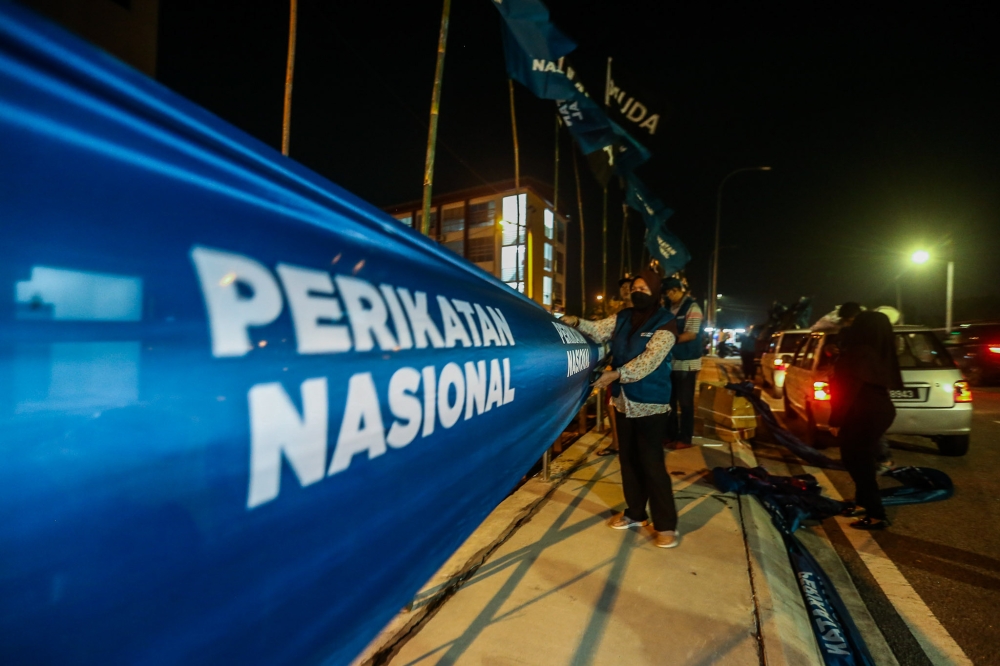
What happens the morning after?
Malaysia still has to attract foreign investment. Yet the ringgit will potentially face a free fall since PN has no nation building agenda.
Furthermore, Malaysia still has to develop artificial intelligence, semiconductors, advanced manufacturing, renewable energy and other technologies.
Malaysia still has to improve its universities.
Malaysia still has to strengthen the ringgit and improve productivity.
Malaysia still has to address wages, housing, healthcare and the cost of living.
Malaysia still has to negotiate with China, the United States, Japan, India, the European Union and the Gulf states.
Malaysia still has to maintain the confidence of Sabah and Sarawak.
And Malaysia still has to preserve Asean’s confidence in its moderation, diplomatic dexterity and ability to communicate across competing geopolitical blocs.
None of these challenges disappear because two Malay-Muslim parties have successfully aggregated their votes.
Indeed, this is where the concept of “Muslim unity” can become dangerously superficial.
A political coalition can win another 20 or 30 seats without producing another university of international distinction, another globally competitive Malaysian corporation, another technological breakthrough or another ringgit of productive foreign investment.
Seats are instruments of political authority.
They are not measurements of civilisation. For the lack of a better word, Malaysia must become stronger in a comprehensive manner, not merely more Muslim politically.
The Royal Commission of Inquiry into the financial malfeasance of Tabung Haji is a case in point.
After all, Malaysia already possesses an overwhelmingly important Muslim political, constitutional and institutional character.
Islam is the religion of the Federation. Malay political participation remains central to the functioning of the country.
The Malay rulers occupy their constitutionally defined positions. Islamic institutions exist throughout the federation.
The proposition that Malay-Muslim civilisation can therefore survive only by continuously concentrating electoral power in one increasingly homogeneous political bloc deserves scrutiny.
The more important question is whether Malaysia becomes stronger.
A Muslim-majority Malaysia should aspire to demonstrate that Islam and good governance are mutually reinforcing; that Muslim leadership can produce technological sophistication, intellectual excellence, social justice, administrative competence and international diplomacy of the highest order.
That would be considerably more impressive than demonstrating that two parties have discovered how to avoid splitting votes.
This distinction becomes especially important when Malaysia’s position in Asean and the wider world is considered.
Malaysia cannot behave internationally as though it were an isolated political island.
It is a founding member of Asean.
It is deeply connected to global supply chains. Its economic future depends on trade, technology, investment and international confidence.
It simultaneously maintains important relationships with China, the United States, Japan, South Korea, India, Europe and the GCC.
Its diplomatic strength has historically arisen partly from its ability to speak to different civilisations.
That is an asset Malaysia should strengthen, not jeopardise.
Sabah and Sarawak cannot be afterthoughts too.
There is also a fundamental Malaysian reality that proponents of an increasingly concentrated Malay-Muslim electoral bloc must confront.
Malaysia is not merely Peninsular Malaysia.
Sabah and Sarawak are indispensable components of the federation.
Any political project that succeeds electorally in the peninsula while creating greater apprehension in Borneo would therefore represent an extremely peculiar definition of national success.
A coalition might become stronger in Kelantan, Terengganu, Kedah or parts of the west coast while simultaneously making political leaders and communities in Sabah and Sarawak increasingly uncomfortable.
That would not constitute national consolidation.
It could produce the opposite.
Malaysia’s political architecture therefore demands coalition building across ethnicity, religion, geography and historical experience.
This is not a weakness of Malaysia. It is one of the country’s most important safeguards against excessive political concentration.
The Mecca Accord offers a different standard. This is where the principles associated with the Mecca Accord deserve attention.
The larger lesson is that Muslim solidarity should be directed towards reconciliation rather than permanent confrontation; consultation rather than political absolutism; development rather than slogans; and the welfare of society rather than the fortunes of individual political organisations.
Malaysia should adopt an equally demanding standard.
Any party claiming to represent Muslim unity should be asked several substantive questions.
Does its politics improve governance? Does it reduce corruption?
Does it strengthen educational excellence?
Does it make Malaysia more attractive to investors?
Does it improve relations among Muslims themselves? Does it reassure non-Muslims that their constitutional rights and legitimate interests remain protected?
Does it strengthen Sabah and Sarawak’s confidence in the federation?
Invariably, does it enhance Malaysia’s diplomatic reputation? And does it make Malaysia more respected throughout Asean and the international community?
If the answer to these questions is uncertain, if not a definite No, then electoral arithmetic should not be mistaken for Muslim unity.
The ultimate test
Malaysia should be ambitious enough to demand something considerably greater from Muslim politics.
The objective cannot merely be to defeat DAP, PKR, Amanah or Pakatan Harapan. Nor should the objective of Pakatan Harapan be simply to defeat PAS, Bersatu or Umno. Such thinking traps Malaysia inside an endless electoral carousel.
Governments change. Coalitions change. Alliances change. Political personalities eventually disappear.
Countries, however, must endure.
The true measure of successful Muslim political leadership must therefore be whether Malaysia emerges more prosperous, more knowledgeable, more technologically advanced, more institutionally credible and more respected internationally.
This is why the Mecca Accord deserves attention across Malaysia’s political spectrum.
Its deeper relevance is the proposition that Muslim political cooperation must transcend factional rivalry and pursue a higher common purpose.
PAS and Umno are perfectly entitled to negotiate electoral arrangements.
That is democratic politics. But they should not automatically describe the aggregation of their respective vote banks as the consummation of Malay-Muslim unity.
That is too grand a description for what may ultimately be little more than electoral engineering. The distinction is fundamental.
A Muslim political coalition cannot claim success merely because it wins Malaysia. It must demonstrate that Malaysia wins because of it.
Anything less risks turning Muslim unity into pseudo-Muslim unity: electorally impressive perhaps, but nationally, regionally and internationally inconsequential.
* Phar Kim Beng, PhD is the Professor of Asean Studies at International Islamic University of Malaysia and Director of Institute of International and Asean Studies (IINTAS). Lutfy Hamzah is a research fellow at IITAS.
** This is the personal opinion of the writer or publication and does not necessarily represent the views of Malay Mail.


