


AUGUST 15 — Poor air quality. Reduced visibility. Disruptions to daily life. Health concerns. Impacts on wildlife and ecosystems.
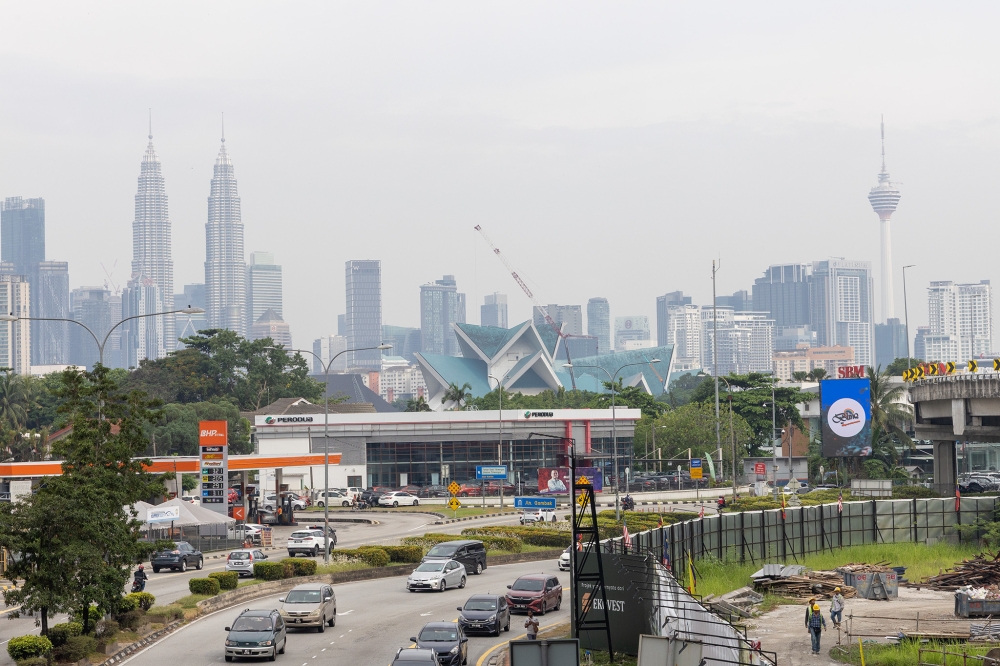
Every year, the same story returns to Malaysia and this year, a super El Niño onslaught in the region means things may get from bad to worse in the coming weeks. In the past two weeks the worsening haze has been affecting Kuala Lumpur and some parts of Sarawak with very unhealthy air quality. It was reported that 108 schools in Serian, Sarawak, were closed till 14 August, to protect children from “very unhealthy” air quality mainly caused by forest fires in the neighbouring country, Indonesia.
While haze has become an unfortunate annual occurrence in the region, it is also a visible symptom of a land-management failure that repeats because the incentives driving it have never fundamentally changed. We need to treat haze as a structural problem, one rooted in how land is being managed, rather than simply an emergency to be managed each dry season. As climate change brings intense heat and increasing risks of prolonged dry conditions, the consequences could become even more severe.
The prolonged dry conditions associated with this year’s El Niño are expected to last till early next year, and pose increased risks to the environment and people. Millions of people in the country are exposed to unhealthy air quality during haze occurrences, increasing the likelihood of respiratory illnesses and other health complications, particularly among children, the elderly, and those with existing medical conditions. The economic costs are also significant, affecting businesses, tourism, transportation and overall productivity.
Haze is a worrying environmental problem, particularly when caused by unsustainable land clearance and forest fires. Beyond its immediate impact on human health, haze can disrupt reforestation efforts, damage ecosystems and wildlife habitats, and affect the food chain. Forest fires also release significant amounts of carbon emissions, further contributing to climate change.
In 2024, global temperatures exceeded 1.5°C above pre-industrial levels for the first time on an annual basis. This is a deeply worrying signal of how rapidly our climate is changing and highlights the urgent need for governments, businesses and communities to take stronger action to protect our forests and natural ecosystems.
Intact forests and healthy ecosystems play a crucial role in regulating climate, storing carbon and maintaining water cycles. While some may argue that the current haze in Malaysia originated from our neighbouring country, there are also incidences whereby fires originated from within. We call upon our leaders to urgently address the Asean transboundary haze problems. At the same time, we must endeavour to do our part to minimise haze occurrence in Malaysia.
Keeping these ecosystems intact can also reduce the degradation and drying that make landscapes more vulnerable to fire. As a stronghold of tropical forests, Malaysia, and particularly Sarawak, has a unique opportunity to pursue development while safeguarding the natural systems that support human well-being and economic resilience. About 8.7 million hectares out of Sarawak’s landmass of 12.4 million hectares are still covered by natural forests – making it the largest forested area in Malaysia.
Besides forests, attention must also be given to peatlands, which are among the most important and vulnerable ecosystems. Sarawak has the largest area of peatlands in Malaysia, totaling 1.7 million ha. These peatlands are important assets that contribute to environmental protection and economic resources and ought to be sustainably managed to maintain and enhance long term social and economic benefits. In their natural environment, peatlands act as significant carbon stores and can store water that buffers against fire. However, when drained or becomes degraded, the water table drops, drying up the peat to become highly flammable. Once ignited, peat fires can burn underground for weeks or even months, releasing large amounts of smoke and greenhouse gases.
Recent peatland fires in Sri Aman, Daro and Kuala Baram are a preview of what this looks like at scale, and a reminder of how difficult and costly these fires can be managed once they start.
This is why prevention matters more than suppression.
Mitigating fires on peatlands for example, requires concerted, proactive and long-term measures rather than emergency responses alone. The basic fundamentals include maintaining high water tables and strengthening fire prevention and early warning systems. WWF-Malaysia believes there is an urgent need to tackle haze at its source. Sustainable land-use practices, including strict zero-burning policies, responsible agricultural development, and stronger forest protection measures, must be implemented and enforced. Nature-based solutions should be integrated in addressing current environmental challenges as well as into new development plans. Companies and individuals found responsible for these fires must be held accountable through stronger penalties and effective enforcement. Above all, we call for careful land use planning to avoid opening up anymore of the remaining peatlands in Sarawak.
At the regional level, relevant governments across Southeast Asia, including Malaysia, must take urgent action to address the haze issue, which poses a major threat not only to human health but also to our region’s natural heritage and biodiversity.
As one of the world’s remaining tropical forest strongholds, Malaysia should not just be a country affected by haze; it has the opportunity to help define what a nature-positive development pathway looks like. That means treating forest and peatland protection not as a constraint on economic growth, but as infrastructure for it: the same ecosystems that prevent fire also regulate water cycles, store carbon, and underpin the agricultural and tourism sectors the economy depends on.
Addressing transboundary haze is a shared responsibility. Governments, businesses, local communities, civil society organisations, and consumers all have a role to play. Greater demand for sustainably produced products can help drive responsible practices throughout supply chains, while community-led conservation efforts can strengthen protection of forests and other critical ecosystems.
As world-renowned scientist and environmentalist David Suzuki said, “What we do to nature, we do to ourselves.” Each haze season is a reminder of how directly environmental degradation translates into public health crises, economic loss, and diminished quality of life. The question is not whether this will happen again next year.
The question is whether this cycle becomes the one where policy, enforcement and regional cooperation finally address the root problem, or whether we spend another year managing symptoms and calling it progress.
Our future generation – our children and grandchildren – depend on the choices and actions we make today.
* This is the personal opinion of the writer or publication and does not necessarily represent the views of Malay Mail.


