


AUGUST 14 — In the case of Kerajaan Negeri Kedah Darul Aman & Anor v Lee Bak Chui & Ors and other appeals [2026], the facts were straightforward.
The first appellant was the government of the State of Kedah and the second appellant was the Menteri Besar of Kedah, who presided over the Majlis Mesyuarat Kerajaan Negeri Kedah (Exco).
The respondents were pool betting operators, agents, premises operators, and persons directly affected by the cessation of renewals of business premises licences for federally licensed pool betting operations in Kedah.
STM Lottery Sdn Bhd and ENE (Penang) Sdn Bhd held pool betting licences issued by the Minister of Finance under Section 5 of the Pool Betting Act 1967 (PBA). The individual agents and premises operators conducted business within that federal licensing framework and pursuant to the necessary premises licences issued by the relevant local authorities.
In November 2021, after tabling the Kedah State Budget, the Menteri Besar announced that the Kedah State Government would no longer renew business premises licences for gaming outlets in Kedah. The state Exco subsequently made a decision to that effect.
In 2022, the respondents received letters from the relevant local authorities that referred to the state Exco decision and, in substance, conveyed two matters: (a) that the Minister of Finance would no longer consider renewal of gambling licences in Kedah for 2023 because such licences were within the Minister’s jurisdiction; and (b) that if licence holders continued to operate after December 31, 2022, the relevant local authorities together with the Royal Malaysia Police would take firm enforcement action.
The Minister of Finance, however, renewed the relevant PBA licences for 2023, leading to the respondents applying for renewal of their local business premises licences, which were not approved. The practical effect of the non-renewal of the business premises licences (impugned decision) was that federally licensed pool betting businesses could no longer operate in Kedah.
The respondents then commenced judicial review proceedings.
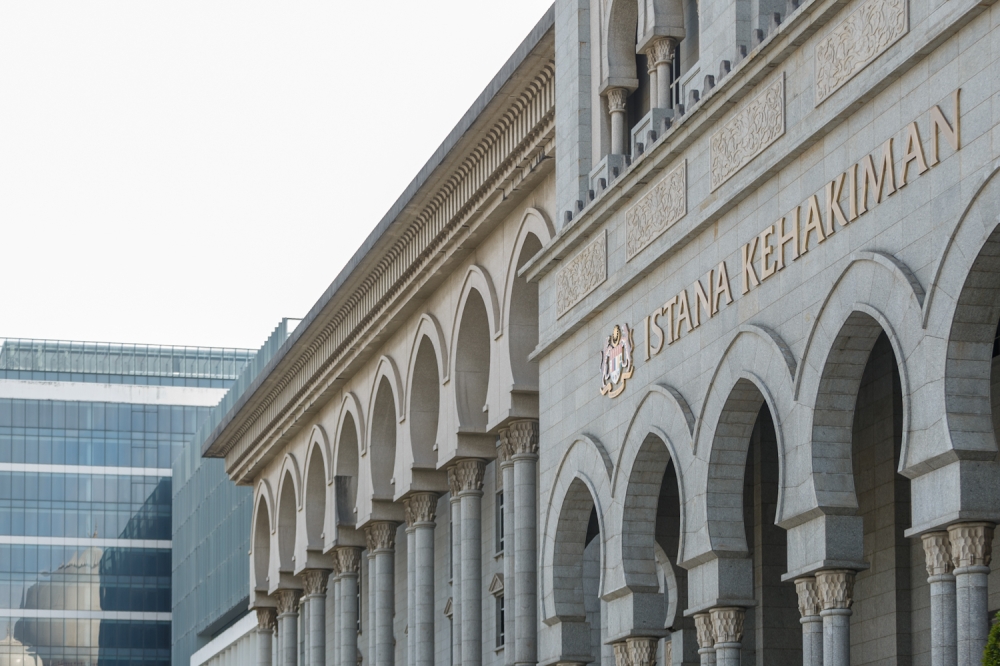
The High Court granted declarations that the first appellant had acted illegally and irrationally in deciding to cease the renewal of business premises licences for pool betting businesses; that the impugned decision was ultra vires the Federal Constitution (FC) and unconstitutional; and that its implementation by the local authorities was unlawful.
The High Court also ordered damages to be assessed.
Read a quick commentary of the High Court’s decision here.
The appellants appealed to the Court of Appeal.
The issues for consideration by the appellate court were:
(i) whether the impugned decision was a policy decision founded on moral and social considerations and therefore non-justiciable;
(ii) whether the High Court erred in its constitutional analysis of the Federal List, the State List, and Articles 74, 75, 80 and 81(b) of the FC, including the application of harmonious construction; and
(iii) whether the order that damages be assessed was wrong in principle.
These issues were, in substance, questions of law and constitutional principle. The material facts were largely undisputed.
The task on appeal was therefore to decide whether the High Court erred in law, principle, or constitutional characterisation.
The Court of Appeal, by a majority (2:1), dismissed the appeal and affirmed the High Court’s decision.
Here is how the majority decided.
On the first issue, the appellants argued that the impugned decision was one of policy, adopted in the public interest and on moral and social grounds, and was therefore not amenable to judicial review.
In response to the argument, Court of Appeal Judge Faizah Jamaluddin, delivering the judgment of the majority, said:
“I accept, of course, that courts do not sit in judgment on the wisdom, merits or political attractiveness of Executive policy. Whether a policy is preferable is not a question for the courts.
“But a decision does not become immune from review merely because it is described as policy. The distinction is clear. The court does not review policy on its merits; it reviews legality. Where a policy decision is said to exceed constitutional limits, to contradict federal law, or to amount to an abuse of power, the court is not entering the policy arena. It is performing its constitutional duty.
“[W]here policy or action is unconstitutional, unlawful, arbitrary, irrational, tainted by mala fides, or constitutes an abuse of power, judicial intervention is required.
“Judicial review in Malaysia is not confined to formal error where the complaint is that a public authority has exceeded constitutional or statutory limits. A challenge to the legality of the decision itself, where grounded in public law error, is plainly justiciable.
“It is … consistent with Peguam Negara Malaysia v Chin Chee Kow (as secretary of Persatuan Kebajikan dan Amal Liam Hood Thong Chor Seng Thuan) and another appeal [2019] … where the Federal Court explained that justiciability concerns whether an issue is capable of determination by legal standards. A challenge that an Executive decision exceeds constitutional power is paradigmatically such a case.
“The present case is therefore remote from those in which the court is invited to choose between competing policy preferences, allocate scarce public resources, conduct foreign relations, manage national security, or determine educational content.
“The respondents do not ask this court to decide whether the State of Kedah should approve of gambling. They ask whether Kedah may, consistently with the Federal Constitution and federal law, implement a blanket refusal of premises licences so as to prevent the operation of federally licensed pool betting businesses throughout the state.
“[T]he present dispute is resolvable by legal criteria: the constitutional allocation of subject matter, the limits of State Executive power, the effect of a federal licensing statute, and orthodox public law grounds of review. That makes the case justiciable.
“The impugned decision was justiciable and amenable to judicial review. The court below was not reviewing the merits or desirability of gambling policy. It was determining legality, constitutionality, and the limits of State Executive power.”
Accordingly, it was within the remit of the High Court to judicially review the impugned decision.
* This is the personal opinion of the writer or publication and does not necessarily represent the views of Malay Mail.


