














JULY 22 — There is a word that appears repeatedly throughout the 2026 World Economic Situation and Prospects (WESP) report, a word designed to comfort: resilience. We are told the global economy is “bending, not breaking”. Despite the sharpest tariff hikes in a generation, a blockade of the Strait of Hormuz, and a Middle East conflict that sent oil prices soaring over 60 per cent, the machine kept moving. Global trade expanded. Consumer spending held.
But here is the uncomfortable truth buried in the fine print of the UN’s flagship report: Resilience is not recovery. And as we look past the headlines of 2.7 per cent growth, it becomes clear that the global economy is not strong—it is merely surviving. Worse, the very systems that propped up this stability have left us more unequal, more indebted, and dangerously unprepared for the next shock.
If you read only the January press release from the UN Department of Economic and Social Affairs (DESA), you would see a picture of steady, if boring, stability. The global growth forecast for 2026 was 2.7 per cent—slightly down from 2.8 per cent in 2025. Inflation was cooling. The doomsday scenarios of a trade war meltdown failed to materialize.
Yet, by mid-2026, that narrative shattered. The conflict in the Middle East forced the UN to slash the forecast to 2.5 per cent , with a worst-case scenario plunging to 2.1 per cent —a number that reeks of recessionary territory.
This whiplash reveals our core vulnerability: Supply-side dependency. The current “resilience” wasn’t built on sound industrial policy or diversified supply chains. It was built on wartime stockpiles and the frantic front-loading of goods to beat tariff deadlines. When the Strait of Hormuz was threatened, fertilizer supplies were disrupted, energy prices reversed their downward trend, and the “soft landing” suddenly looked like a crash landing.
The inflation trap is back. Just as workers and small businesses began to breathe easier about the cost of living, the 2026 report signals a grim reversal. The disinflationary period is effectively over.
For those living in developed economies, the projected inflation uptick to 2.9 per cent might sound manageable. But for developing economies, the UN expects inflation to accelerate to a punishing 5.2 per cent. This is not an economic statistic; it is a political and social crisis.
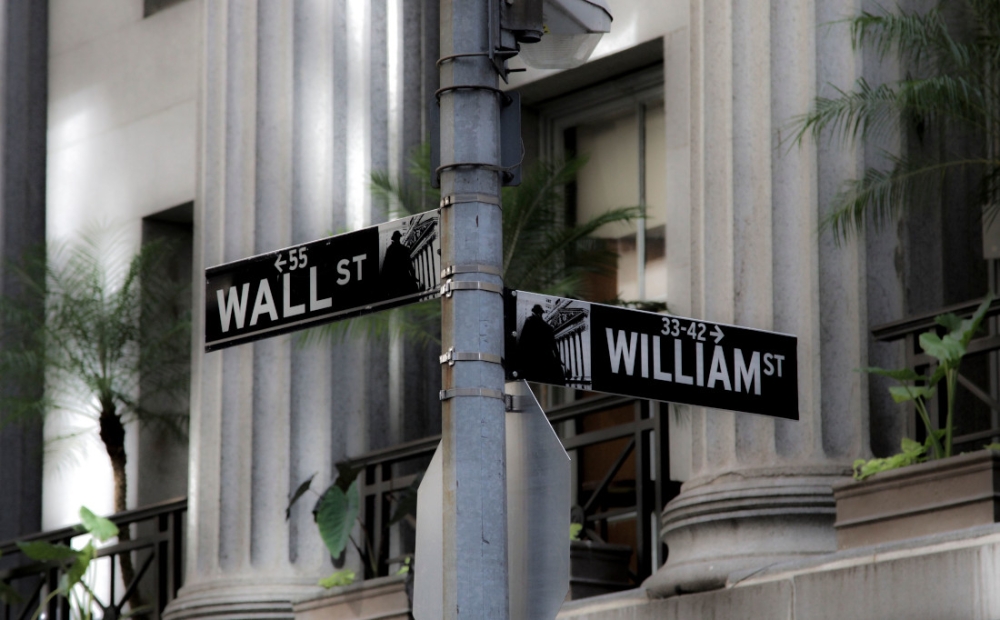
When fuel and food prices rise in lockstep, it erases wage gains, bankrupts small farmers, and often precedes the kind of instability that shuts down stock exchanges.
Perhaps the most striking cognitive dissonance in the report concerns technology.
The boom in AI is one of the few engines of capital spending. Data centres and semiconductor manufacturing are keeping industrial numbers afloat.
But the UN DESA report pours cold water on the Silicon Valley euphoria. While AI promises a productivity boost, the authors warn that these gains are “likely to be unevenly distributed,” risking a widening of existing structural inequalities.
We are witnessing the “hollowing out” of the labour market in real time. High-skill tech workers capture the value, while white-collar clerical jobs face obsolescence. The report essentially asks a question no one wants to answer: If AI drives productivity but displaces millions of workers in developing nations who rely on outsourced digital labour, what happens to the “global” in global economy?
Reading through the 212 pages of the WESP 2026, one senses a deep frustration emanating from the analysts at UN DESA. The blueprints for fixing this mess already exist. The Sevilla Commitment on financing for development, the Belém Package on climate action—the frameworks are there. What is missing is political will.
The report notes that fiscal space is shrinking. Governments are broke because they bailed out the system during Covid-19, and now they are fighting inflation by tightening belts. Developing nations are trapped: they cannot borrow to invest in green energy or social safety nets because interest rates are punishing and debt burdens are crushing.
The World Economic Situation and Prospects 2026 is not a story about a broken global economy. It is a story about a stalled one.
We have optimised for “resilience”—the ability to take a punch without collapsing.
But in doing so, we have sacrificed velocity. We have sacrificed equity. The gap between the 2.7 per cent growth figure and the 5.2 per cent inflation figure in the developing world is the gap between the global haves and have-nots.
As UN Secretary-General António Guterres noted, a combination of economic, geopolitical, and technological tensions is “reshaping the global landscape”. Unless we stop celebrating mere survival and start demanding coordinated, multilateral action on debt relief, supply chain diversification, and AI regulation, 2026 will be remembered not as the year we bent, but the year we broke.
*The author is affiliated with the Tan Sri Omar Centre for STI Policy Studies at UCSI University and is an Adjunctn Professor at the Ungku Aziz Centre for Development Studies, Universiti Malaya. He can be reached at [email protected].
** This is the personal opinion of the writer or publication and does not necessarily represent the views of Malay Mail.