


JULY 20 — Malaysian politics has always been shaped by coalitions rather than by any single political party acting alone.
Since the watershed election of 2008, PAS has occupied a pivotal position in determining whether opposition forces could unite sufficiently to challenge the long-standing dominance of Barisan Nasional or whether political fragmentation would once again favour the incumbent.
The elections of 2008, 2013, 2018 and, in a different configuration, 2022 demonstrate that PAS has often held the balance between cooperation and division.
Its strategic choices have influenced not only electoral outcomes but also the broader stability of Malaysia’s political system.
In 2008, PAS worked closely with PKR and DAP under the loose Pakatan Rakyat framework. The unprecedented cooperation among Malay-Muslim, multiracial and reform-oriented parties denied Barisan Nasional its two-thirds parliamentary majority for the first time since 1969.
PAS’s willingness to compromise on ideological differences was indispensable to that breakthrough.
The same formula largely endured in 2013. Although Pakatan Rakyat won the popular vote, it fell short of forming the federal government because of constituency boundaries and the first-past-the-post electoral system.
Nevertheless, PAS remained an important component of the opposition alliance, helping to consolidate support across both urban and rural constituencies.
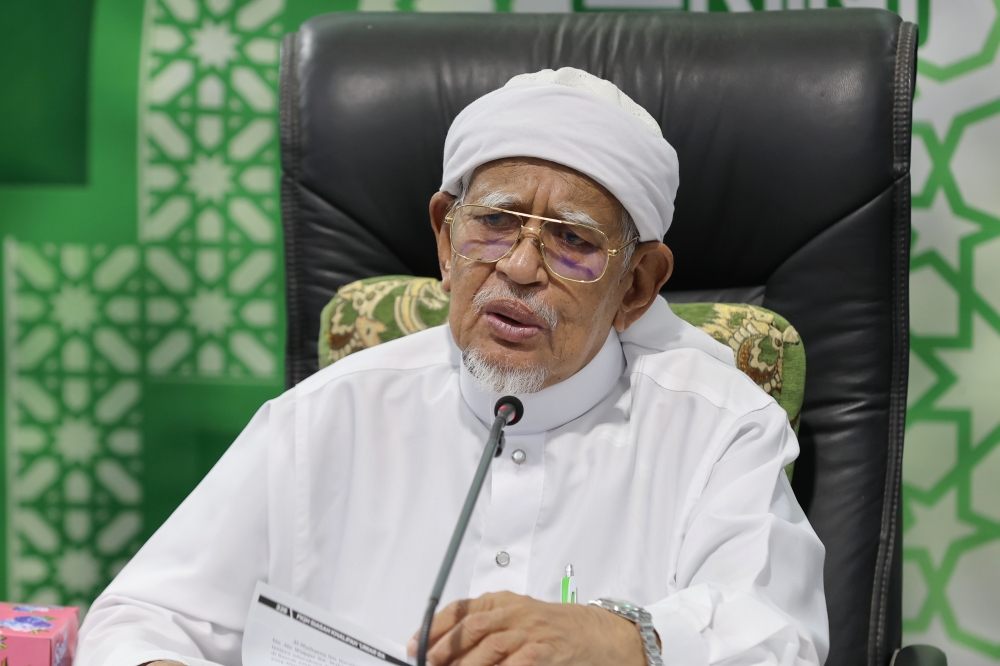
The relationship fractured after 2015 following disagreements over the implementation of hudud legislation and differing visions of governance.
The dissolution of Pakatan Rakyat fundamentally reshaped Malaysia’s political landscape. By the time of the 2018 general election, PAS contested independently.
Yet the party continued to command significant Malay-Muslim support, while Pakatan Harapan succeeded in winning Putrajaya through a different coalition that included Bersatu. Although PAS was no longer inside the coalition, its electoral strength remained a decisive factor in determining how votes were distributed among competing blocs.
The 2022 general election again underscored PAS’s importance. As the dominant component of Perikatan Nasional, PAS emerged as the single largest political party in Parliament by seat count. No coalition secured an outright majority, making coalition-building inevitable.
Ultimately, Pakatan Harapan formed the Unity Government together with Barisan Nasional and parties from Sabah and Sarawak, but the electoral weight of PAS fundamentally shaped the negotiations and the composition of the opposition.
These episodes illustrate a broader lesson. PAS has repeatedly demonstrated that it possesses the organisational reach and electoral influence to determine whether Malaysian politics becomes more collaborative or more polarised.
When major political actors are able to cooperate despite ideological differences, Malaysia has generally experienced greater political stability. Conversely, when political competition becomes defined by mutually exclusive identities, governing becomes considerably more difficult.
This does not imply that any party should subordinate its principles. Rather, it highlights the realities of coalition politics in a plural society.
Successful governance in Malaysia requires compromise, constitutional respect and the willingness to work across political and communal divides.
As Malaysia continues to evolve, voters may wish to evaluate not merely which party gains the largest number of seats, but also which political arrangements are most capable of providing stable governance, sustaining economic growth, strengthening constitutional institutions and preserving national cohesion.
The experience of the elections from 2008 through 2022 demonstrates that PAS has been an influential actor in Malaysia’s political development.
Whether its influence contributes more to cooperation or to sharper political competition depends not only on PAS itself but equally on the choices made by every other political party and, ultimately, by the Malaysian electorate.
* Phar Kim Beng is a professor of Asean Studies and a director at the Institute of International and Asean Studies, International Islamic University Malaysia.
** This is the personal opinion of the writer or publication and does not necessarily represent the views of Malay Mail.


