


OCTOBER 20 — I remember standing by the water in Pasir Gudang, looking towards the horizon and wondering how far the world really went.
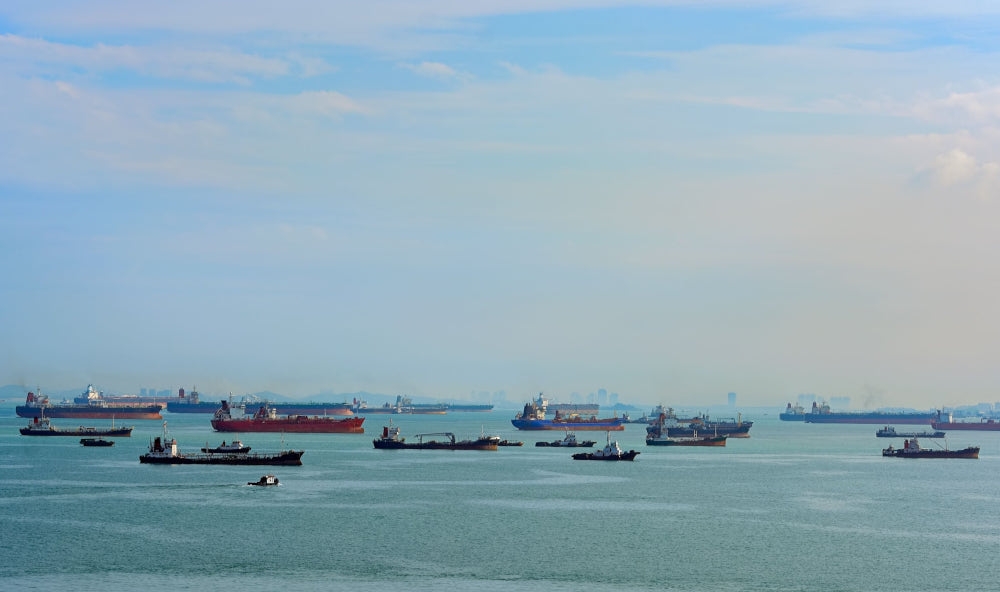
There were ships in the distance, some moving slowly while others seemed to be waiting for their turn at the busy port.
Across the water was Singapore, or at least that was what I imagined I was looking at. I could never be entirely sure which buildings belonged to which part of the shoreline, but it hardly mattered.
There was so much happening out there, and to a boy growing up in Pontian, the whole scene seemed wonderfully alive.
We were actually in Pasir Gudang to visit Abah’s youngest sister and her family, who lived there. It was one of those family visits that formed part of growing up, with Mak driving us in our secondhand Honda hatchback.
Watching the ships was simply something we took the opportunity to do while we were there. After all, what else was there for a boy to look at in a port town?
Pontian was also a coastal town, although not quite in the way people usually imagine seaside places.
We had the sea, certainly, but much of our coastline was lined with mangrove forests rather than sandy beaches.
The water was familiar to us, yet it never quite offered the same spectacle as the busy port at Pasir Gudang.
Watching those ships made me feel that there was an enormous world beyond the places I knew, filled with people travelling somewhere and carrying things from places I had never heard of.
Mak was the one who drove us there.
We had a secondhand Honda hatchback, which served as our family car during those years.
I cannot remember how often we made those outings, or whether they followed any particular routine.
What I remember is the excitement of going somewhere different, sitting in the car with my brothers and watching the familiar roads give way to places we rarely visited. Even the journey felt like part of the adventure.
As children, we never thought very much about what it took to make those trips possible.
We knew the car was not new, but that hardly mattered. It could take us places, and Mak knew how to drive it.
Petrol was something adults worried about, just as they worried about whether the car needed servicing or whether there was enough money for the coming week. We were mostly concerned with where we were going and how long it would take to get there.
Looking back, I realise that our childhood was lived within fairly modest means. Abah was a teacher, and Mak managed the household with the kind of careful attention that becomes necessary when there are seven children to raise.
There were bills to pay, school expenses to consider and groceries to buy. Money had to be stretched, and I suspect there were many decisions made around the household budget that never reached our ears.
Our meals were similarly ordinary. Fish and eggs appeared regularly on the table, while chicken and beef were more closely associated with occasions such as Hari Raya.
We ate what was available, and Mak made sure there was enough for everyone. I do not remember sitting at the table thinking that something was missing simply because another family might have been eating something different.
That is perhaps the part I find most interesting now. We did not feel poor.
I do not mean that we had everything we wanted, or that there were never things we wished we could afford.
Like most children, we probably asked for more than our parents could reasonably provide. But when I think about those years, the memories that return are not primarily about what we lacked.
They are about the things we did together, the places we visited and the ordinary routines that made our little world feel complete.
It would be easy, of course, to turn those memories into a romantic story about growing up with very little. I would rather not.
Financial limitations are real, and there is nothing particularly charming about having to calculate whether there is enough money for petrol or groceries.
Mak and Abah had to make those calculations, even when we children were happily occupied with something else.
What seemed like an ordinary visit to relatives has remained with me for decades, not because anything remarkable happened, but because of how the world looked to me then.
Mak was simply taking us to see family. I was discovering that there was so much more of the world I had yet to see.
Since Mak passed away last month, I have found myself returning to memories like this more often.
Not necessarily the important occasions that everyone remembers, but the ordinary days that somehow survived in my mind for decades.
I wish I could ask her what she remembered about those trips, whether she enjoyed watching the ships too, or whether she was already thinking about the journey home and the petrol left in the tank.
I suppose I will never know. What I do know is that she gave us a childhood in which the world seemed much larger than our circumstances.
We were not unaware that money mattered, but we were allowed to be children without carrying every worry that came with it.
And when I think of that boy standing by the water in Pasir Gudang, imagining Singapore somewhere beyond the ships, I remember how enormous the world appeared to him.
Only now do I appreciate how much Mak had already done to let him see it.
* Nahrizul Adib Kadri is a professor of biomedical engineering at the Faculty of Engineering, the Director of UM Press, and the Principal of Tuanku Bahiyah Residential College (KK2), Universiti Malaya. He may be reached at [email protected]
** This is the personal opinion of the writer or publication and does not necessarily represent the views of Malay Mail.


