


JUNE 22 — The world has entered a peculiar and dangerous phase in the confrontation between the United States and Iran.
Military strikes continue to cast long shadows over the Middle East even as diplomats gather in Switzerland to search for a political way forward.
President Donald Trump has warned that the United States could strike Iran “very hard” should Tehran fail to meet Washington’s expectations, while Iran has signaled that any negotiations conducted under threats of force cannot be regarded as genuine diplomacy.
The result is a diplomatic process that appears active but remains fundamentally uncertain.
On paper, the latest memorandum of understanding between the United States and Iran offers an opportunity to reduce tensions.
It provides a temporary framework for negotiations and seeks to prevent a wider regional conflict while discussions continue on issues ranging from Iran’s nuclear programme to sanctions relief and regional security arrangements.
In practice, however, the agreement appears less like a peace process and more like a pause.
Its centrepiece is a sixty-day timeline, yet the meaning of those sixty days remains unclear. Are they intended to produce a comprehensive agreement?
Are they merely a cooling-off period? Or are they simply a temporary suspension of escalation before a new round of confrontation begins?
The ambiguity matters.
Diplomacy succeeds when all parties understand the destination, the route and the consequences of failure.
What is emerging in the current US-Iran negotiations appears instead to be diplomacy conducted amid shifting political calculations, changing military realities and competing interpretations of what success actually means.
Iran continues to insist that sanctions relief, access to frozen assets and broader regional issues must be addressed before significant concessions can be made on the nuclear front.
The United States, meanwhile, remains focused on limiting Iran’s nuclear capabilities while maintaining pressure over Tehran’s regional influence and support for various allied groups.
The two sides are therefore negotiating from fundamentally different starting points.
This divergence alone would make a comprehensive settlement difficult.
Yet the challenge is compounded by the fact that events outside the negotiating room can easily alter the diplomatic landscape.
Every missile strike, every clash involving regional proxies, every maritime incident in the Gulf and every political statement issued in Washington or Tehran has the potential to reshape the talks.
Diplomacy becomes hostage to events rather than the master of them.
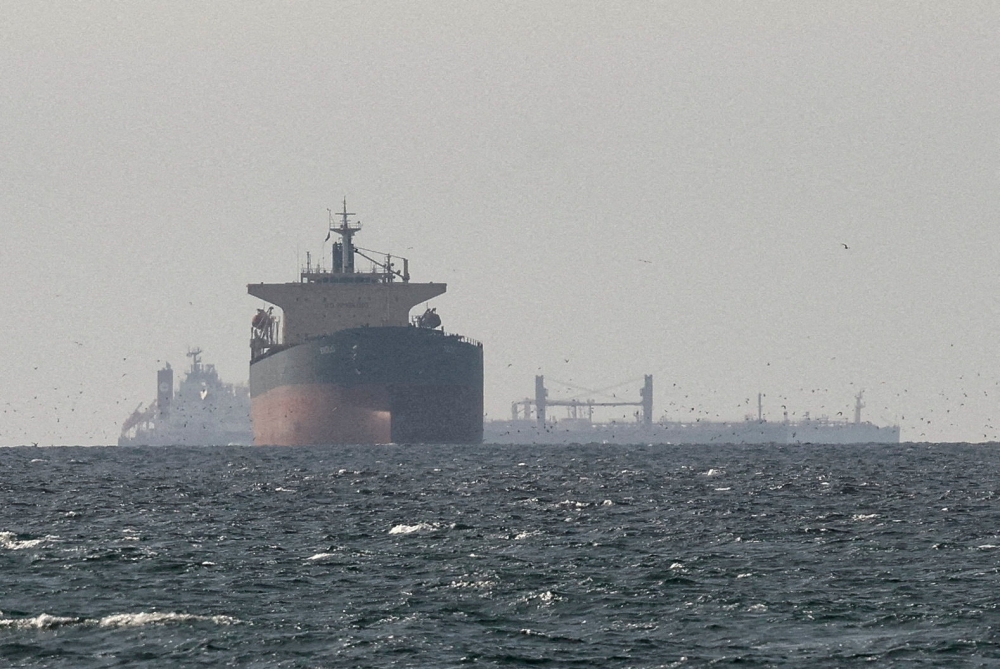
This is particularly troubling because the Strait of Hormuz remains one of the world’s most strategically important waterways.
Nearly one-fifth of globally traded oil continues to pass through this narrow corridor.
Any disruption, even temporary, would send shockwaves through the international economy.
For Asia, the risks are immediate.
Countries such as Japan, South Korea, China and India remain heavily dependent on energy flows originating from the Gulf.
Asean economies, including Malaysia, may possess varying degrees of domestic energy resources, yet all remain vulnerable to rising shipping costs, higher insurance premiums, supply chain disruptions and inflationary pressures resulting from instability in the region.
The experience of recent years has demonstrated how quickly geopolitical shocks can spread across continents.
The war in Ukraine affected not only European security but also global food prices, fertiliser supplies, transportation costs and industrial production.
A prolonged crisis in the Strait of Hormuz would likely generate similar consequences.
Energy markets have already shown signs of nervousness.
Prices rise when military tensions intensify and retreat when diplomatic signals emerge. Such volatility may appear manageable in the short term, but prolonged uncertainty gradually erodes investor confidence and weakens economic planning.
Businesses can adapt to high prices. They struggle far more with unpredictability.
This is why the current diplomatic framework raises concerns. The memorandum of understanding appears to postpone rather than resolve many of the central disagreements between Washington and Tehran.
Important questions remain unanswered.
How will compliance be verified?
Which international institutions will oversee implementation?
What mechanisms exist to resolve disputes?
What happens if one side accuses the other of violating the agreement?
Most importantly, what becomes of Iran’s nuclear programme once the sixty-day period concludes?
Without clear answers, the process risks creating the illusion of progress while leaving the underlying sources of tension intact.
History offers numerous examples of temporary agreements that failed because they addressed symptoms rather than causes. Ceasefires can stop fighting for a time, but they do not automatically generate trust.
Memoranda of understanding can create political space, but they do not necessarily establish durable peace.
The danger in the current situation is therefore not simply that diplomacy may fail.
The greater danger is that diplomacy may continue without sufficient clarity.
Such ambiguity creates opportunities for miscalculation.
One side may interpret restraint as weakness. Another may view delays as evidence of bad faith. Domestic political pressures may push leaders toward harder positions even as negotiators seek compromise.
In this environment, the sixty-day timeline risks becoming less a roadmap and more a countdown.
Every passing week increases pressure on negotiators to demonstrate progress. Yet progress measured by deadlines rather than substantive breakthroughs often produces fragile outcomes.
The Middle East has witnessed this pattern before.
Temporary understandings generate cautious optimism. Markets respond positively. Political leaders declare success. Then unresolved issues resurface, and tensions return with renewed intensity.
For Malaysia and Asean, the appropriate response is neither neutrality born of indifference nor alignment with any particular side.
Rather, it should be principled support for diplomacy that is clear, verifiable and institutionalised.
Asean’s own experience offers useful lessons.
The success of mechanisms such as the Asean Regional Forum, the Asean Defence Ministers’ Meeting-Plus, the East Asia Summit and Asean Plus Three has not been based on dramatic breakthroughs. Instead, these institutions function because they provide predictable channels of communication, confidence-building measures and agreed procedures for managing differences.
They create structure.
Structure reduces uncertainty. The Gulf region requires a similar approach in due course if it hopes to move beyond recurring cycles of confrontation.
GCC and Iran need to work together to harness their concept of cooperative security, where the other side is not seen as a perpetual threat.
Diplomacy anchored in threats is inherently unstable. Diplomacy built upon vague promises is equally fragile.
What is needed instead is a framework that establishes clear benchmarks, transparent verification mechanisms and gradual implementation that can survive political changes in both Washington and Tehran.
Otherwise, the world may find itself trapped in a situation where negotiations and military preparations occur simultaneously, each undermining the credibility of the other.
The Strait of Hormuz may remain open today. The talks in Switzerland may continue tomorrow. The sixty-day clock may keep ticking.
Yet unless diplomacy becomes more precise and less conditional, the region could easily find itself returning to the edge of crisis before the timeline expires; especially when the likes of Trump functions not unlike a loose cannon alternating the language of peace with threats to unravel the MOU. With Iran consistently trying to call his bluff, leading to a toxic relationship that hardened the hard liners of all sides.
In international relations, uncertainty can occasionally create opportunities for compromise.
Too much uncertainty, however, becomes a strategic danger in itself.
That is the true risk posed by unclear diplomacy and a movable sixty-day timeline.
It may not prevent conflict. It may simply postpone it, while leaving the world exposed to the consequences of a miscalculation that no one genuinely intends but everyone increasingly fears.
* Phar Kim Beng is professor of Asean Studies, International Islamic University Malaysia (IIUM) and director of the Institute of International and Asean Studies (IINTAS)
* This is the personal opinion of the writer or publication and does not necessarily represent the views of Malay Mail.


