


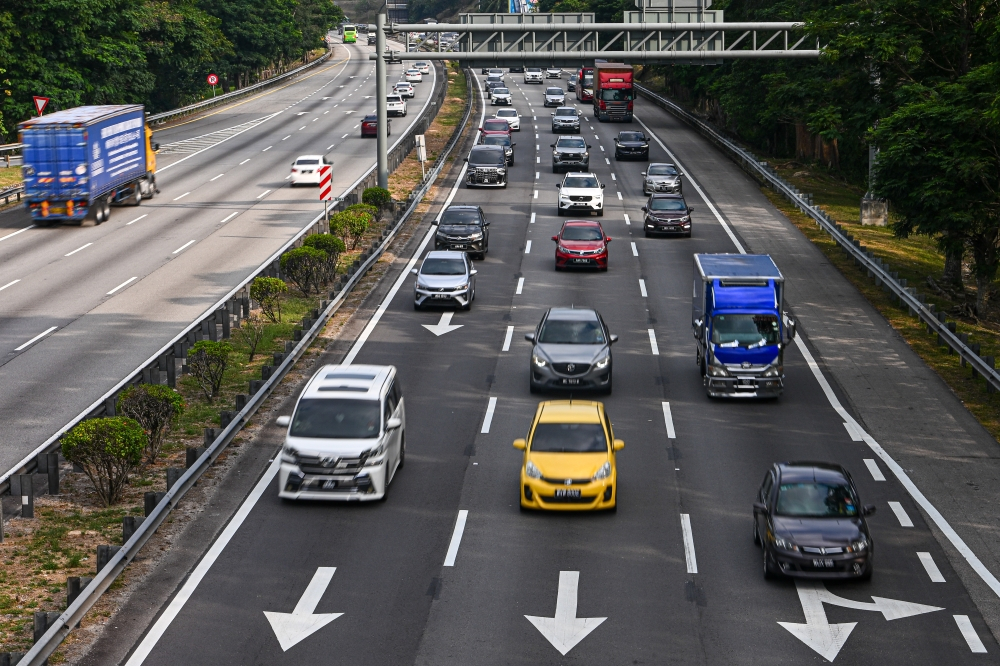


KUALA LUMPUR, Aug 7 — We are all familiar with maximum speed limits designed to keep us safe. Now, the Malaysian Institute of Road Safety Research (Miros) is flipping the script to tackle a different kind of road hazard: the slow-moving vehicle.
In a bid to curb the frustrating habit of “lane hogging,” Miros has launched a proof-of-concept (POC) project to implement minimum advisory speed limits.
The goal is simple: keep traffic flowing, reduce driver frustration, and minimise the dangerous bottlenecks caused by vehicles travelling too slowly in the fast lane.
Running until October 31, the initiative is a collaborative effort between Miros, the Malaysian Highway Authority (LLM), PLUS Malaysia Berhad and the South Klang Valley Expressway (SKVE).
The strategy targets lane monopolisation by encouraging drivers to choose a lane that matches their speed. By nudging slower vehicles out of the rightmost lane, Miros hopes to improve traffic flow and reduce the risk of highway accidents.
Where the pilot is being conducted
Miros is testing the initiative at three locations:
- North-South Expressway (PLUS) E1: KM400.1 to KM388.0, northbound (Tanjung Malim–Behrang)
- SKVE E26: KM9.6 to KM16.7 (Ayer Hitam Toll Plaza–Bandar Saujana Putra)
- PLUS E2: KM267.8 to KM278.8, northbound (Bandar Ainsdale–Nilai)
Over the next three months, Miros will collect data to determine whether the advisory limits influence driver behaviour before deciding whether to expand the programme nationwide.
Recommended minimum speeds
The advisory speed limits are based on lane usage:
- Left lane: Minimum 60 km/h (ideal for cruising or slower-moving traffic)
- Middle lane: Minimum 80 km/h (or 60 km/h, depending on the number of lanes)
- Rightmost lane: Minimum 100 km/h (on three- to four-lane highways) or 80 km/h (on two-lane expressways)
Strategic signage will be installed throughout the pilot areas to inform motorists of the recommended speeds.
Advisory, not mandatory
Miros stressed that the minimum speeds are advisory rather than legally enforceable. Drivers should continue to adjust their speed according to road and weather conditions, and should not feel obliged to meet the recommended speeds during:
- Heavy rain or poor visibility
- Traffic congestion or road accidents
- Road maintenance or lane closures
- Instructions from highway personnel or police
Safety remains the top priority, and motorists are reminded to maintain a safe following distance at all times.
A practice used overseas
Malaysia is not the first country to introduce minimum speed limits. Similar measures are already in place in several countries to improve traffic flow:
- Germany: Sections of the Autobahn typically impose minimum speeds of around 60 km/h to prevent slow-moving vehicles from obstructing faster traffic.
- Japan: Many expressways enforce a minimum speed of 50 km/h to improve efficiency and reduce the risk of rear-end collisions.
- United States: Several states apply minimum speed limits in selected areas to prevent vehicles from becoming hazards by travelling excessively slowly.
Existing traffic laws and maximum speed limits remain fully in force. The pilot project is aimed at encouraging more disciplined lane usage and improving overall driving etiquette on Malaysian expressways.


