


MAY 11 — The prolonged inability to resolve the conflict in West Asia reveals a sobering reality about the contemporary international system: rebuilding a functioning rules-based order will take far more time than many governments are willing to admit. With each failure to come to a resolution, as happened on May 12 again, dynamics in West Asia portend weak progress, if any, on a Rules-Based Order.
The crisis is no longer simply about Iran, Israel, or the United States. It has evolved into a broader test of whether international law, multilateral diplomacy, and institutional restraint still possess enough legitimacy to prevent geopolitical competition from descending into perpetual instability.
The answer, at least for now, appears deeply uncertain. What cannot be achieved at the regional level all across West Asia implies a breakdown to achieve any global equilibrium akin to an international order parallel to the UN Convention on the Laws of the Seas (UNCLOS).
For that matter, the Geneva Convention. The latter is often known as the international humanitarian law, too. A system to prevent war from becoming excessive.
For decades after 1945, the international system operated on the assumption that institutions such as the United Nations, international law, and multilateral diplomacy could gradually constrain unilateral uses of force.
The system was never perfect.
Major powers violated international norms repeatedly during the Cold War and after it.
Yet there remained at least a broad global expectation that military action required political justification within some larger framework of legitimacy. Today, that framework appears increasingly fragile, if not fragmented, with only a small chance of restoration. As Fareed Zakaria affirmed after a trip to interview the key stakeholders in China, “the law of the jungle” seems to have returned with a vengeance.
The current West Asian conflict demonstrates how rapidly modern warfare can outpace diplomatic mechanisms meant to contain it.
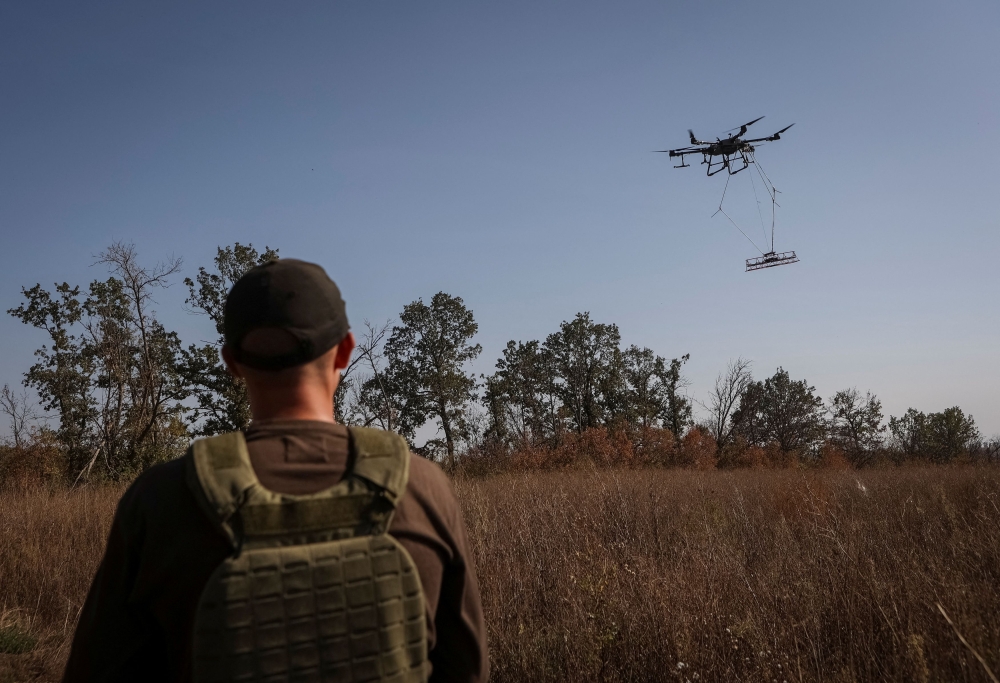
Artificial intelligence-assisted targeting, drone warfare, cyber operations, maritime blockades and real-time propaganda ecosystems now compress escalation into extremely short timeframes.
Political leaders face pressure to retaliate immediately rather than deliberate carefully. Wars no longer slow down naturally.
They accelerate continuously. This is one reason ceasefires in West Asia remain so brittle.
Even when temporary truces are announced, the infrastructure of confrontation remains fully operational underneath them.
Naval patrols continue maneuvering. Missiles remain deployed. Economic sanctions remain intact. Artificial intelligence systems continue processing potential targets in real time..
Under such conditions, ceasefires become temporary interruptions rather than foundations for durable peace.
The deeper problem, however, is that the conflict has exposed profound distrust between major actors in the international system itself.
Iran no longer trusts the United States to respect its sovereignty or security concerns.
The United States, meanwhile, remains unconvinced that Iran’s nuclear, ballistic missile and drone programs can ever be fully constrained through diplomacy alone.
Regional actors such as the Gulf Cooperation Council (GCC) states fear that any weak settlement merely postpones future escalation against their cities, ports, desalination plants and energy infrastructure.
Israel likewise views strategic ambiguity regarding Iran’s capabilities as intolerable.
In other words, every actor fears that compromise today may create greater vulnerability tomorrow.
This is the essence of the current trust deficit.
And without trust, rules-based orders cannot function effectively.
Rules-based systems ultimately depend not only on military deterrence or legal frameworks, but on a minimum level of shared confidence that agreements will be respected even during moments of strategic tension.
That confidence is now eroding globally. The delayed resolution of the West Asian conflict therefore, reflects something much larger than regional instability alone.
It reflects the gradual fragmentation of the post-1945 international order itself.
The world is increasingly entering an era where economic interdependence no longer guarantees strategic restraint.
Instead, interconnected supply chains are becoming instruments of geopolitical pressure.
Energy flows become leverage.
Shipping lanes become strategic chokepoints.
Technology becomes militarized.
Artificial intelligence accelerates escalation faster than diplomacy can contain it.
The Strait of Hormuz illustrates this transformation clearly.
Iran’s disruption of maritime traffic has allowed Tehran to increase strategic leverage without needing conventional military superiority over the United States.
Washington, meanwhile, has responded through counter-blockade measures targeting Iranian ports and shipping.
According to the United States Central Command, the US has redirected 58 commercial vessels away from Iranian ports and disabled four ships since April 13, 2026.
American forces also reportedly struck two empty Iranian oil tankers accused of attempting to circumvent the blockade.
Thus, the Gulf has become both a blockade zone and a counter-blockade zone simultaneously. The implications extend far beyond West Asia.
For Asean and East Asia, prolonged instability around the Strait of Hormuz threatens energy security, fertilizer supplies, shipping insurance costs, and semiconductor-related supply chains.
The region, therefore, has a direct stake in preventing the collapse of multilateral norms and maritime stability.
This is why rebuilding a rules-based order cannot happen quickly.
The problem is not merely institutional weakness.
It is the widening gap between technological acceleration and political trust. Military technologies evolve rapidly. Diplomatic confidence does not.
Artificial intelligence systems can identify targets within seconds. That’s the kill chain put into action on February 28 in the US-Israel war against Iran, much to the world’s total detriment.
Rebuilding strategic trust between rival states may now require decades.
This asymmetry is profoundly dangerous.
The longer the conflict persists unresolved, the more hardliners on all sides gain influence. On May 12, Trump himself rejected yet another peace proposal from Iran.
Moderates from the US and Iran advocating diplomacy increasingly struggle to justify compromise to domestic audiences traumatized by war, sanctions and insecurity.
Every failed ceasefire, however, invariably strengthens the argument that negotiations are futile. That’s because trust is thin on both sides.
The world, therefore, risks entering a cycle where instability becomes self-sustaining.
This is why Asean’s continued emphasis on multilateralism, strategic moderation, and a United Nations-centered international system remains important despite growing skepticism globally.
The Asean Outlook on the Indo-Pacific (AOIP), adopted in 2019, retains relevance precisely because it rejects zero-sum confrontation and seeks to preserve inclusive regional equilibrium.
As is the newer version of the Free and Open Indo Pacific (FOIP) was unveiled by Japan in Hanoi, Vietnam, last week.
Malaysia, particularly as Coordinator of China-Asean Relations between 2025 and 2028, should continue supporting diplomatic mechanisms capable of slowing escalation before wider fragmentation occurs. China, Japan, and South Korea have to work together with Asean to create the largest market in the world, without which international trade will continue to list.
The lesson from West Asia is deeply sobering. The delayed resolution of the conflict does not merely indicate diplomatic failure.
It reveals how much time, patience and political rebuilding may now be required before the world can restore even a minimally functioning rules-based order again.
And until that trust is rebuilt, ceasefires may remain temporary pauses in an international system increasingly defined not by stability, but by permanent volatility.
* Phar Kim Beng is a professor of Asean Studies and director, Institute of Internationalisation and Asean Studies, International Islamic University of Malaysia.
** This is the personal opinion of the writer or publication and does not necessarily represent the views of Malay Mail.


