


APRIL 21 — Amid ongoing tensions in the Middle East, global markets are facing renewed uncertainty, particularly in energy supply and price volatility.
As the region remains a critical hub for oil and gas production, any disruption has immediate ripple effects on fuel costs, transportation, and overall production expenses worldwide.
For Malaysia, which still relies partly on fossil fuels for industrial activities, such instability highlights the vulnerability of traditional resource-dependent business models.
This challenge is not unique to Malaysia. Across the globe, major economies have already begun accelerating their transition strategies in response to similar geopolitical risks.
In the European Union, the REPowerEU plan aims to reduce dependence on imported fossil fuels by increasing the share of renewable energy to at least 42.5 per cent by 2030, while more than €300 billion (RM1,395 billion) has been allocated to support energy transition and efficiency improvements.
Similarly, Japan has prioritised energy security through its Green Growth Strategy, targeting carbon neutrality by 2050 and expanding hydrogen usage as a key alternative energy source.
China, the world’s largest energy consumer, has committed to reaching carbon neutrality by 2060 and has become the global leader in renewable energy investment, accounting for nearly 50 per cent of global renewable capacity additions in recent years.
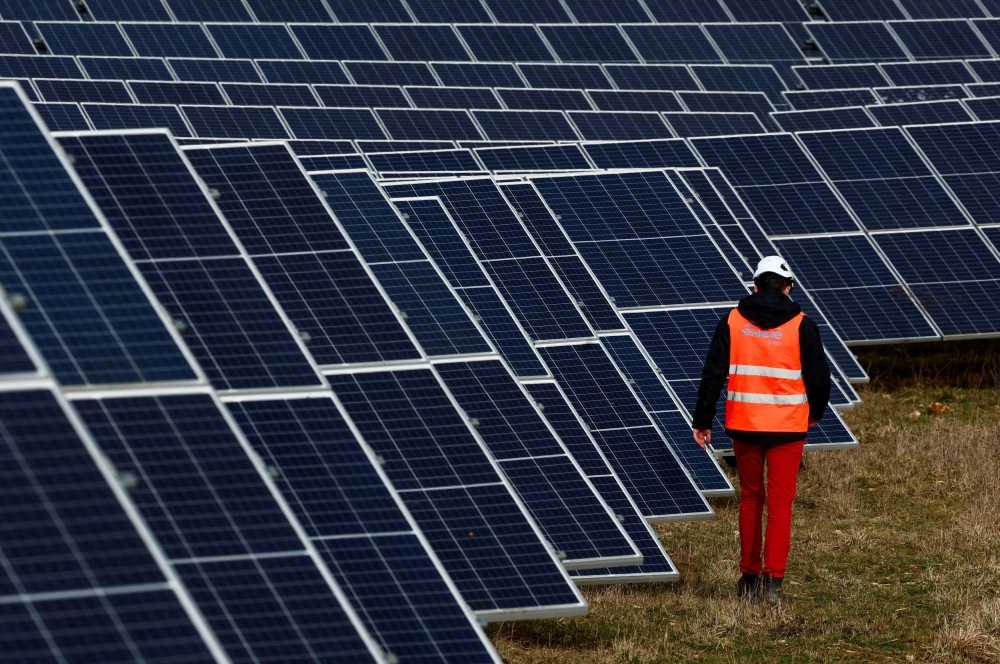
Even oil-dependent economies such as Saudi Arabia are diversifying aggressively under Vision 2030, with plans to generate 50 per cent of its energy from renewable sources by 2030 and investing billions in large-scale green hydrogen and solar projects.
These developments clearly indicate that green transition is being treated as a strategic response to geopolitical and energy risks rather than solely an environmental agenda.
In this context, green technology innovation is gaining greater relevance.
Malaysian firms that depend heavily on energy-intensive processes are increasingly exposed to rising operational costs during periods of geopolitical instability.
This has intensified the need for businesses to adopt energy-efficient technologies, renewable energy solutions, and sustainable production systems as a hedge against external shocks.
However, the readiness of Malaysian businesses remains mixed. While larger corporations and listed companies have begun integrating ESG practices and sustainability reporting in line with Bursa Malaysia requirements, many small and medium enterprises (SMEs) are still in the early stages of transition.
According to SME Corporation Malaysia, SMEs account for 97.4 per cent of total business establishments in Malaysia, yet a significant proportion remains low in digital and sustainability adoption.
A survey by Bank Negara Malaysia found that over 60 per cent of SMEs cited financial constraints as a major barrier to adopting new technologies, including green innovations. In addition, reports indicate that less than 30 per cent of SMEs have implemented sustainability or ESG-related practices, reflecting a relatively low level of readiness compared to larger firms.
Limited financial resources, lack of technical expertise, and uncertainty about returns on green investments continue to slow adoption, particularly among smaller firms that prioritise short-term survival over long-term sustainability investments.
Despite these challenges, global evidence suggests that firms investing early in green technology innovation are better positioned to withstand external disruptions. Studies by the International Energy Agency indicate that companies adopting energy-efficient technologies can reduce energy costs by 10 to 30 per cent, improving their ability to cope with energy price volatility.
Similarly, research by the World Bank shows that firms investing in sustainable and resource-efficient practices demonstrate higher operational resilience during economic shocks.
In addition, a report by McKinsey & Company highlights that companies with strong ESG and green innovation strategies tend to outperform peers in terms of financial stability and investor confidence, particularly during periods of market uncertainty.
By reducing reliance on volatile energy sources and improving operational efficiency, these companies can enhance resilience, maintain cost stability, and strengthen investor confidence.
Given these pressures, Malaysian businesses must act decisively. Businesses should urgently accelerate sustainability adoption, not only to manage risk but also to secure long-term competitiveness.
The government must provide clearer and stronger incentives for green technology, especially for SMEs.
It is time to commit to reducing fossil fuel dependence by scaling up renewable energy investments and green financing.
Policymakers should prioritise aligning short-term energy needs with long-term sustainability to safeguard Malaysia’s economic future.
Immediate, coordinated action from both businesses and government is essential to ensure lasting resilience in an unpredictable global environment.
* Mas Nordiana Rusli is a Senior Lecturer at the Department of Accounting, Faculty of Business and Economics, Universiti Malaya, and can be contacted at [email protected]
** This is the personal opinion of the writer or publication and does not necessarily represent the views of Malay Mail.


