


APRIL 5 — During my recent visit to Chiang Mai, I spent time in three communities, namely Lisu, Lahu and Kayin, each shaped by different languages, rituals, and rhythms of everyday life.
Yet beneath these differences lies a shared experience, where these communities navigate questions of citizenship, identity and cultural continuity at the margins of the Thai state, where culture becomes a way of remaining visible.
The Lisu: Ceremony, memory and the continuity of community
The Lisu village felt alive in a quiet, grounded way. The open space in the centre as featured in Photo 1 shows a flattened circle of earth, and this was not simply empty land.
It was a ceremonial space. I was told that this is where rituals are performed, where community gatherings take place and where memory is enacted collectively.
Ceremonial grounds matter. For communities like the Lisu, ritual is not only cultural performance but also a way of maintaining cohesion across generations.
The Lisu are part of a Tibeto-Burman-speaking group historically migrating from southern China through Myanmar into northern Thailand.
Their presence in Thailand is therefore shaped by mobility, but also by negotiation through negotiating land, recognition and belonging.
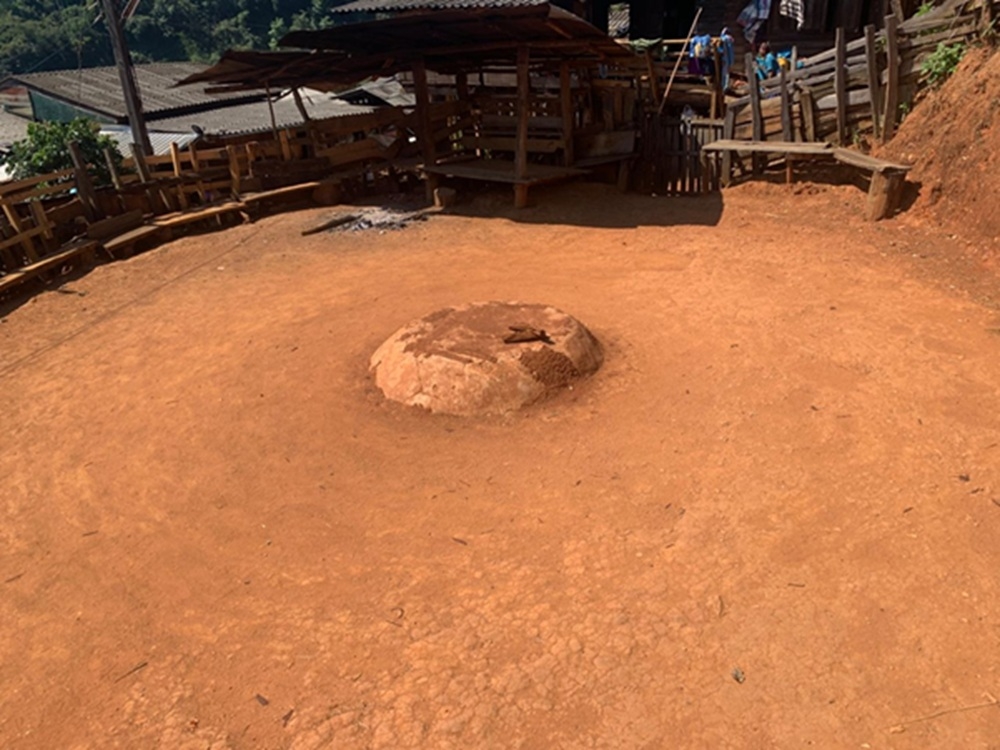
In many hill communities, ceremonies mark agricultural cycles, ancestral connections and communal decision-making.
The circular ground in the village reflects a spatial reminder that community is not abstract but physically enacted. It is where identity is rehearsed.
As Chakur, whom I met at Lisu village explained, the space is also linked to practices that extend beyond ritual where healing, gathering and the passing of knowledge across generations.
He showed me how herbs collected from the surrounding hills are used for traditional healing, carefully prepared and shared within the community.
I was offered a cup of his herbal tea, brewed from locally gathered leaves, slightly bitter but grounding that shows a small gesture that reflected a broader system of knowledge rooted in land, memory and care.
Yet such spaces also reveal political tensions. Hill tribes in northern Thailand have long faced challenges related to citizenship status, land rights, and integration into the Thai national framework.
Many Lisu communities were historically categorised as “hill tribes,” a label that simultaneously recognises difference and marginalises them within national narratives.
Development policies, conservation zones and forest regulations have sometimes restricted traditional agricultural practices, reshaping how communities live.
The Lahu: Quiet settlements and linguistic worlds
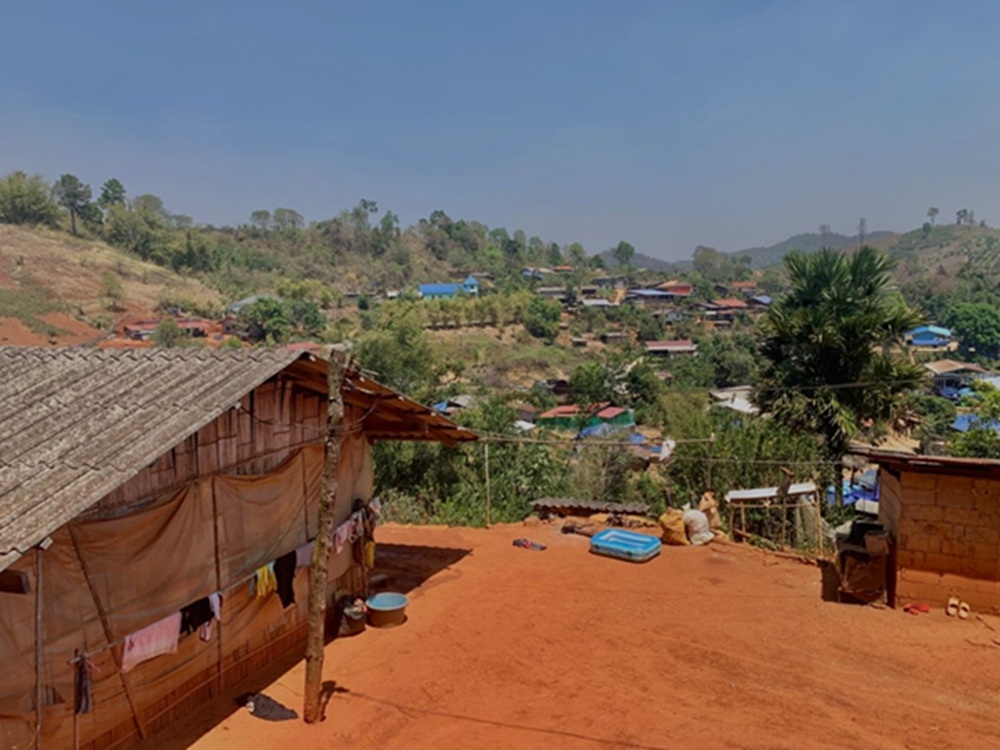
The Lahu village sat along a slope, overlooking scattered settlements across the hills.
Wooden houses lined the terrain, and the red soil reflected the heat of midday. It felt calm, almost suspended. The pace here seemed slower, shaped by geography and distance.
The Lahu, like the Lisu, belong to the Tibeto-Burman linguistic family. Yet their language, customs, and social structures are distinct.
In northern Thailand, Lahu communities are often dispersed across mountainous terrain, maintaining small-scale agricultural livelihoods and close-knit kinship networks.
Language plays a crucial role in shaping identity here. Many Lahu communities speak their own language at home, while Thai functions as a second language, often learned through schooling or administrative interaction.
This linguistic layering creates a dual existence, with local belonging alongside national integration.
The quietness of the village reflects this. It is not isolation, but a different rhythm of life. Houses appear spaced, movement is deliberate, and social interaction unfolds within familiar circles. The environment itself reinforces community cohesion.
Yet the Lahu experience also intersects with broader political questions.
Hill communities in northern Thailand have historically been associated with borderlands, migration and mobility.
This has shaped state perceptions, often framing these groups through development or security lenses. Access to education, infrastructure, and documentation has improved over time, but unevenly.
The Lahu village illustrates this layered reality. The landscape is expansive but opportunities remain structured by distance.
The quietness becomes symbolic where we witness a community present, yet often overlooked in national discourse.
What remains striking is resilience. Despite pressures of modernisation, language and cultural practices persist.
The village feels anchored in its own world, even while connected to broader structures.
The Kayin: Twenty-three houses and the politics of smallness
The Kayin village that I visited was small, only 23 houses. The scale immediately reshapes perception. This is not a large settlement, but a compact community, tightly woven through proximity.
Houses stand close, built on slopes, with shared spaces linking them together.
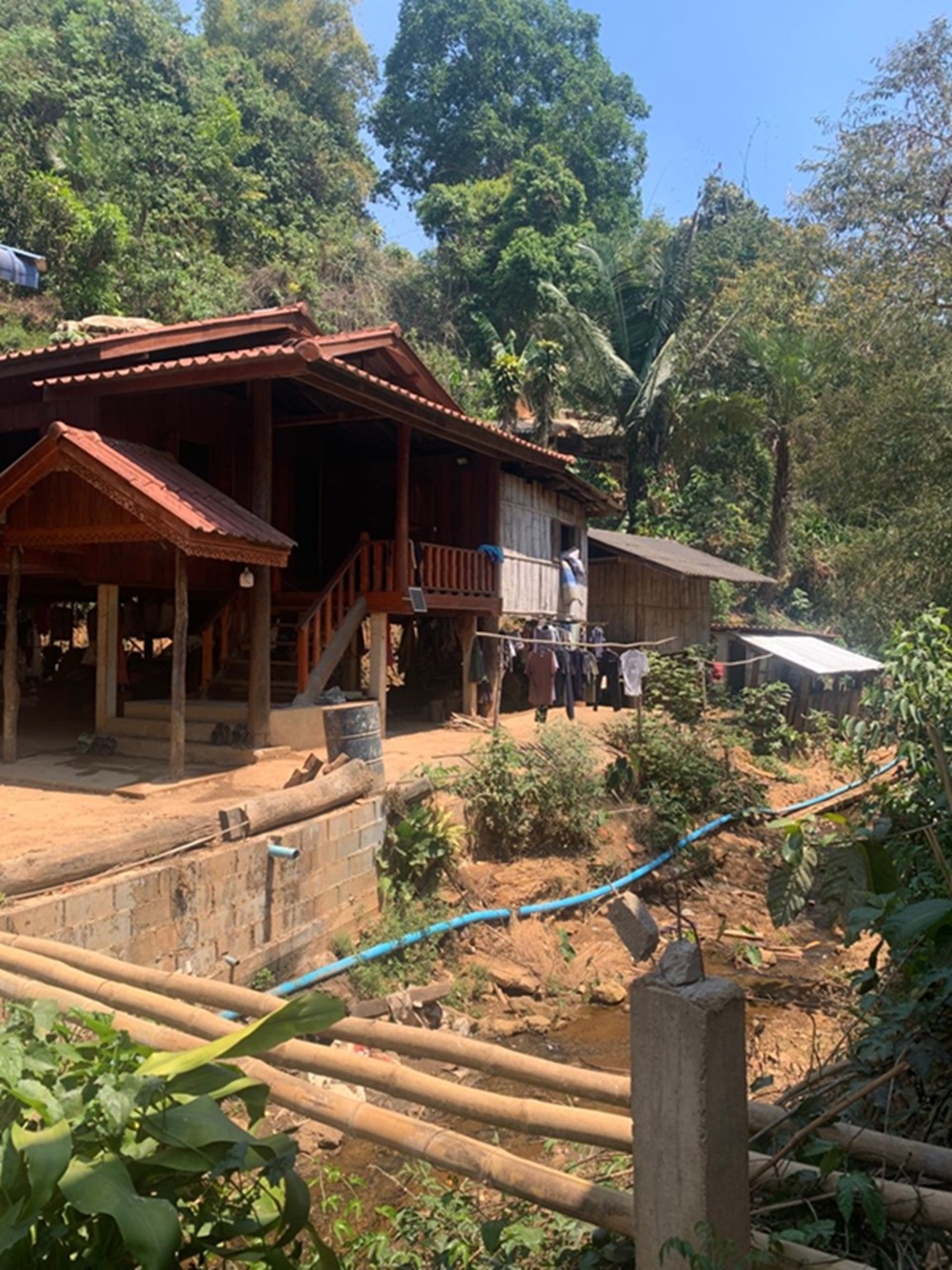
The Kayin (often also referred to as Karen in broader regional contexts) are spread across Thailand and Myanmar, with diverse subgroups and languages.
In northern Thailand, smaller Kayin communities often exist within mountainous regions, maintaining agricultural livelihoods and strong community bonds.
During the visit, I met Dowjai, a youth from the village who has begun exploring small-scale entrepreneurship within the community.
Her efforts, shaped by local constraints, reflect how younger generations are finding ways to create opportunities without leaving.
The village itself has no stable Internet access and connectivity is only available in certain spots. And, this uneven access shapes how information, markets and possibilities are navigated.
Dowjai also showed me a manual rice-processing tool used within the village, a wooden mechanism operated by hand.
However, on that particular day, it could not be demonstrated. According to local spiritual beliefs, it was not considered an auspicious day to operate the tool.
The decision not to use it was respected collectively, a reminder that everyday practices here remain intertwined with cultural rhythms and belief systems.
Small villages carry their own political significance. With only 23 houses, the Kayin settlement represents both vulnerability and cohesion.
Vulnerability, because small communities are more exposed to demographic shifts, migration, and economic pressures. Cohesion, because social ties remain strong, and identity is collectively maintained.
Yet smallness also reflects broader structural realities. Many hill communities have experienced relocation, resettlement or gradual migration due to land policies, development projects, or economic change.
Some villages shrink as younger generations move towards urban areas for education or employment.
In this sense, Dowjai’s initiative, emerging from a village with limited connectivity, illustrates how continuity is not static; it is actively negotiated, improvised, and sustained.
Borderlands, belonging and the politics of presence
Across the Lisu, Lahu, and Kayin villages, differences are visible ranging from language, layout, ritual space, to scale.
Yet common threads emerge. These communities exist in Thailand’s northern highlands, historically shaped by migration across borders that predate modern states. Their identities are therefore both cultural and political.
Northern Thailand’s hill communities have long navigated questions of citizenship, land access and cultural recognition.
State policies since the mid-20th century have aimed to integrate hill tribes into national frameworks, often through education, infrastructure, and development programs.
While these policies have improved access in many areas, they also reshape traditional ways of living.
As I left, the landscape slowly widened again into larger roads and busier towns. But the villages remained in memory; not as isolated images, but as connected stories.
The red earth, wooden houses, and ceremonial spaces are more than scenery. They are reminders that South-east Asia’s diversity is not only national, but local.
Languages shift within kilometres. Identities reshape across hills. Communities persist in quiet ways.
In these villages, politics is not loud. It is embedded in language spoken at home, in ceremonies held on open ground, in the decision to remain in a village of 23 houses.
* Khoo Ying Hooi, PhD, is an Associate Professor at Universiti Malaya. My sincere thanks to Surachai and M for bringing me to these villages and generously sharing their knowledge along the way. I am also grateful to Chakur and Dowjai, whom I had the privilege to meet during the visit, for their warmth, conversations and openness in allowing me to learn from their communities.
** This is the personal opinion of the writer or publication and does not necessarily represent the views of Malay Mail.


