


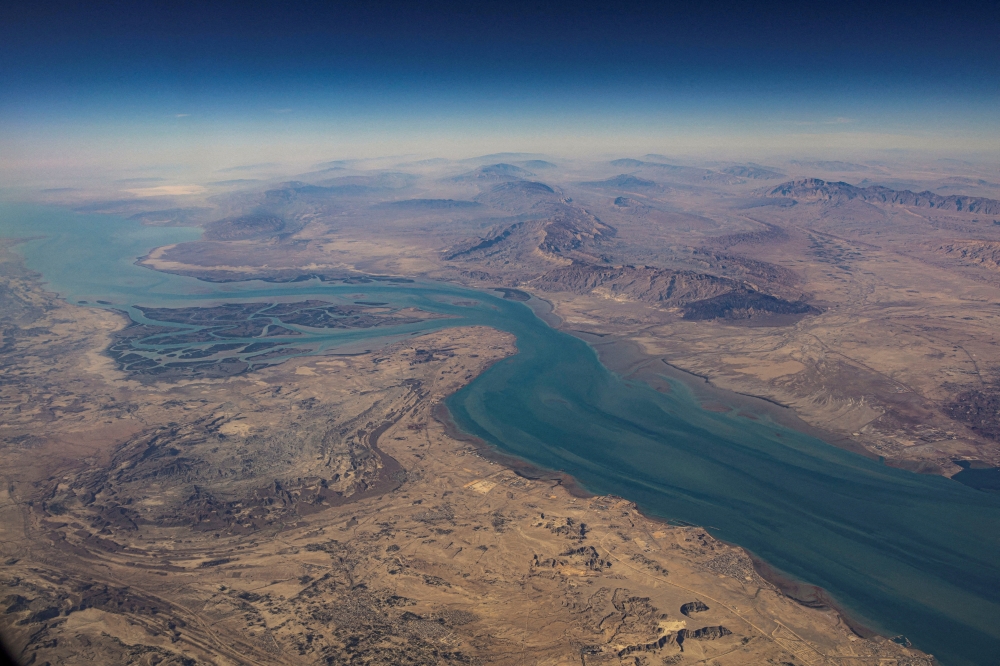
MARCH 27 — The world has long fixated on the Strait of Hormuz as the ultimate geopolitical chokepoint. And for good reason. Roughly a fifth of global oil flows through that narrow artery, making it a perennial flashpoint in times of war.
Yet to focus solely on Hormuz is to misunderstand the fragility of globalisation itself.
The real story is far more unsettling: the global trading system is not anchored by resilience, but by a series of narrow, vulnerable passages — each capable of disrupting the entire world economy.
The war in the Middle East has merely exposed what was always there. Globalisation, for all its sophistication, runs through bottlenecks.
From the Strait of Malacca to the Bab el-Mandeb, from the Panama Canal to Hormuz, the modern world economy depends on a handful of maritime corridors that are geographically narrow but economically vast.
These choke points are not just physical passages; they are pressure points.
They are where geopolitics, climate change, insurance markets, and military strategy intersect in ways that can amplify disruption far beyond their size.
When even one of these arteries is constricted — whether by conflict, drought, or piracy — the consequences ripple across continents.
We saw this when drought limited traffic through the Panama Canal. We saw it again when attacks in the Red Sea disrupted shipping through Bab el-Mandeb.
Each event forced vessels to reroute, increasing costs, delaying deliveries, and ultimately feeding global inflation.
In other words, the global economy does not break all at once. It frays at its edges — at its narrowest points.
The Strait of Hormuz is therefore not unique. It is simply the most visible. What makes the current moment particularly dangerous is that multiple choke points are under simultaneous stress.
The Middle East conflict threatens Hormuz. Instability in Yemen affects Bab el-Mandeb. Climate change continues to reduce water levels in the Panama Canal.
Similarly, the Strait of Malacca — through which a substantial portion of East Asia’s energy imports pass — remains one of the busiest and most strategically sensitive waterways in the world.
This convergence is unprecedented in recent decades.
It means that the global trading system is no longer facing isolated shocks, but compounding ones. The implications are profound.
First, inflation is no longer a temporary phenomenon. When shipping routes are disrupted, transport costs rise. When transport costs rise, the price of everything — from fuel to food to fertilisers — follows.
This is especially critical for countries dependent on imported inputs, including agricultural commodities and industrial materials. Second, insurance markets have become silent arbiters of global trade.
When insurers withdraw war-risk coverage, shipping effectively stops — even if the waterway itself remains physically open. This “financial blockade” can be as powerful as any military one.
Third, supply chains are being forced into a costly recalibration. Companies must now factor in geopolitical risk, not as an exception but as a constant.
Redundancy, diversification, and strategic stockpiling—once considered inefficient — are becoming necessary.
For South-east Asia, the implications are immediate and strategic. The Strait of Malacca is no longer just a regional waterway. It is a global lifeline.
Any disruption in Hormuz increases the strategic premium of Malacca, as energy flows are redirected and maritime traffic intensifies.
This places Malaysia, Singapore, and Indonesia at the heart of global trade security.
But it also exposes them to new vulnerabilities.
If global powers begin to “deepen and broaden” their naval presence to secure trade routes, South-east Asia could find itself drawn into a more militarised maritime environment.
The line between protection and provocation may become increasingly blurred.
At the same time, Asean must recognise that economic resilience is now inseparable from maritime stability.
Energy diversification, strategic reserves, and regional cooperation are no longer optional. They are essential safeguards against a world in which choke points can no longer be taken for granted.
The lesson is stark.
Globalisation was built on efficiency — on the assumption that goods would move freely through predictable routes at minimal cost.
But efficiency has come at the expense of resilience. The world is now rediscovering the price of that trade-off.
In an era of polycrisis — where war, climate change, and economic fragmentation intersect — the fragility of chokepoints is no longer a peripheral concern. It is the central challenge of the global economy. Hormuz may dominate headlines.
But the Straits of Malacca, South China Sea, Indian Ocean, the Cross Straits between China and Taiwan, indeed, all the seas in owned by Indonesia and the Philippines have all gained added importance.
Thus, Hormuz is but one of many fault lines. And if even one of them fails, the consequences will not be localised.
They will be global. Therein the importance of Free and Open Indo Pacific and the Asean Outlook on Indo Pacific.
The world does not run on open seas. It runs on narrow passages that have to be global commons.
And those passages are under strain like never before although the most critical one is the Strait of Hormuz.
* Phar Kim Beng, PhD is the Professor of Asean Studies at International Islamic University of Malaysia and Director of Institute of International and Asean Studies (IINTAS).
** This is the personal opinion of the writer or publication and does not necessarily represent the views of Malay Mail.


