


MARCH 22 — Watching the world this week has been a bit like watching a drunk man start a bar fight, smash half the furniture, and then loudly complain that nobody is helping him pick up the chairs.
That, in essence, is where we are.
Donald Trump has been having a very public meltdown because several countries declined to send warships to help stabilise the Strait of Hormuz — after he decided to start a war without bothering to consult most of the world first.
Let that sit for a moment.
Three weeks ago the United States and Israel launched strikes against Iran.
No consultation with Nato.
No consultation with Asian allies.
No consultation with half the countries whose economies depend on the oil flowing through that narrow stretch of water.
At the time the message from Washington was clear.
We don’t need anyone.
Fast forward three weeks.
The Strait of Hormuz — the artery through which roughly one fifth of the world’s oil flows — is effectively shut.
Mines in the water.
Anti-ship missiles along the coast.
Drone boats buzzing around like angry hornets.
Tankers won’t sail.
Insurance companies won’t insure.
Oil sitting in the Gulf like cars stuck in a traffic jam that stretches across the global economy.
Suddenly the phone calls begin.
Washington starts dialing anyone with a navy.
Japan.
South Korea.
France.
Britain.
Canada.
Australia.
Basically anyone with a boat, a flag, and a willingness to clean up someone else’s mess.
The responses were… restrained.
Germany essentially said:
“You told us you didn’t need us before the war started. Why exactly are you surprised now?”
France said they would happily escort ships after the bombing stops and Iran agrees.
Which in diplomatic language means: don’t hold your breath.
Spain declined.
Poland declined.
Sweden declined.
Several Indo-Pacific allies quietly indicated they were not particularly interested in being dragged into a conflict they had no say in starting.
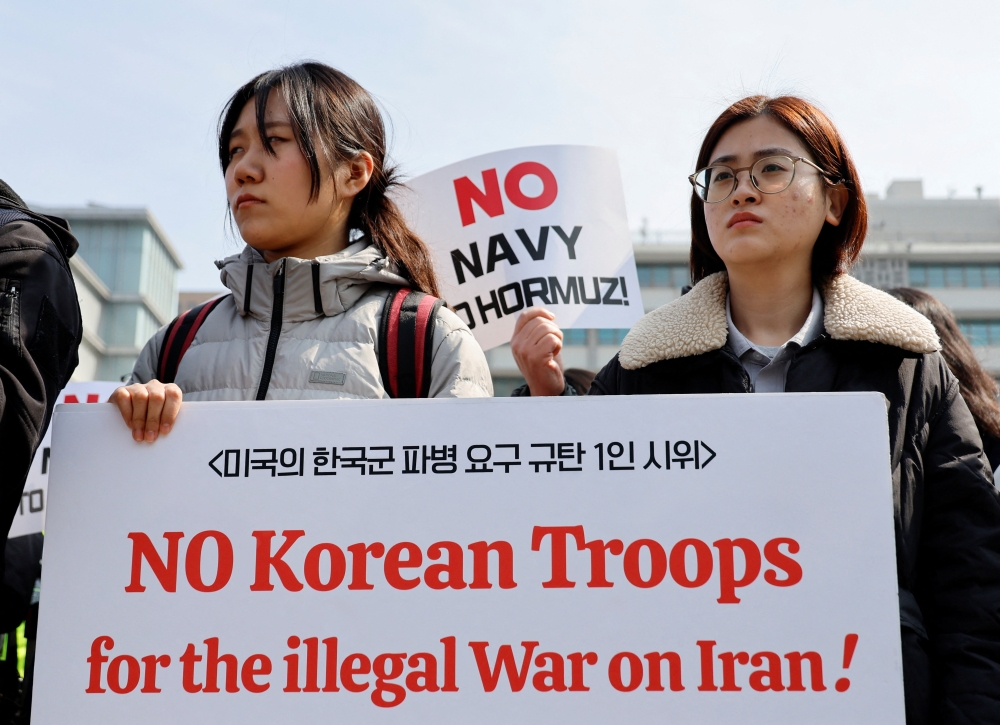
So what does Trump do?
Does he reflect?
Does he pick up the phone and speak to allies like a grown adult?
Of course not.
He jumps on Truth Social and starts shouting in capital letters that America never needed Nato, never needed allies, and doesn’t need anyone.
Which is roughly the geopolitical equivalent of getting rejected at a party and loudly announcing that you never wanted to attend the party anyway.
The man has the emotional stability of someone flipping a Monopoly board because he landed on someone else’s hotel.
And then there’s the supporting cast.
Take Pete Hegseth — the television warrior who appears on American news channels delivering lectures about strength and patriotism while somehow radiating the intellectual depth of the loud kid in high school who discovered protein powder and never quite made it to the library.
Every conflict apparently looks simple from the safety of a studio chair.
Bomb this.
Strike that.
Show strength.
The kind of thinking that sounds very impressive until someone asks the slightly awkward follow-up question:
What happens next?
Because what happened next is the Strait of Hormuz shutting down.
And when that happens, the consequences don’t stop at the Persian Gulf.
They travel.
They travel to truck drivers in Malaysia.
To factories in Vietnam.
To farmers in India.
To fishermen in Sri Lanka.
Diesel prices rise.
Food prices rise.
Shipping slows.
Currencies wobble.
Central banks panic.
The Global South — which had absolutely no vote in this war — ends up paying the bill anyway.
That is the quiet absurdity of modern geopolitics.
Two powerful countries exchange missiles in the Gulf and suddenly a vegetable seller in Colombo is wondering why cooking oil costs twice as much.
Meanwhile the Strait remains closed.
Tankers wait.
Oil sits in limbo.
And the world economy watches while politicians argue on social media.
Because this isn’t strength.
This is what happens when strategy is replaced by impulse and foreign policy starts to resemble a reality television episode.
Alliances, after all, are built on consultation and trust.
Not on midnight decisions followed by public insults.
When leaders publicly berate the very partners whose cooperation they rely on — Japan, South Korea, Nato members — they quietly weaken the architecture that has kept global trade routes stable for decades.
And somewhere in Beijing, analysts are almost certainly watching this unfold with quiet fascination.
Because nothing erodes alliances faster than a superpower that treats partners like disposable extras in its own drama.
The Strait remains closed.
The oil remains trapped.
And the rest of the world — particularly those of us far from Washington but deeply exposed to its decisions — are left hoping that someone, somewhere, remembers that geopolitics is not a television show.
It is the machinery that keeps food moving, fuel flowing, and economies alive.
Break that machinery carelessly enough…
…and the whole planet starts to feel the vibration.
* This is the personal opinion of the writer or publication and does not necessarily represent the views of Malay Mail.


