











SINGAPORE, Jan 25 — Illegal hawkers, police raids, and battling for shared toilets — these are some of the fond memories retired national Singaporean sprinter Canagasabai Kunalan have of Little India when he lived there for a period of time when he was a little boy.
Kunalan, 75, had spent plenty of his childhood there while staying with his grandparents — who lived at Clive Street — during the school holidays. Then, he had to share the loo and kitchen with seven other families. “The kitchen was not too bad because you could see different people cooking things but the toilet was a bad experience,” he quipped.
In the early mornings, young Kunalan would be awakened by the sounds of illegal hawkers selling their wares. When the police came, “you will see them scattering and pulling their carts. Sometimes they have to leave their things there or grab the cloth on which they have these things displayed and run for it”, he recalled.
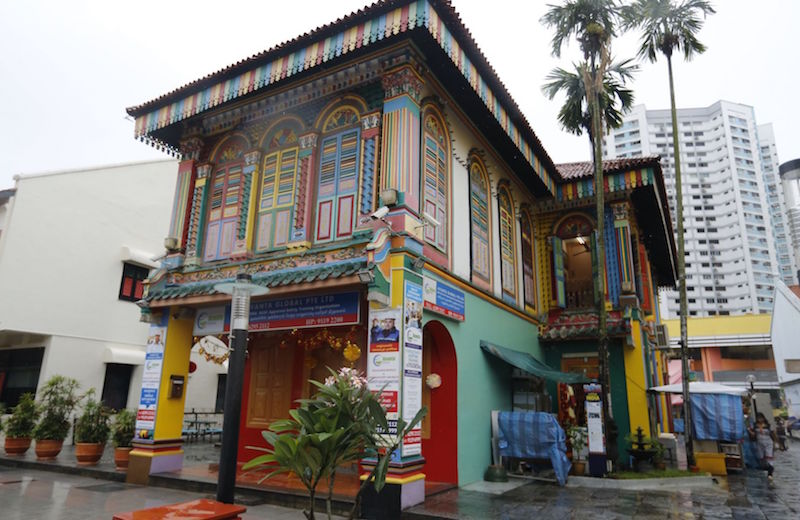
This richness and colour of the area’s history is why the National Heritage Board (NHB) has decided to launch a new heritage trail — their 16th so far — there.
NHB’s assistant chief executive (Policy and Community) Alvin Tan said they chose Little India because it is an area that is rich in architecture, heritage and culture.
Tan added that Little India is also a good showcase for tangible heritage and intangible heritage, such as “how they could co-exist together, how they could be preserved and how they could actually evolve from the past to the present”.
The new Little India Heritage Trail will span 4km and feature more than 40 heritage sites with 18 heritage markers filled with information of the site, and all of them are confined within the 200-year-old Little India precinct. It will also be the first in NHB’s collection of trails to feature thematic trails — trails that are customised to appeal to specific interests that visitors might have.
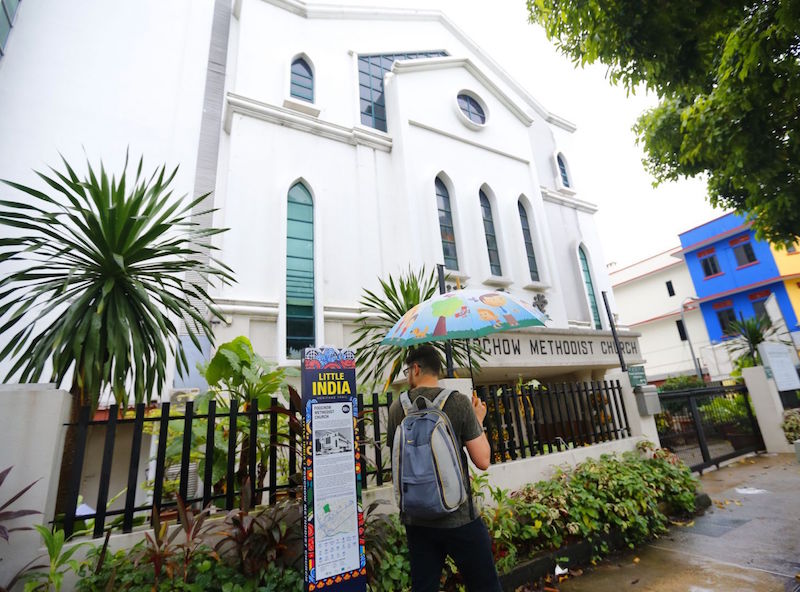
This means the trail will be divided into three bite sized trails — Serangoon in the 1900s, a 40 minute journey which will take you through the history of the area; Walk of Faiths, an hour-long trail which takes you through the religious institutions found within Little India; and Shop Till You Drop, a 30 minute experience which focuses on shopping, bringing you to some of the traditional shops and shopping areas that little India is famous for.
“Different visitors might have different interests so we are trying to have these thematic trails to appeal to these interests, but at the same time, we also recognise that there are certain visitors that might be starved of time,” Tan explained.
Another new addition is the adoption of Bluetooth technology — an effort in promoting these trails to youths. Beacons will be installed at most of the heritage markers and visitors can access information through the use of their mobile devices, after they turn on the Bluetooth function, such as lesser-known facts and photos of the site shared by other trail-goers. The Bluetooth mobile feature is still in its testing phase and will be available later this year.
“Visitors can retrieve more information about the various heritage sites and buildings and get information on where’s the next nearest marker to guide them to the marker,” Tan said, adding that NHB will look at visitors’ response before deciding whether to implement this feature in other trails.
“We will see how it goes. We are introducing this new feature and collecting feedback on how effective they are before we decide if we should launch this initiative and make it part of every heritage trail,” Tan said.
“We are quite committed to always enhancing the entire experience for visitors. In this case, it’s the whole experience of going on a heritage trail and we wanted to present the information in a more engaging and accessible manner.” — TODAY
Visitors can download the Little India Heritage Trail brochure and map from NHB’s heritage portal, Roots.sg or pick up a printed copy of the trail brochure and map at Indian Heritage Centre located at 5 Campbell Lane. For more information, visit https://roots.sg/visit/trails