

CHIANG RAI, March 10 — The Thai city of Chiang Rai is often overlooked when travellers visit northern Thailand. Its charms are frequently eclipsed by its sister province Chiang Mai, which is more popular with locals and tourists. But if you intend to discover a more rustic destination that is quiet, scenic and rich in local lore and fare, Chiang Rai ticks all those boxes.
Chiang Rai was founded by Phaya Mengrai in 1262 as part of the Lao-Thai Lanna Kingdom, and it was not a Siamese territory until 1786 and a province until 1910. Like any province in Thailand, temples are ubiquitous here and Chiang Rai’s trove of ancient monuments are rich in mystery and history. Wat Chedi Luang situated in Chiang Saen, where the earthen city walls still stand is a must-visit. When it fell into Burmese hands, the city deteriorated. Even when Thailand took control at the start of the 19th century, it was left to further disrepair. Today, it is a small river town best known for its images of Buddha and artefacts of the Chiang Saen Kingdom, which flourished in the 11th and 12th centuries, that are housed in the Chiang Saen National Museum.
Also in Chiang Saen is the Hall of Opium. The mist-shrouded hills, cool climate and tropical forests of Chiang Rai were once the perfect place to grow opium poppies. Founded by the Mae Fah Luang Foundation (a non-profit organisation in Thailand), this attraction is situated over 40 ha in the Golden Triangle Park and has a total exhibition area of about 5,600 square metres. Its cavernous halls showcasing artefacts and insightful dioramas are a great way to learn more about the opium trade — you can learn how it was grown and harvested — and see relics such as opium pipes and scales.
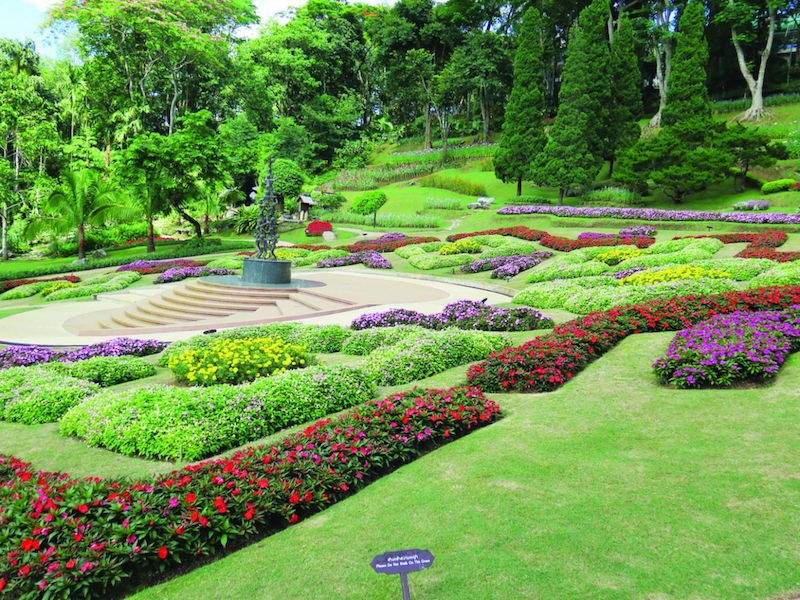
Over in Doi Tung is the National Botanical Gardens. Dubbed the Mae Fah Luang Garden, these gorgeous gardens with their undulating knolls and lush landscapes are tended by dedicated local villagers. The air here is fresh and crisp, while plenty of flowering plants greet visitors upon arrival. Interestingly, the blooms hide a darker past. This area used to be an important route for opium caravans and individuals involved in the drug trade. It was the late Princess Srinagarindra, mother of the present King of Thailand, who started the Doi Tung Development Project in order to transform and sculpt the vast landscape into a stunning botanical garden. She had wanted the Thai people to have an opportunity to enjoy flowers of temperate climates.
So here, you have dahlias, carnations and petunias in their dazzling colours and forms. The best time to visit is between November and March. And there are a few cafes and restaurants serving refreshments. The expansive garden also includes coffee plantations and offers spectacular views of Myanmar.
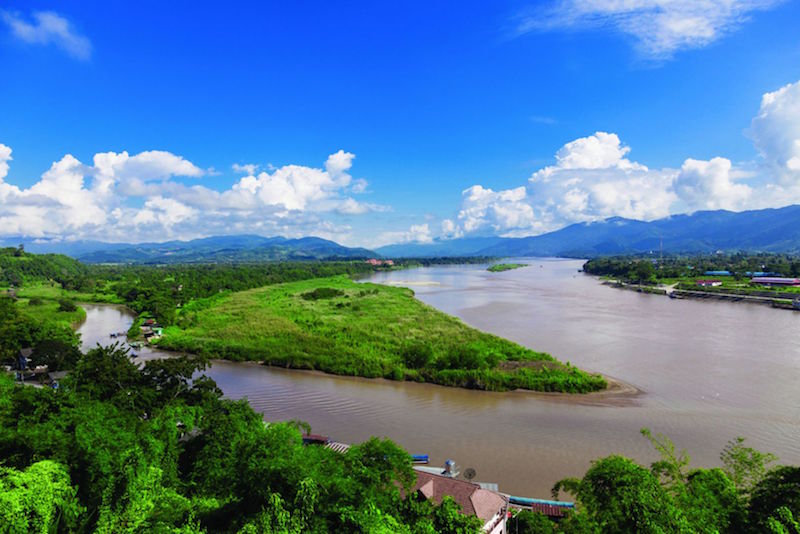
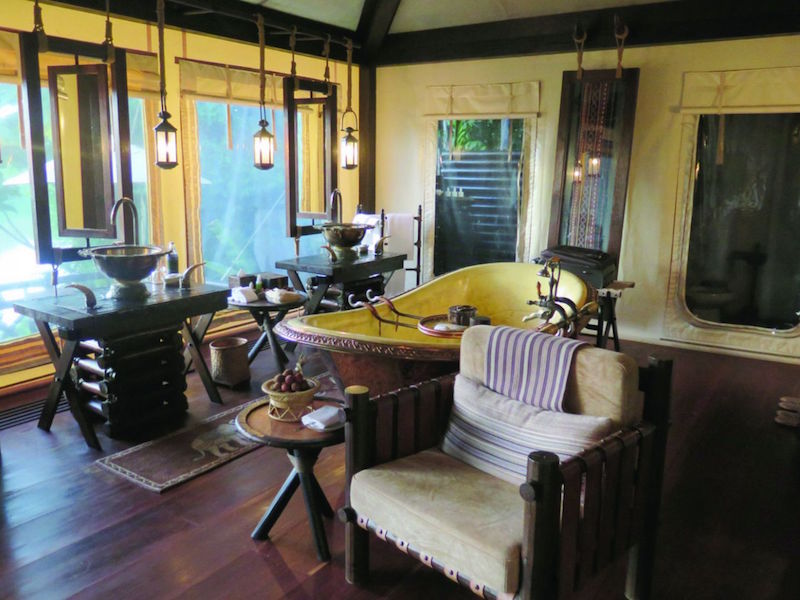
Another way to take in the views is to stay at the Four Seasons Tented Camp, located in the Golden Triangle. Each of the 15 tents here is 581 square feet of well-appointed living, relaxing and bathing spaces done up in safari chic. We’re talking air-conditioning, leather-clad chairs, paddle fans, hardwood desk, hand-hammered bathtub and an outdoor deck to gaze into one of the rivers leading to the Golden Triangle. Don’t worry, the mosquitoes can’t get in, and all you will hear at night are the croaking of frogs to lull you to sleep. The Deluxe tent accommodates two adults but the Superior tent can fit two adults and a child.
Less luxurious but no less lush is Le Meridien Chiang Rai, set along the Kok River where you can opt for rooms that face the scenic and tranquil river. All the rooms and modern amenities are ensconced in beautifully landscaped gardens and a picturesque man-made lake. Best of all, this modern five-star resort won’t bust your bank account.
To market, to market
Like most parts of Thailand, the local market is a huge draw. There is the morning market where locals buy some of the freshest ingredients, including fish, vegetables and fruits — even honey harvested from the jungles. A popular morning snack is boiled maize, with its many coloured hues of red and purple. You don’t need to add butter because its natural sweetness comes through.
At night, the Saturday Walking Street located in the centre of town should not be missed. You’ll find many stalls selling food, clothes, home products, plants and more. Here, we got our fill of aromatic grilled squid, while deep-fried chicken wings tossed with kaffir lime leaves were superbly scrumptious. Aside from food, you’ll find plenty of hill tribes selling silk-ready garments, artisanal products, handicrafts and artworks. The street market opens from 6pm to 10pm on Saturdays, so it’s good to get there early, have a bite and walk around.
The next day, we checked out the Sunday Walking Street along Sankhongnoi. It is slightly smaller than its Saturday cousin, but Sankhongnoi “Happy Street” showcases more performances and cultural activities than the retail-focused Saturday Walking Street. And while you are there, check out Chiang Rai’s Clock Tower’s colourful light show, which takes place every evening at 7pm, 8pm and 9pm.
Foodie alert
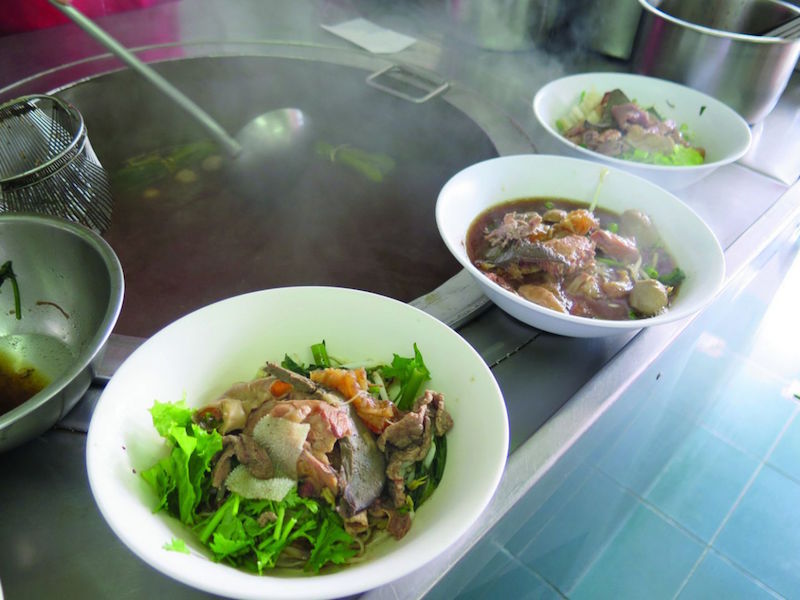
While Kao Soey — the iconic dish of northern Thailand — can be easily found everywhere, what’s more unique is Thaksin beef noodle at Rod Yiam Beef Noodle. The stall is on Banpaprakan Road, just west of the Clock Tower and is so named because of the former Thai leader’s visit in 2002. Hanging on its walls is a porcelain bowl logo representing a thumbs-up from Thailand’s own version of its Michelin guide (Shell Chuan Chim) along with framed photographs of VIPs, dignitaries and celebrities who have slurped on the robust dish.
For something more idyllic, head to Chiang Rai Beach where there are 20 cafes and restaurants opened during the day. Sip beers and tuck into local fare as you gaze at the Mae Kong River. It is located out of town, but tuk-tuks and motorbikes are plentiful and cheap.
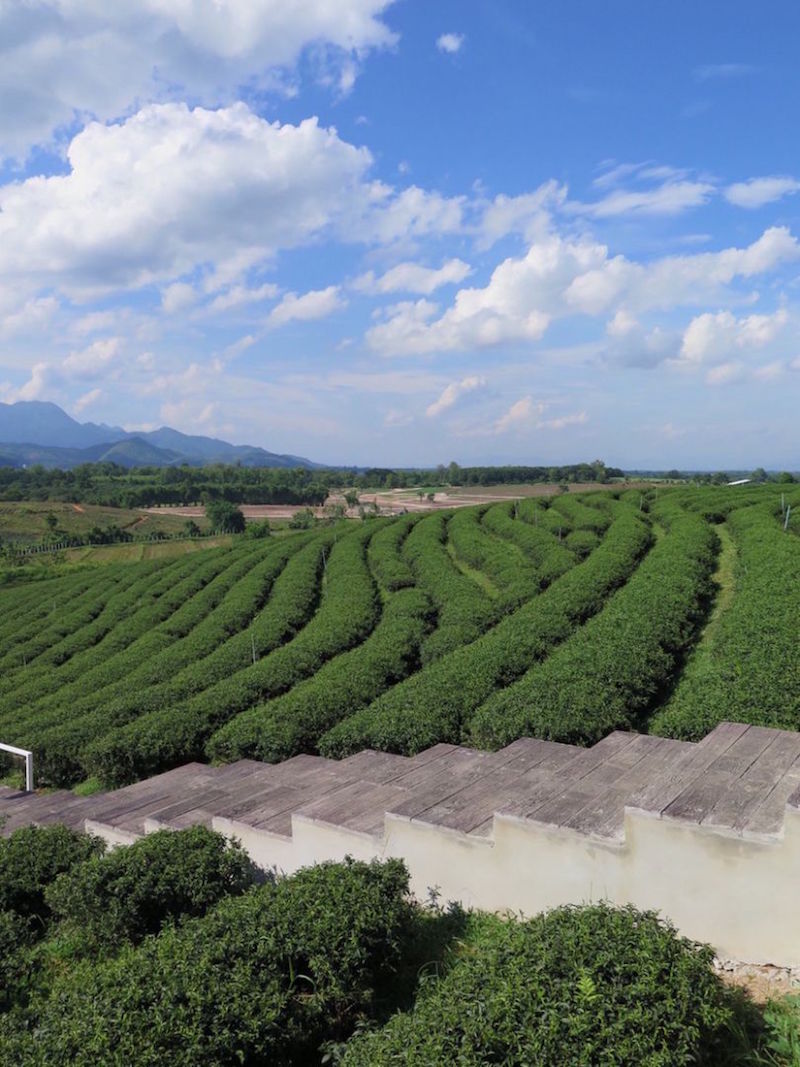
Also located outside the city is the Choui Fong tea plantation which is synonymous in the Mae Chan district of Chiang Rai. The brand is more than 40 years old and has consistently produced some of the finest tealeaves. Here, you can stand at the peak (at 1,200 metres above sea level) for an unobstructed view of the undulating hills where tea grows abundantly. A small shop also provides a great pit stop for gifts — its Oolong, Black and Assam teas are especially good. It’s also therapeutic sitting at the cafe with a cup of tea, nibbling on the green tea snacks and gazing at the lush hilly vistas.
In Chiang Rai, the simple pleasures really matter the most. — TODAY