

RIYADH, March 7 — I reached the port of Jizan in southwestern Saudi Arabia just in time to catch the speedboat. After buying my ticket and having my passport checked by a moustachioed police officer, I climbed into the small, closed cabin with a few other passengers, a box of vegetables, a green shag rug and a parakeet in a wire cage, and we set off for what I had been told was one of the most enchanting places in the kingdom.
My destination lay 28 miles off the coast: Farasan Island, the largest of a cluster of sunbaked sand and coral outcroppings in the Red Sea that are festooned with pristine beaches, prime dive sites, mangrove forests and historic relics dating back centuries.
The trip was my first lesson in what it means to travel in a country full of potential tourist sites that the government is ambivalent about letting foreigners see.
Most people reach the island aboard passenger ferries bequeathed to residents by the previous Saudi king. But I had missed the last trip, so I had to endure an hour-long, bone-shattering trip across the waves on a wooden bench in the speedboat.
After we landed, I rolled my bag to the parking lot to find scores of dust-covered pickup trucks but not a taxi in sight, because, as I was later informed, the island doesn’t really have taxis. But before long, a student I had chatted with on the boat divined my predicament and delivered me to my hotel. His parakeet chirped the whole way.
In a region where countries like Egypt, Jordan and the United Arab Emirates have invested to make tourism pillars of their economies, Saudi Arabia stands apart, and for good reason.
The country’s identity revolves around being the birthplace of Islam and home to its holiest sites. Part of that heritage is adherence to a strict creed by which shops close throughout the day for prayer, women wear head-to-toe black gowns and are barred from driving or from socialising with unrelated men, alcohol is illegal and drug dealers and other criminals are beheaded in public squares.
That keeps the kingdom off the list of where most Westerners — and even many Saudis — want to spend spring break.
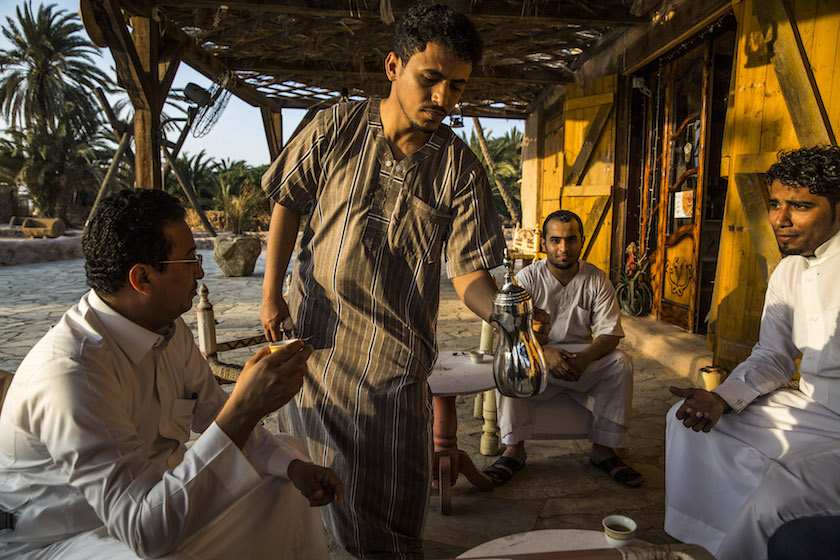
Saudi officials say they are not against visitors; more than 10 million expats reside in the kingdom and millions more Muslims come every year for religious visits. And on a personal level, Saudis can be disarmingly friendly and hospitable.
But as the world’s largest oil exporter, Saudi Arabia has long lived without tourism income and has seen little need to attract tourists who might make out on beaches or hold hands at the mall. (Or who may be women travelling alone.)
Officials at the tourism commission say the kingdom is opening up, albeit at its own pace, which is often glacial. The commission is led by Prince Sultan bin Salman, whose father became king last year and who is famous for his own travels: He was the first Arab to go to space. The government now offers interest-free loans for tourism investments.
For now, the priority is encouraging Saudis to visit their own country. Tourist visas are not imminent, but for the intrepid tourist like me who gets in for other reasons (in my case a conference, as I report on the region) and follows the rules, there is the exhilaration of having awe-inspiring sites virtually to yourself.
“For those who like history, culture and nature, there is lots to do,” Salah Al-Bukhyyet, the commission’s vice president, said in an interview. “But here in Saudi, you won’t see people on the beach in bikinis.”
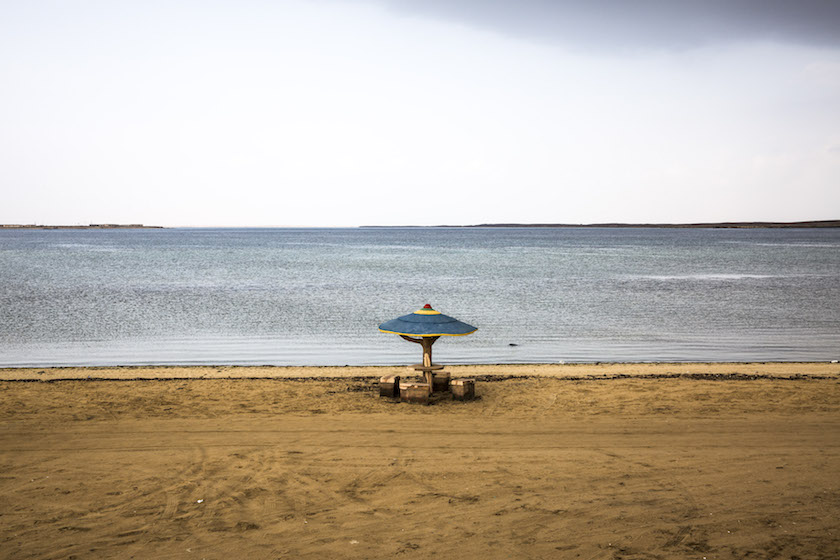
Despite their vast idyllic coastlines, the Farasan Islands have not a single beachfront restaurant. And despite extensive coral reefs, no one rents scuba gear, unless you book far enough in advance for it to be brought from the mainland.
There is only one hotel on the water, the Coral Farasan Resort (400 riyals, or RM436, a night), a boxy, two-star affair whose green hallway smelled faintly of sewage but whose simple rooms were clean. After checking in, I found its restaurant’s windows closed despite the balmy weather and a single man devouring a plate of fried chicken.
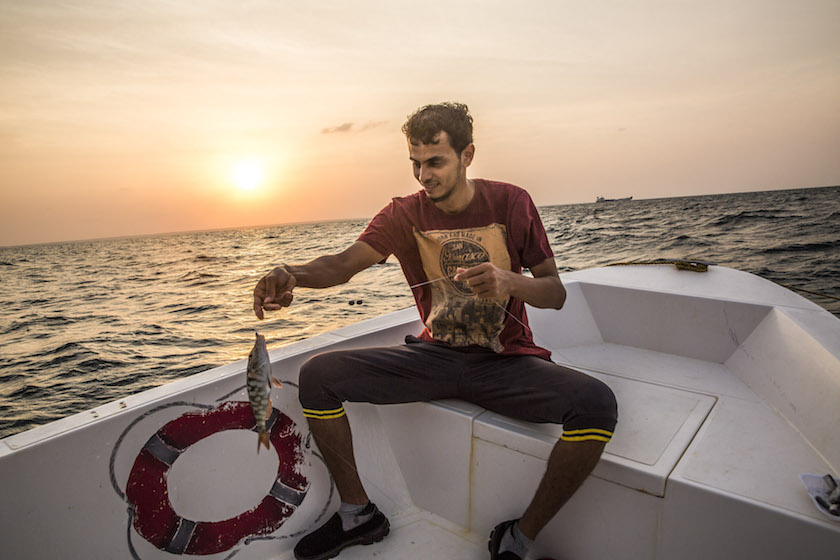
I wanted fish, so Mohammad Saigal, a local English teacher I had hired as a guide (1,000 riyals a day), drove me to the fish market, where we bought two fish as long as my forearm for 80 riyals and gave them to some men to grill. Back at the hotel there were no tables outside, so we walked to the end of a sandy pier, sat on the ground under the stars and ate with our hands. The fish were as tasty as I have ever had.
After dinner, I confronted one reality of travelling alone in Saudi Arabia: When the sun goes down, there isn’t much to do. Groups of men played loud rounds of cards in the lobby, and kids kicked a soccer ball on the grass outside. I went to bed early.
I woke early, too, to the sounds of large Saudi families mobilising for the beach. So I took a run along the coast and within 10 minutes was alone on a sandy track near clear, blue water, with no signs of other humans but the occasional remains of campfires.
That afternoon, Mohammad and I hired a boat and a captain (250 riyals an hour) and looped around the back of the island, passing smaller coral isles along the way and spotting tall, stick-legged cranes fishing and gliding overhead. We later entered an inlet with mangrove forests on both sides. Skinny green fish skipped in front of the boat, and we watched dozens of large pelicans nesting in the branches and unfurling their wings to take flight. The captain killed the engine, and all was silent but the waves and the squawking of the birds.
The next morning, I met two single American women in T-shirts and capri pants sitting in the sun at the hotel and asked them about their experiences travelling as foreign women.
They taught at an international school and said they had flown to Jizan and taken the ferry by themselves with no problems, although they had asked a male friend to drive them to the airport.
Their advice: Be open-minded about the culture and don’t judge, be prepared to cover up, respect gender rules and you will probably be surprised at how welcome you are.
Mohammad and I spent the day visiting sites around the island. At an old Ottoman fort, we found a group of out-of-work tour guides eating beans and fried dough on the steps. The site had been refurbished, but there was no information on its history, its windows had been shattered, and trash was everywhere.
We visited a one-room, private “maritime museum” full of curios from the sea, including dolphin skulls, shells, shark jaws, a massive sea tortoise preserved in lacquer, and a sword made from the nose of a sawfish that the museum owner had planned to give to King Abdullah before his death.
But the highlight — which was also a downer — was wandering through a number of communities that had been abandoned decades before and were slowly decaying. We walked through what had clearly been entire neighbourhoods of fine homes with stone walls, palm-trunk rafters and intricate geometric designs in stucco around their entryways. Many of their roofs have now collapsed, and trees and vines had sprouted from their floors and courtyards. Many were full of trash. One held a flock of sheep.
I wanted to treat myself to a nice lunch before I returned to the mainland. As Mohammad had heard that another hotel had a new cook, we dropped by. We were told that you have to order two hours in advance. So instead, I had tasty rice and chicken at a local joint full of labourers and bachelors (married men eat at home) where I was the only one using a spoon rather than my hands.
I took the ferry from the island and passed the much smoother trip dozing and watching children play tag in the aisles. As in much public space in Saudi Arabia, including Hardee’s and Starbucks, the passengers were divided, with single men on the left and families and single women on the right. But before I figured that out, I had sat in the ambiguous middle. No one seemed to care.
My next stop was a site seen by many as the showpiece of Saudi archaeology: Mada’in Saleh, or al-Hijr in Arabic, an ancient settlement of the Nabatean Empire that left its biggest traces about 2,000 years ago.
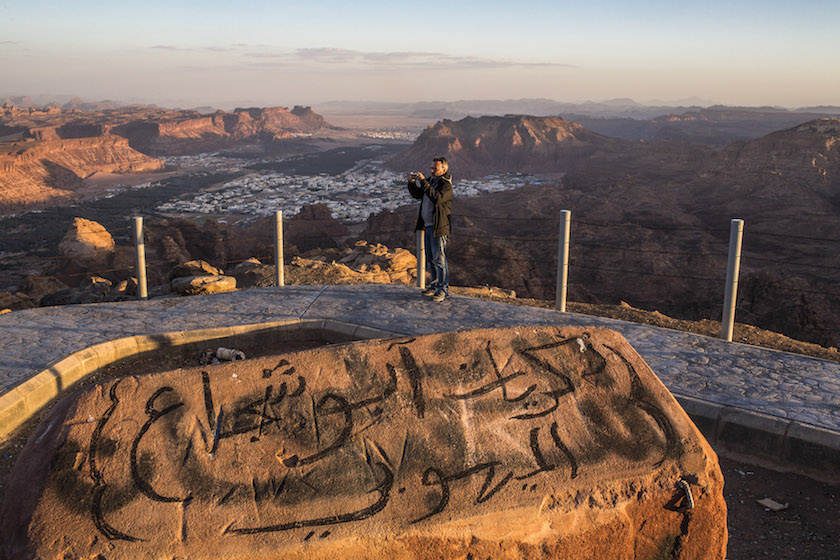
It was the Saudi Arabia’s first Unesco World Heritage site and where the astronaut prince took Prince Charles when he visited the kingdom last year.
Visiting it should be easier than visiting Farasan, given the new airport nearby. There are four flights in and four out each week, so when I got a ticket, I assumed I was fine. But I soon discovered that the airplane holds more people than the town’s main hotel, which was fully booked, leaving me no place to stay. (I was later told about a tent camp out in the desert.)
Thankfully, getting around the kingdom is cheap and easy on Saudia, the national carrier, which serves more than two-dozen domestic airports and plays prayers over the PA system before takeoff. So I changed my dates and flew to Medina, where I rented a car for a four-hour drive though a stunning desert to reach the expansive palm groves of Al-Ula, an oasis town. And gas is cheap: 15 riyals to fill up my Hyundai. Although prices have increased recently, they are still very low.
I had found the staff at the hotel hard to deal with when reserving a room over the phone, so when I arrived, the Al-Ula Arac Resort was a pleasant surprise: clean rooms with patios around a grassy courtyard and a small mosque.
Visitors need permission to visit Mada’in Saleh, something the hotel handled with a copy of my passport, along with finding me a guide named Tamir (800 riyals a day).
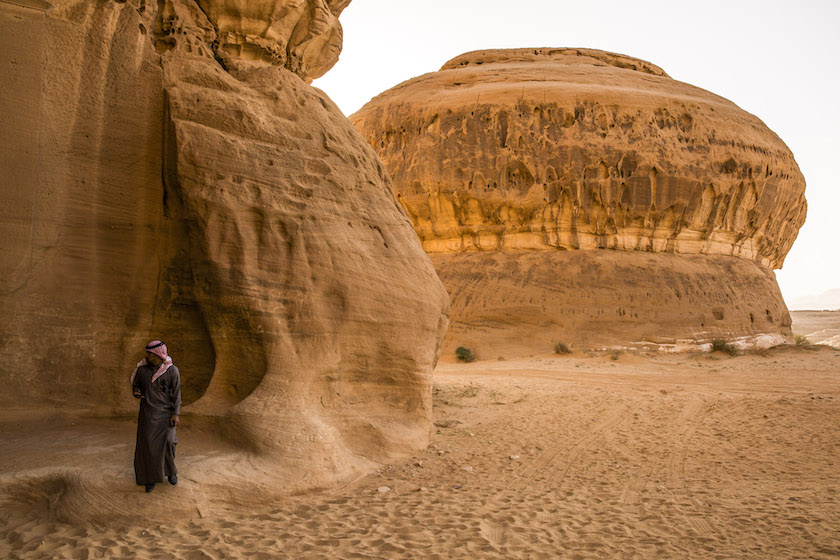
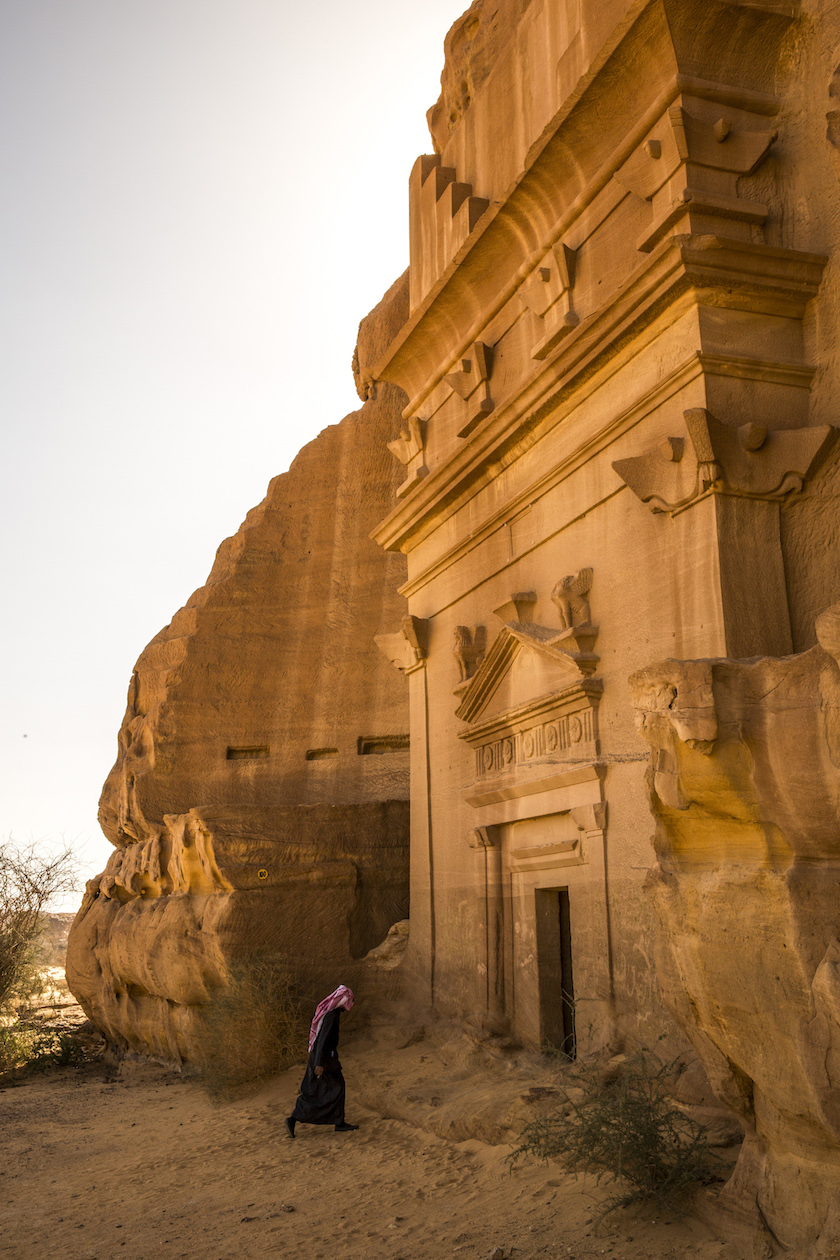
When we reached the site the next morning, it was empty. Large sandstone formations rose from the rolling expanse of sand. About 2,000 years ago, the Nabateans had lived nearby and carved massive, elegant tombs into the rocks, adorning their entryways with statues of birds and images of flowers, faces and serpents.
Their doors lead to large rooms, some with separate tombs inside, others with long shelves carved into the rock. And while the facades are perfectly flat, the inside walls bear the marks of thousands of chisel blows. My wrists got sore just thinking about it.
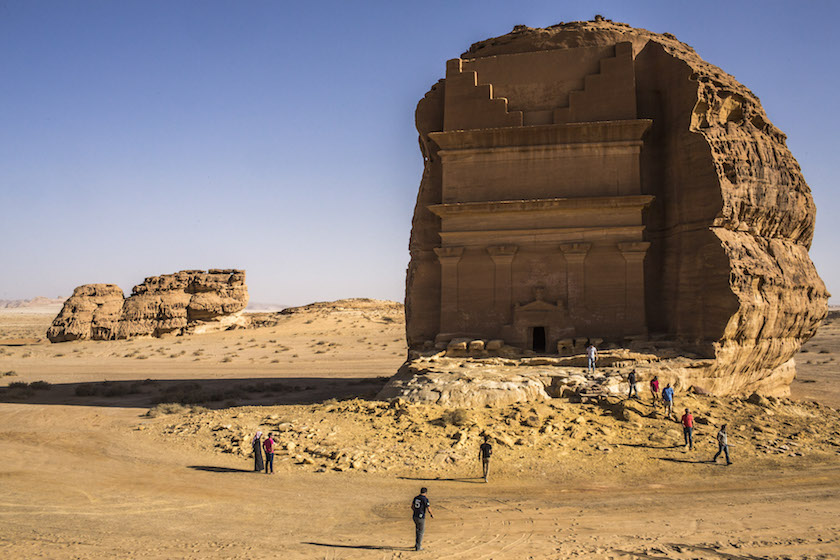
I spent the morning happily wandering from tomb to tomb, snapping photos, marvelling at the workmanship and wondering what the rest of the civilisation had looked like. My guide was no help.
“I don’t know the history,” he said. “I just know where stuff is.”
The tombs are empty, mostly cleaned out by grave robbers long ago, and the plaques around the site lacked detail on the wider culture. Compared with sites in Egypt, it was pleasant to be left alone. There were no touts, no hawkers, no Bedouins offering camel rides, not even rangers to protect the sites. But some of the tombs had bullet holes in their facades and many were covered with graffiti.
I visited a few more tombs but soon felt I had seen enough and decided to see what I could learn at the complex of small museums near the entrance.
Not much, apparently. The visitors’ centre, the multimedia building, the Hejaz Railway Museum, the Syrian Pilgrim Road Museum and the Islamic fortress were all closed, even though, according to the hours posted by their doors, they should have been open.
“They are supposed to be open, but no one came to work today,” a guard said with a shrug.
The tourism commission may have a hard time persuading Saudis to visit such sites instead of going to the United Arab Emirates or Bahrain, neighbouring countries with more relaxed social codes and attractions lacking in the kingdom, like movie theatres and bars.
And my Saudi friends were more interested in picnics in the desert, where young men like to cruise the dunes in their SUVs.
But I had seen some local tourism earlier in my trip when some Saudi friends took me to the Ghada Festival in Unayzah, a local fair named after a desert shrub.
The tourism commission supports more than two-dozen similar festivals across the kingdom, but they are hard to find out about if you don’t speak Arabic. Your best bet is to ask the locals, who will tell you what is happening nearby and maybe take you for a visit. Which is what happened to me.
We reached the fairgrounds mid-afternoon, and there were already hundreds of people there: men in long white robes, women in black gowns with only their eyes showing through face veils, and children wearing whatever they wanted.
The festival was a series of exhibits celebrating the area’s history. There were traditional markets where men made ropes from plant fibres and women sold embroidered clothing and wove rugs on traditional looms.
There were tents set aside for prayer, bonfires where we stopped for coffee and tea, and a kids’ area with games and music (voice only; no instruments). We even saw an itinerant clown, who sat in the back of a truck and made up a song about me for a small tip.
We visited an exhibit on traditional medicine showing bonesetters, local diseases that had largely been eradicated and a mannequin giving birth standing up with a midwife on the ground in front of her.
Elsewhere, a family wearing traditional garb acted out scenes in front of an adobe house. A woman shook milk in a suspended metal container to churn butter, and a group of men chanted while digging a well. Nearby, a gas-powered water pump chugged away, one of the first machines to reach the area powered by the same oil that had distanced most Saudis from the very life the festival sought to recall.
On a patch of sand, a teacher and a group of children with wooden pallets recreated a traditional Koranic school. As the sun set, they marched through the festival, chanting “Hafiz! Hafiz!” to celebrate a student who had memorised the Quran.
As they passed, a young boy ran up to me, smiled and asked, “How are you?” — The New York Times