

BATH, Oct 22 — Not many people may know that Bath is one of the top places to visit in England. But just ask Jane Austen fans, for whom a trip to this UNESCO World Heritage site is a must (the way Beatles fans must walk on that zebra crossing at Abbey Road in London). Two of her six published novels, Northanger Abbey and Persuasion, are set in the city, where she lived for from 1801 to 1806.
Bath is incredibly proud of its most famous resident and there are constant reminders of her. There’s the Jane Austen Centre where you get a glimpse into what life would have been like during her time. For real fanatics, there’s a photo-op section of the exhibition where you can change into bonnets, shawls and other Regency costumes. You can also stay at the writer’s four-storey Georgian home at 4 Sydney Place. The building has been converted into luxury boutique apartments that are each named after something Austen-inspired.
Truth be told, I’ve only read “Pride and Prejudice” and I found it incredibly annoying. Which was why, while the Austen fans I was with were geeking out over everything — did you know, for example, that Austen would have had to cross the Pulteney Bridge to get into town from her home (forget that this elegant piece of architecture was inspired by Ponte Vecchio in Florence and it’s one of only four bridges in the world to have shops spanning across it on both sides) — I had seek out a different, Austen-less Bath.
Let’s spa-ty
Those who know their history will know that Bath was founded upon natural thermal spring water and noted for its Roman Baths, a complex of public bath houses above Bath’s natural springs. Built in 70AD, the extensive ruins are one of the world’s best-preserved Roman remains. It’s also one of England’s most popular heritage sites and queues are snaking by 11am. You’ll need to set aside about two hours for your visit — the museum doesn’t look that big from street level but there are many chambers such as ancient heated rooms to explore and artefacts that deserve a closer look. Be sure to pick up an audio guide — the narration is surprisingly witty and engaging, and provides a good context for understanding how Romans lived, and the importance the natural spring waters played in the development of Bath. Final tip: Get there before 10am if you’re going during summer.
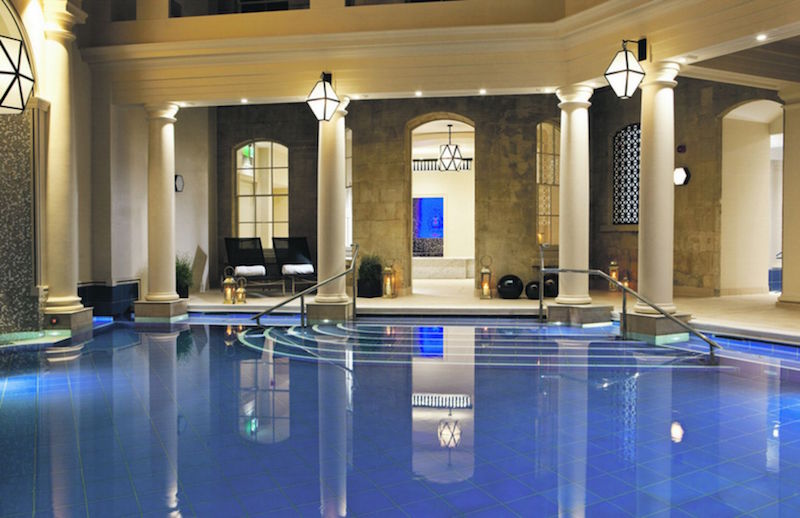
The Roman Baths were the spa treatments of the era, but if you’re looking for something more modern, the five-star Gainsborough Bath Spa on Beau Street is the perfect starting point (it also helped me detox from Austen-mania).
It is developed by Malaysian hotel group YTL, and is the company’s first hotel in the United Kingdom. It has also been making quite the splash. With sumptuous rooms and interiors created by award-winning design sensation Champalimaud Design, this is the only hotel in the UK to offer access to natural thermal spring waters in its spa.
The Bath House there is possibly the most luxurious way to enjoy the mineral-rich waters. It provides spa treatments that harness the healing properties of the water including personalised aquatic sessions. There are two smaller thermal pools, one at 37 degrees Celsius and the other at 40 degrees Celsius. You’re encouraged to soak in them to warm your body. If you want to get your blood pumping, relax your muscles and detox through a deep sweat, there’s a steam room and two saunas. But for me, the main atrium pool, complete with neck jets to ease any upper body tension, takes the cake. With the natural light coming in from the glass atrium above and relatively exclusive access (when I was there, there were only four other people in the Bath House), it was a peaceful and serene setting to clear the mind and float freely in the waters.
The only other place you can enjoy the waters is at Thermae Bath Spa, which is conveniently just across the road from the hotel. Open to the public, there are steam rooms, a restaurant, an indoor pool and a spa, but I recommend going straight to the rooftop pool. Be warned: It looks more like a pool party as it’s unisex (everyone wears a bathing suit) and the water is only at 33.5 degrees Celsius. While it’s not quite the place for quiet meditation, it’s quite fun if you’re into crowds, and it does boast a panoramic view of Bath to make up for the squeeze.
A bite of Bath
Bath is compact, which means it’s ideal for leisurely walks. It also constantly tops lists on the most beautiful small towns in Britain and it’s easy to see why. The streets are also dotted with colourful flower displays, a testament to Bath’s record number of wins at Britain In Bloom, a nation-wide horticulture display competition.
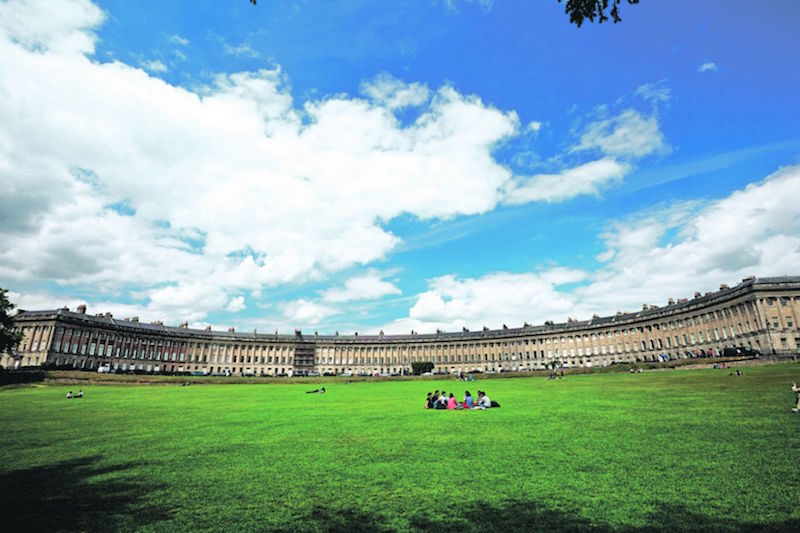
And because Bath is a UNESCO World Heritage Site, all new buildings have to be built in similar fashion to the city’s original Georgian buildings. What this means is that the town centre is one sweeping harmony of elegant honey-coloured limestone buildings. For one of the best examples of Bath’s beautiful architecture, head to The Royal Crescent, a panoramic crescent of 30 terraces that overlooks a lawn and the Royal Victoria Park.
Apart from spas and buildings, Bath is also famous for the Bath bun. Not to be confused with the London Bath Bun, which is small, dense and sweet, the original Bath Bun is a huge, rich and round Brioche bread that comes with either sweet or savoury toppings. Sally Lunn’s is where you can taste the original recipe in one of the oldest houses in Bath, but it can get as crowded as weekends at Tim Ho Wan (you have to join a snaking queue to get your bite).
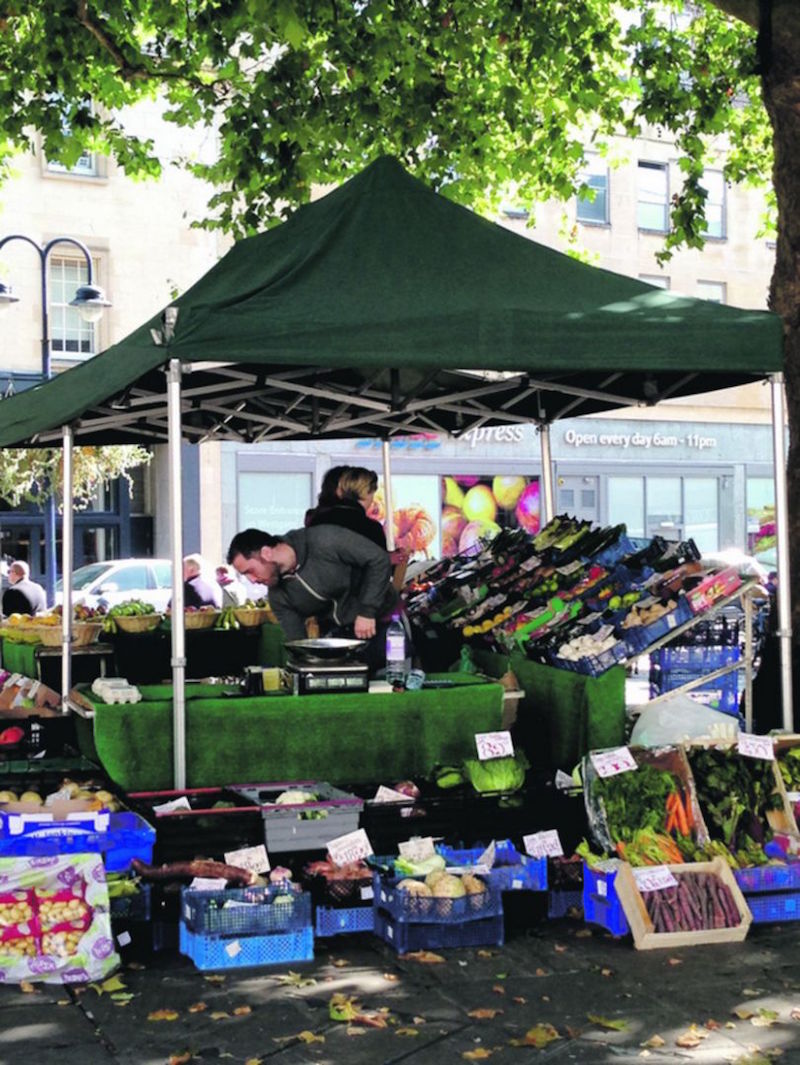
Foodies will be glad to know Bath has a long tradition of sourcing locally and emphasising homegrown produce. After all, Bath is the birthplace of UK’s farmer’s market. To this day, people still flock to Green Park Station on Saturdays to chat with local producers and stock up on cheese, organic meat and vegetables.
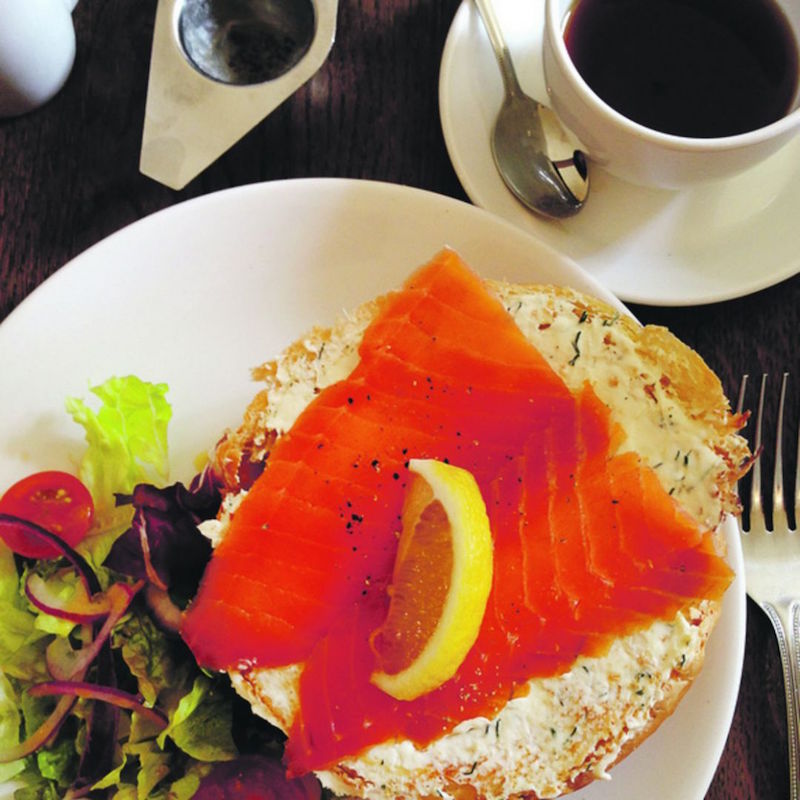
The Foodie Bugle website best encapsulates Bath’s foodie spirit. Independently owned and family-run, what started as an online journal to celebrate artisan food producers developed into an online shop, and finally a charming sun-filled retail space and cafe that showcases the best of the Somerset region. Be sure to buy Bath Soft Cheese — a handmade creamy cheese with a hint of lemon that’s made by fourth-generation dairy farmers. Or if you have the time, take a seat in their tea room, and tuck into their concise menu of seasonal salads and soups, or homemade pastries and cakes.
For a more sophisticated meal, Johann Lafer at Gainsborough Bath Spa is worth checking out. This Michelin-starred restaurant is chef Lafer’s first venture outside Germany and his Asian-inflected menu highlights the best of English produce. Expect dishes such as slow-cooked honey-soy pork belly with mango salad and sesame cream, or a Szechuan pepper-crusted roasted Wiltshire lamb rack.
Caffeine addicts will be thrilled to know Bath takes the craft of coffee seriously. Leading the pack is Colonna And Small’s, which is helmed by Maxwell Colonna-Dashwood, two-time winner of the World Barista Championship. I also liked Society Cafe (which also came highly recommended by locals), because it’s the kind of place where the milk, which is sourced from an organic farm in the Somerset region, is heated to 60 degrees (to bring out the optimum sweetness) and a perfectly balanced flat white is exactly six ounces — but the unpretentious and friendly service keeps the vibe casual. Plus, both Society Cafe outlets are centrally located, so they’re perfect spots for kicking back and people watching.
Jane Austen reportedly disliked her time in Bath; but as I lay on the lawn at The Royal Crescent Hotel with my perfectly made flat white, I couldn’t imagine how anyone could resist this charming town. — TODAY
*This trip was made possible by YTL Hotels.