

LONDON, Aug 17 — What do Europeans put in their suitcases when packing for a last-minute weekend getaway? Lastminute.com recently sought to answer this question in a survey. Judging by the results, the answer seems to vary according to nationality.
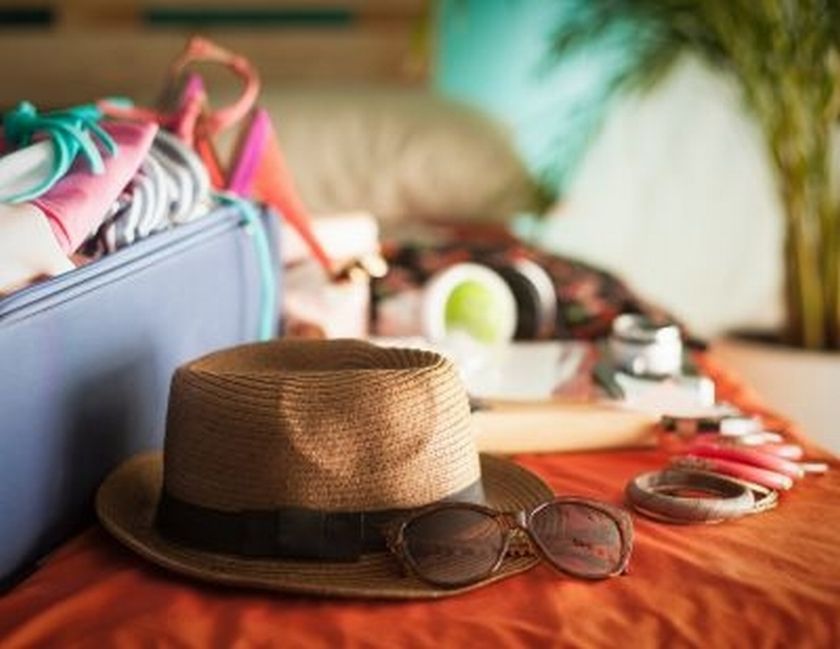
Respondents were asked to choose only 10 essential items to pack in addition to their passport, money and credit card. Interestingly, a toothbrush was the most commonly chosen item across all of the five nations in question, despite being relatively easy to replace in most destinations. A smartphone, a camera and clothes followed close to the top of the list in most nations. But for the rest, Europeans seemed to make very different packing choices depending on which nation they hail from.
For example, Spanish and French travellers were the most likely to remember their underwear when packing for a weekend trip (70.1 per cent and 59.6 per cent respectively), contrasting with Italians (12.4 per cent) and Britons (39.6 per cent).
Another notable difference between French and Italian travellers was seen in the footwear department: over 40 per cent of French travelers chose to bring a pair of extra shoes in their suitcase, compared to less than 10 per cent of Italians.
Germans revealed their preparedness for cooler climates: 22.3 per cent named socks as one of their essential items, compared to just 6.3 per cent of Italians. Also, 22 per cent of Germans made sure to pack pyjamas, compared to just 9.6 per cent of Britons.
Around a third of British respondents said they would pack sunscreen, an item chosen by only 12.9 per cent of Italians, who are probably more accustomed to the sun.
Speaking of stereotypes, Italians and Spaniards emerged as the continent's most “caliente” travellers, or arguably as its safest. While only 9.7 per cent of Europeans overall chose condoms as one of their essentials, the figure was close to 20 per cent for Spaniards and nearly 15 per cent for Italians.
The survey was carried out online in late March for Lastminute.com by OnePoll. The results are based on responses from a total 5,000 adults (1,000 per country) from the UK, Germany, France, Spain and Italy. Participants were selected according to the quota sampling method. — Afp-Relaxnews