


KUALA LUMPUR, July 5 — Hujan’s recent 20th anniversary concert drew 17,000 fans to the National Hockey Stadium in Bukit Jalil, but the milestone also reflected something less visible: a band that has evolved into a shifting social ecosystem where fans, critics and collaborators frequently swap roles over time.
Consisting of frontman Noh Salleh, guitarist-composer AG Coco, drummer Azham Ahmad (Am) and bassist Izzat Uzaini, Hujan is widely regarded as a cornerstone of Malaysia’s independent music scene.
But its most unusual legacy may not be musical; it is social.
When rejection becomes part of the story
“I would get annoyed whenever I saw Hujan’s name on a lineup, up to a point where it got hard for me to catch my own favorite bands live,” avid gig-goer Syawal Zainal told Malay Mail.
The 34-year-old freelance audio technician was once firmly outside the band’s orbit, frustrated by the sheer scale of their early gig draw.
“They had a huge crowd, and these fans tended to come early and wait until Hujan showed up later in the evening.
“I got fed up because there were just too many people. Every time my friends asked me to go to a gig that had Hujan, I would just say, ‘f**k Hujan’.”
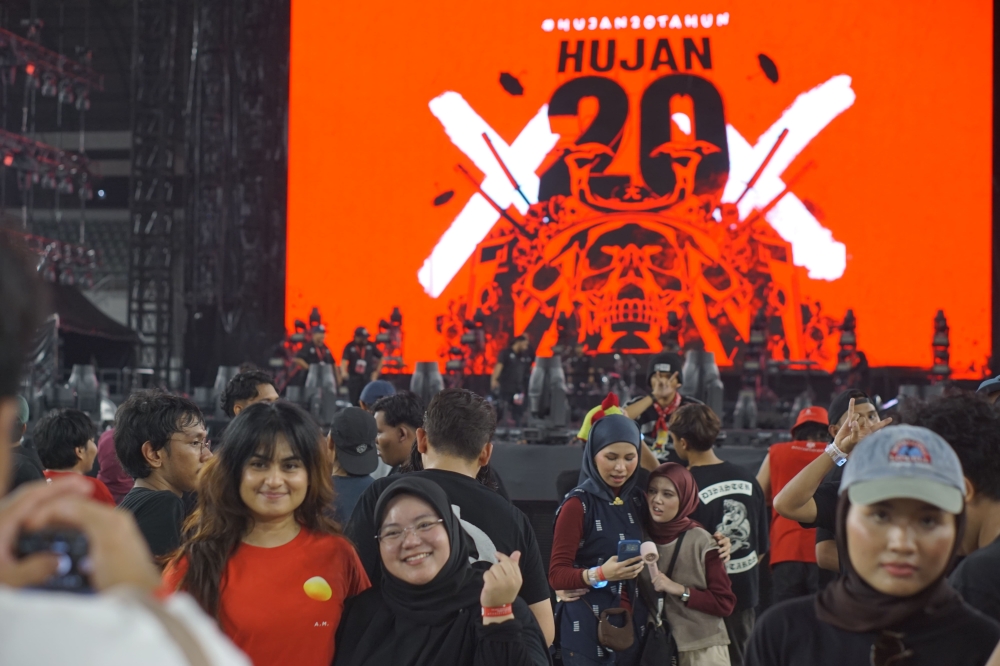
But the frustration was not isolated; it was part of a wider phenomenon shaping Malaysia’s late-2000s indie scene.
“I remember a show at MCPA Hall where I couldn’t even get inside despite having a ticket because the place was packed. I only managed to reach the main door,” Syawal recalled of the time he attended gigs during his high school years.
“Back then, it was normal for organisers to sell tickets well over venue capacity just to make money.
“Security and safety measures at local gigs weren’t anywhere near as good as they are today,” he said.
What began as resistance would later become participation.
The Myspace era

Hujan’s rise coincided with Myspace, where early indie bands built audiences without traditional industry structures.
The band made full use of the platform — releasing demos, announcing gigs and building direct fan engagement that translated into packed venues nationwide.
In that same digital environment, Syawal created a parody Myspace page featuring the words ‘F**k Hujan’ embedded into the band’s iconic umbrella logo after a suggestion from a friend.
A friend later suggested turning it into a page.
What began as a joke quickly gained traction online, attracting attention, backlash and thousands of interactions.
“We were just doing it for fun, without expecting anything.
“We didn’t post any hate messages or anything like that,” Syawal said.
The backlash eventually spilled into real life, culminating in a 2008 Johor gig where chants of “F**k Hujan” forced the band off stage after one song.
“It seems like nobody likes Hujan songs here,” frontman Noh Salleh was heard saying in that 18-year-old video clip that later went viral.
When the system turns
Syawal eventually moved away from the page and, over time, his perception of the band shifted.
Today, he works as part of the live music technical crew and eventually landed a job on Hujan’s XX: 20th Anniversary concert in Bukit Jalil.
“After knowing them for some time, I actually told Am about the Myspace page and my involvement, and surprisingly he was relaxed about it.
“He told me that the domino effect from that era actually humbled them and taught them a lesson.
“Reflecting back, it was just our childish intuition taking over. We weren’t expecting it to blow up, but Hujan did well on their own. Twenty years later, look where they are now. A huge congratulations to them,” Syawal said.
The Raingers as infrastructure
If Syawal represents reversal, Hujan’s hardcore followers – known as Raingers – represent continuity.
The fanbase behaves less like an audience and more like an operating system.
For Arif Fahmi Mesri, known as Cikai, that devotion began with a six-hour motorcycle ride from Melaka to Kuala Lumpur in 2007 just to catch a short set.
“AG was really kind enough to have me that day and he actually remembers me from our time in Melaka and gave me a place to crash,” the now 38-year-old said.
He later lived at AG Coco’s studio for years and has since attended close to 100 shows.
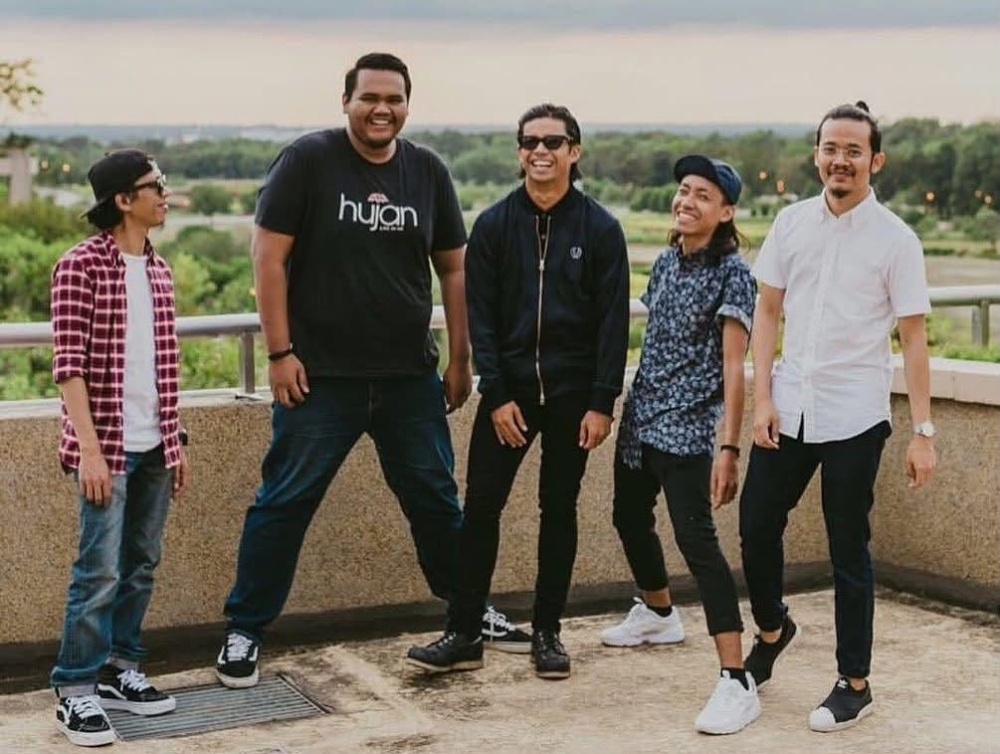
Cikai’s six-hour kapcai journey has also become a legendary tale at almost all Hujan shows; including the latest where Noh was heard giving him a shoutout on stage.
For others, the bond took collective form.
“I am who I am today thanks to Hujan – from the course I took when I was still studying to my career in the creative industry now is all because of Hujan.
“If I didn’t know them back then, I think I would have become a mat rempit now,” said another Rainger, 33-year-old Fauzy Ramly who goes by the nickname Poji.
A community that protects itself
For fans like Sofea Leiyana, the experience was defined by care within the crowd.
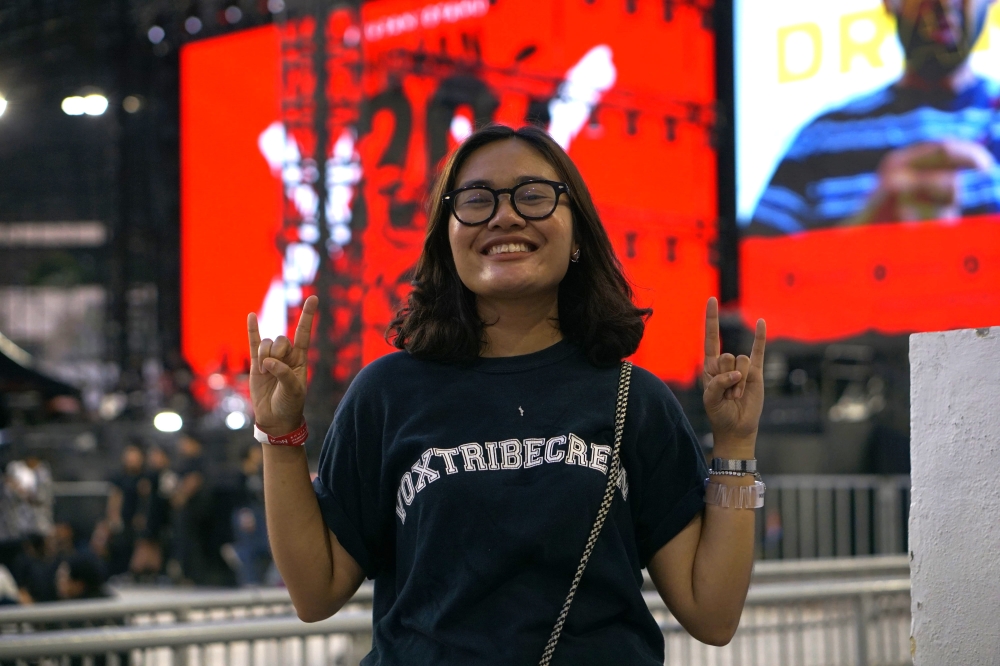
“We were like a family. If anything happened during the gig, like if you fell down or anything like that, the senior members would pick you up and they would protect us.
“Whenever the crowd would begin to mosh or surge, older Raingers would help escort us to the safety of the front barricades and they made sure the surroundings are safe for us at that time,” she said.
A system that loops back
For Hadith Amreil, the entry point was unexpected — a Counter-Strike match during the Covid-19 lockdown with a player named “agcoco7”, later revealed to be AG Coco.
“Back then, I was a massive introvert but the constant interactions and conversations we had throughout the years really pushed me out of my shell.
“It shaped me into the person I am today and I’m grateful for that,” Hadith said.
He eventually attended rehearsals, met the band in person and became part of their wider circle.
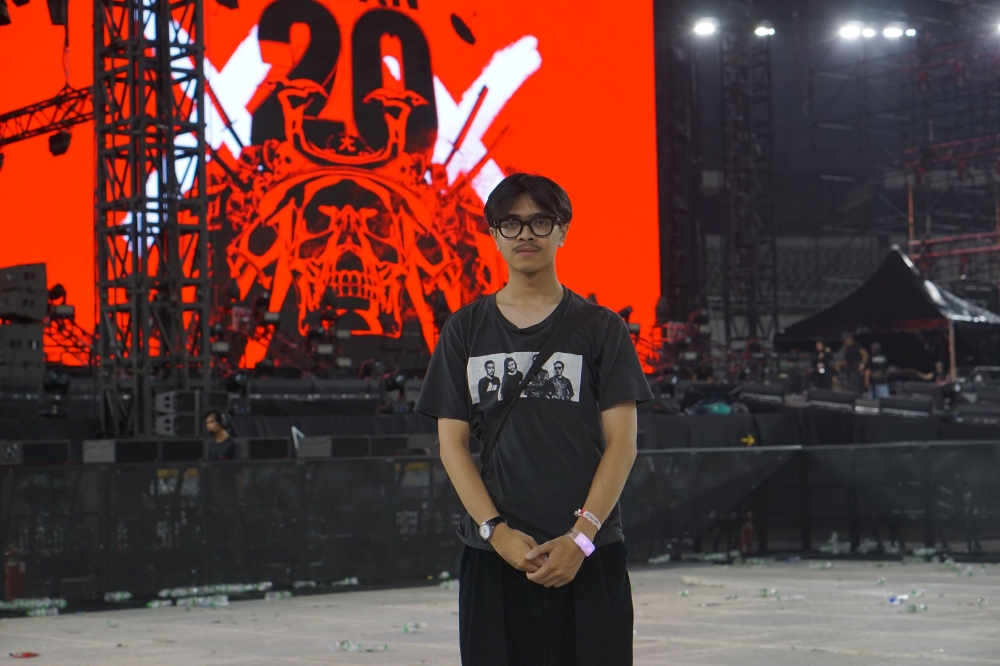
Hujan’s story is often told as a music career — but viewed through its fans, it becomes something more unusual: a system where roles never stay fixed.
Critics become crew. Fans become collaborators. Outsiders become insiders.
And at Bukit Jalil, two decades on, that system was still running — quietly, constantly reshaping itself inside the noise of a concert crowd.


