















JUNE 27 — There have been numerous hiking accidents and mishaps happening in our country of late.
In the first five months, Malaysia recorded 52 cases of lost hikers involving 114 victims. In fact, Malaysia has recorded 1,059 hiking accidents and 63 deaths since 2021.
Those are not negligible numbers.
Likewise, I’m sure we’ve all noticed some recent tragedies around the world involving cave-diving.
Could these have been avoided by some simple rules like, say, ensuring that hikers never wander off ahead too far alone? Or follow a “Stop” protocol if one is lost? Or, in cave-diving, something like “All divers must not use recreational equipment when diving beyond a certain depth”, or “Always maintain a continuous line (of rope, etc.) from the entrance, etc.”? Or maybe just bar cave-diving during monsoon season?!
Those events involved some lives which were snuffed out. Could adhering to, say, one extra SOP have ensured more people survived?
The value of ‘constructive paranoia’
Anthropologist Jared Diamond relates this story which happened on one of his many trips to New Guinea.
He noticed that his native guides refused to sleep under a tree if it was dead. At first Diamond felt that their behaviour verged on overreaction but then it occurred to him that a) every day he could hear trees falling somewhere in the forest and b) given how often the new Guineans slept under trees, it was entirely rational to avoid sleeping under a dead tree because one never knew when it would fall (see note 1).
Diamond gave a name to the kind of caution exercised by his New Guinea guides: Constructive paranoia.
Risk expert Nassim Taleb further explains that we must never discount any kind of behaviour (no matter how “irrational” or “superstitious” they appear) if such behaviour facilitated long-term endurance or survival.
Ergo, a little bit of paranoia ensures we’re not hit by high-impact irreversible tragedies.
Speaking of falling trees in New Guinea, my former workplace is situated on top of a hill. Many cars park along the slopes along which are many trees.
Following the advice of Diamond and Taleb, I warned my colleagues and students to NOT park on those slopes.
You just never know when a tree may collapse, especially during huge storms.
I would generalise this advice to caution any driver from parking their car under any tree for prolonged periods of time. Like many readers, I have lost count of the number of cars I have seen crushed by falling branches.
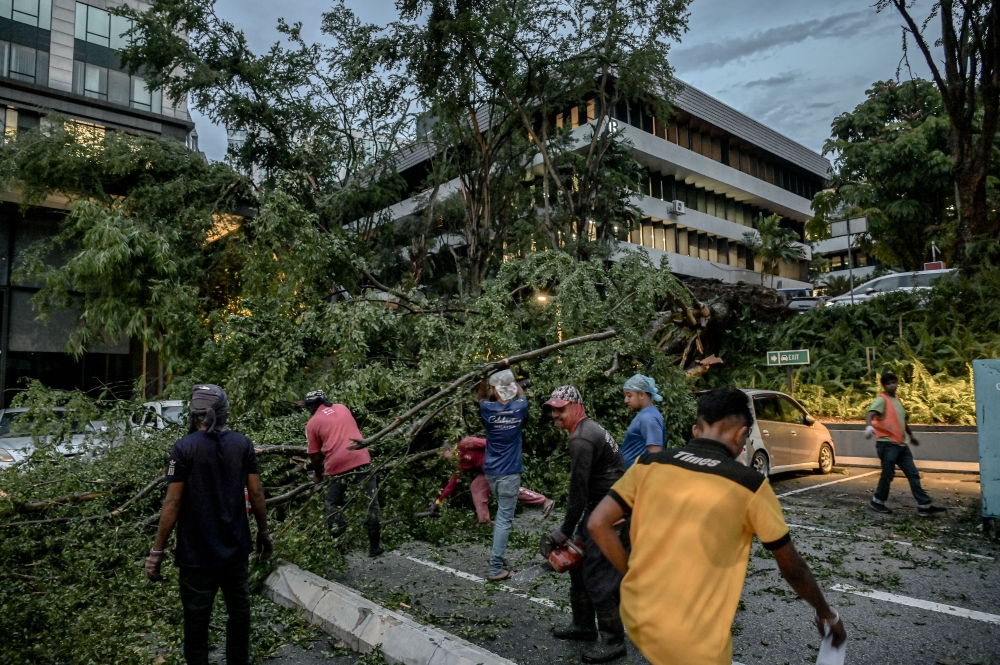
In addition, I would also caution you to stay clear of outdoor parking lots especially those with a high tendency to flood, especially now that the monsoon season has started. Unless you’re just stopping for a few minutes, it’s probably safer to find parking indoors.
Such constructively paranoid suggestions can come across as impractical, silly, boring or fun-destroying. And yes constructive paranoia will inevitably yank the joyride chain of those who like “living on the edge”.
But think about the many bicyclist friends you know who’ve broken a leg or an arm because going at top speeds was such a thrill.
For some folks, tragedies are the only reality that will persuade them of the folly of their actions. Would it really hurt to have behaved in a constructively “paranoid” manner?
It’s not about being afraid of life; it’s about removing unnecessary risks thereby lowering the chances of reaping big-time irreversible consequences.
Note 1: See the entire chapter 7 of Diamond’s The World Until Yesterday: What Can We Learn From Traditional Societies?
* This is the personal opinion of the columnist.


