


APRIL 25 — FIVE relatives — all grandchildren of Tunku Besar Burhanuddin Yamtuan Antah — have passed away in the last two years. In May 2012, Tunku A’amash Tunku Adnan (Yah Vic) fell to leukaemia: if still alive, the royal maverick would have joined the throng who witnessed Karpal Singh’s funeral in Penang last weekend. In December, Tunku A’amash’s sister Tunku Abdiyah (Nda Nita) lost a long battle against cancer. The siblings were best friends, buried miles apart (she was Tengku Puan Panglima Besar Selangor), but reunited in death.
In June 2013, Tunku Asma’ Tunku Mustapha (Nda Yan) passed away after not being well for some time, and in November Tunku Kechil Muda Tunku Farid Tunku Hussain (Yah Farid) succumbed to cancer. As his funeral preparations were under way, one uncle exclaimed: “My generation is dropping like flies!” in a half-joking, half-resigned tone. Sadly, Tunku Munirah Tunku Mustapha (Nda Mimi) passed away on Tuesday April 22, 2014, after fighting cancer for many years.
A keen painter, she had last year invited me to attend the launch of an exhibition she had organised in support of the National Cancer Society Malaysia’s Pink Unity support group at the Yayasan Seni Art Gallery. Entitled “Art to Heart”, it featured the many paintings she had laboured over, and enthusiastic buyers (including Toh Puan Mahani Idris, Toh Puan Aishah Ong and Tan Sri Abdullah Ahmad) quickly snapped up the best works. I did well to acquire her oil painting of Camargue horses, in which she beautifully used texture to give the impression of splashing water.
A few weeks later, she asked for photos of my cats. I suspected she might want to paint them, but I was surprised to discover on my birthday that she had combined the various pictures to paint me and my cats on one large canvas! Both paintings now hang opposite each other in my office.
In recent years it was at events of the Chopin Society Malaysia that I met her most. In her capacity as president, she would regularly invite me to concerts. The last one I attended was the Second International Festival of Classical Music in December 2013, when she joked that the picture of her accompanying the president’s foreword in the programme book made her look “dead”, drawing nervous laughter from the people around her, aware that she had stage IV cancer.
Her artistic pursuits developed alongside her international upbringing. She was well-travelled at a young age by virtue of the fact that her father Tunku Kechil Muda Tunku Mustapha Tunku Besar Burhanuddin, was Grand Chamberlain to the fourth Yang di-Pertuan Agong, the photographer Sultan Ismail Nasiruddin Shah of Terengganu.
The former king’s grandson Raja Zainol Ihsan Shah remembers Tunku Munirah accompanying the entourage on state visits to West Germany and Iran, where he stood beside her in a picture taken outside the Golestan Palace. (Yes, once upon a time Malaysia was capable of according such senior diplomatic status to a Shiah-majority country.)
But it was France that occupied a special place in her heart. Her early education was at the Seremban Convent (long-demolished, the site now occupied by a famous lake after a failed attempt towards a commercial development), but such was her academic prowess that she was offered an Alliance Française scholarship to study in Aix-en-Provence (near the location of the horses in the painting I bought).
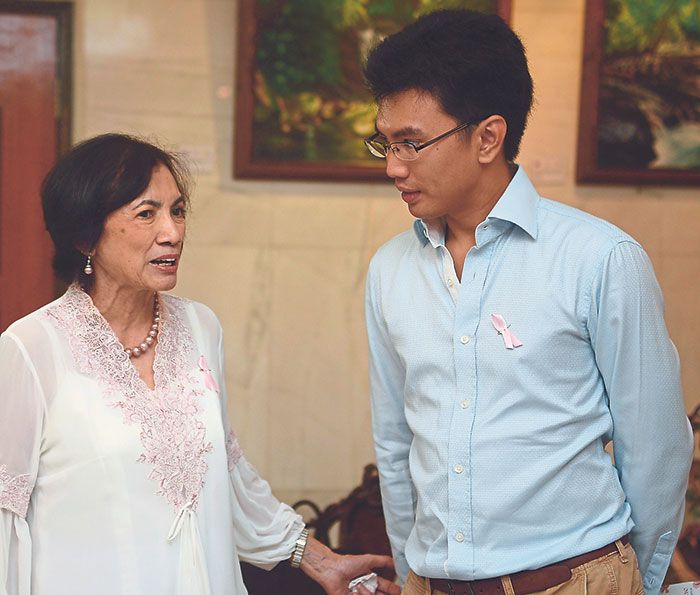
After many years in France and the United Kingdom, she returned to Malaysia and immersed herself in charitable and cultural activities, also being active in the Kuala Lumpur Speakers’ Club and serving as president of the French University Graduates of Association of Malaysia. At many events she would take the opportunity to sing her favourite song C’est si bon.
Yet, she never wavered from her roots. Her Negri Sembilan accent was unsullied by English or French influence and she took adat seriously. When the Yang di-Pertuan Besar and Tunku Ampuan Besar visited her two weeks before her demise, she was unable to speak much, but took great effort to make the customary royal greeting with pressed palms to the forehead.
She passed away at maghrib with her close family praying by her side. When I arrived, her brother Tunku Datuk Mudzaffar told me she had wanted to be buried next to her mother in the family burial ground in Seri Menanti. Her last wish was granted.
As the talqin began, it drizzled, and as we began Al-Fatihah, it rained. It went from dah ghobeh to il pleut, and I took a picture of her loving relatives sharing what umbrellas were available. She could have done a gorgeous painting out of it.
*This is the personal opinion of the columnist.


