


April 18 — Perhaps unsurprisingly, a “news media war” has broken out in China over the hunt for Malaysia Airlines Flight 370. On one side stand loyal local news outlets, facing an abstract entity commonly known in China as the “foreign media.” The battle, according to a March 29 column in the state-owned Beijing Youth Daily newspaper, is over the how to judge China’s role in the investigation of the missing airliner.
News organisations everywhere like to “own” a story, of course. But in China, where the media is mostly state-owned and expected to reflect the political and policy prerogatives of its Communist Party overseers, dominating a story isn’t just a journalistic act. It’s a decidedly political one, and competitors — whether they’re owned by rival governments or not — are viewed as driven by similar motivations.
Thus, the state-owned Global Times felt comfortable publishing a scathing editorial recently that accused foreign news outlets of using the air tragedy to create dissension between the Chinese people and their government, as well as between Chinese and Malaysians. Most important, that dissension is supposedly being sowed in partnership with high-level, non-journalistic entities. An earlier Beijing Youth Daily column made the same point, albeit by confusing sourcing with collaboration.
Foreign media, especially UK and US media, are not going it alone. Rather they’re working with governmental institutions, big companies, and even international organisations.
This paranoid Chinese perspective on foreign media isn’t new. It comes up on a regular basis in Chinese blogs, microblogs and editorial pages, as well as in polite conversation. On two separate occasions over the last few years, I’ve had conversations with Chinese officials who told me that NBCUniversal Inc is an arm of the US government and behaves accordingly. When I explained that the network is actually owned in part by General Electric Co, I received precisely the same response. “Then it’s owned by the government.”
Of course, the tendency to understand others through one’s own experience isn’t exclusive to China; Americans do it, too, with occasionally tragic consequences. Fortunately, in China, the consequences of believing that the US media is controlled by the federal government aren’t yet tragic. But neither are they benign, insofar as they serve to heighten a long-standing, mass sense of aggrievement.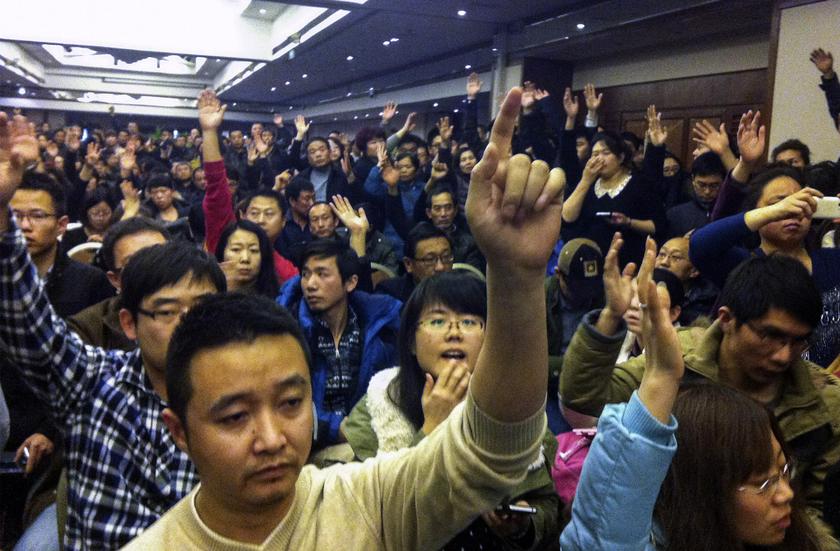
That attitude explains the ferociously angry Chinese response to a New York Times story suggesting that Chinese efforts to aid the Flight MH370 rescue effort had hindered more than they'd helped the search. From the paranoid perspective, such a story exists for one purpose only. to embarrass a Chinese government keen to show its public that it has the will and technical capability to look after their interests. “The New York Times isn’t the judge of whether or not China hampered the search,” wrote the Qiangjiang Evening News. “As the country which lost the most citizens, China’s respect and worry for the 154 missing passengers is known globally.”
Predictably, perhaps, none of the handful of editorials written in response to the Times article bothered to address its conclusions about Chinese technical and bureaucratic shortcomings. This is somewhat understandable.
The air tragedy has produced a sincere outpouring of grief at the loss of the Chinese passengers.
But it may also reflect the way the article has been framed in China. For example, a discussion thread at the heavily censored Sina.com portal bears the loaded title “American Media Accuses China of Supplying Poor Evidence in Order to Hinder the Malaysia Airlines Search and Rescue.”
The thread — now more than 4,000 comments long — provides no link to the article (the New York Times is blocked in China, though translations of its China articles do circulate online), while the vast majority of the comments are unswervingly negative (“damn Americans” appears to be the most common comment, repeated dozens of times). Collectively, it’s an ugly and unsubtle display of information-age xenophobia that’s unlikely to win hearts and minds, much less this particular media war. —Bloomberg View
* This is the personal opinion of the columnist.


