
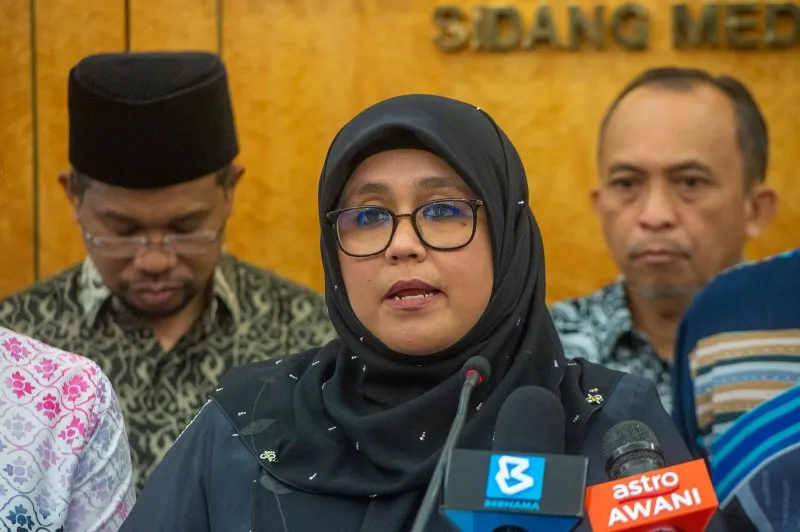







KUALA LUMPUR, Nov 24 — Malaysia must ensure that its newly elevated strategic partnership with France translates into meaningful technology transfer and industrial development, rather than relegating the country to a supplier of raw materials for Europe’s strategic ambitions, said Citizens International executive director Imran Mohd Rasid.
He said closer cooperation with France could help Malaysia diversify its economy and strengthen its industrial capabilities, but cautioned against agreements that could create new forms of economic dependence.
“Malaysia must avoid becoming a mineral supplier for somebody else’s industrial revolution. We should welcome French investment, but Malaysia must not exchange one form of dependency for another,” he said.
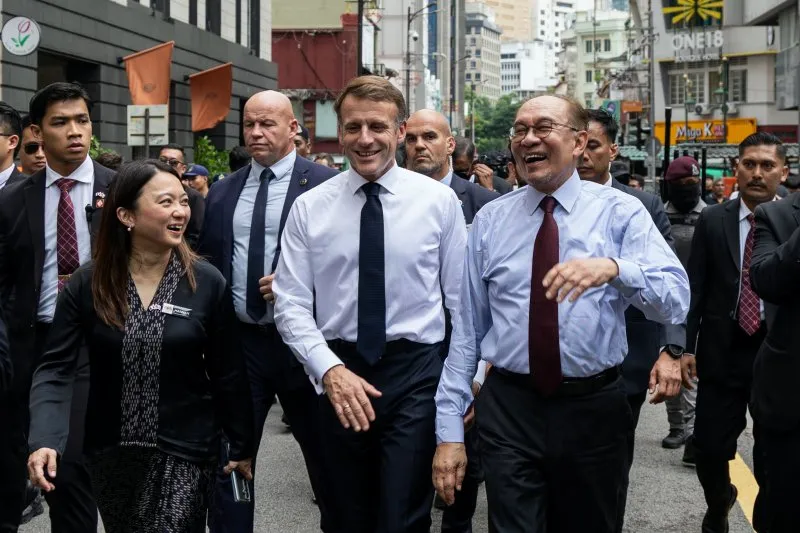
His remarks follow French President Emmanuel Macron’s two-day official visit to Malaysia on November 16 and 17, during which both countries elevated bilateral relations to a Strategic Partnership encompassing critical minerals, defence, energy and advanced technologies.
Among the key developments was a rare earth industrial project involving French company Carester and Malaysia’s Malaco Mining Group, which is expected to begin operations in early 2027. The project will involve extraction and processing in Malaysia, with further refining to be carried out in France.
Imran, who is also an international relations expert specialising in Global South affairs, said the arrangement could benefit Malaysia if it enabled the country to move beyond supplying raw materials and develop its own high-value industries.
“If France wants access to our rare earths, it should also help Malaysia acquire the technology, knowledge and industrial capabilities to become a producer of higher-value products,” he said.
He stressed that Malaysia should sweek substantive technology transfer, greater participation by local companies in separation, refining and downstream manufacturing, and opportunities for Malaysian workers and suppliers to undertake higher-value activities.
He also cautioned against environmental risks associated with rare earth extraction and processing, particularly waste management and pollution.
The Malaysian government has maintained its moratorium on raw rare earth exports, which took effect on Jan 1, 2024, while allowing limited and conditional exports for research, development and processing purposes.
Deputy Natural Resources and Environmental Sustainability Minister Syed Ibrahim Syed Noh told the Dewan Rakyat on Thursday that cooperation with France would focus on technological expertise and developing the entire rare earth value chain, from mining and processing to high-value products.
Imran said the timing of Macron’s visit also reflected growing European concerns over strategic vulnerabilities, with the war in Ukraine, energy insecurity and geopolitical tensions exposing Europe’s dependence on external suppliers for critical minerals, energy and technology.
He said Europe’s growing interest in the Global South could give developing countries greater bargaining power.
On the shared emphasis by Malaysia and France on strategic autonomy, Imran said the concept must be understood in the context of their vastly different economic and geopolitical positions.
He said while France viewed strategic autonomy primarily as a means of protecting its international position and reducing vulnerabilities, Malaysia needed to pursue it as a strategy to overcome structural economic dependencies and strengthen its own development capabilities. — Bernama