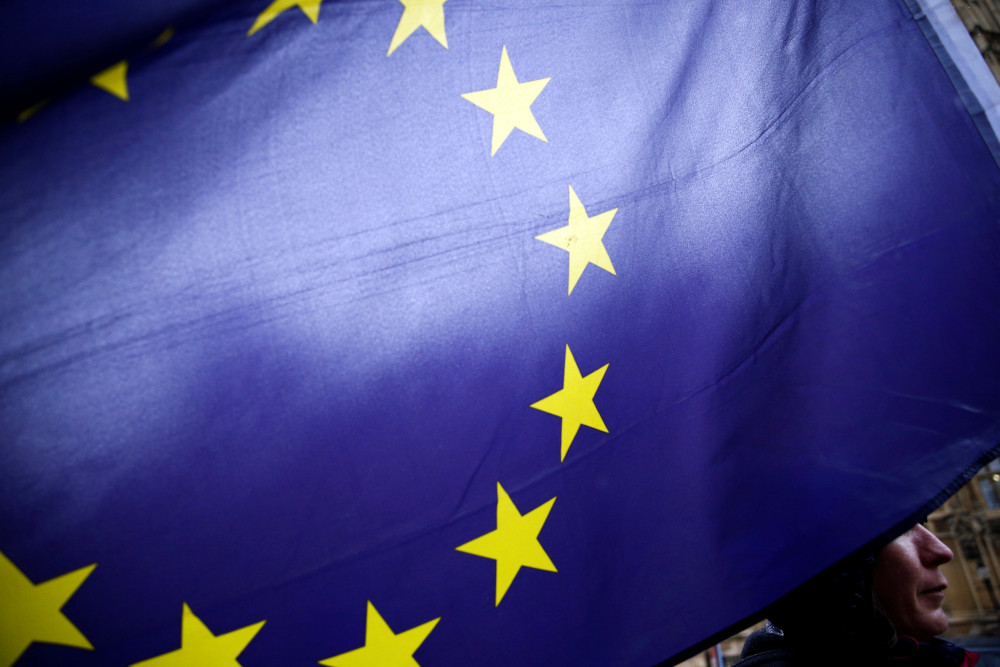


BRUSSELS, April 22 — EU leaders are set to meet via videoconference Thursday to tackle the economic impact of the coronavirus, but with the group bitterly divided, hard decisions v or substantial progress — are unlikely, officials said.
The bloc faces a dire situation. On top of 110,000 deaths across the continent, the shutdown forced by the pandemic is set to shrink the EU economy by a record 7.1 per cent this year, according to the International Monetary Fund.
But the 27 member countries have been unable to agree on a massive fund for long-term economic recovery when the crisis ends.
Divisions dating back to the 2009 financial crisis have split the bloc yet again.
Badly hit and heavily indebted southern states like Spain and Italy are demanding “solidarity” — financial help — from the rich north.
Italian Prime Minister Giuseppe Conte, who has pushed for mutualised EU debt, dubbed “coronabonds”, struck a firm line on Tuesday.
He told the Italian parliament he would accept “no compromises” and would not sign up to a “bargain deal”.
On the other side, northern countries led by Germany and the Netherlands are reluctant to open the chequebook for Mediterranean governments they accuse of profligacy, and refuse even to entertain the idea of coronabonds.
In a sign of how far apart the parties are, leaders will not even issue their usual joint statement after their videoconference on Thursday, a diplomat told AFP.
“No one should have exaggerated expectations for this meeting,” another diplomat said.
Low bar
EU Council President Charles Michel, the nominal host of the summit, set a low bar in his invitation letter sent to leaders on Tuesday.
He urged them only to “work towards” creating a European Recovery Fund to rebuild the bloc’s economy after the pandemic eases.
Details of how much money would be needed and how it would be raised remain highly contentious.
The leaders are expected to ask the European Commission, the bloc’s executive, to analyse the likely economic recovery needs and come back with a proposal.
In Paris, officials said no agreement on the long-term recovery fund can be expected before June or July at the earliest.
“We need a physical meeting of heads of state and government — at least one — and for the moment that is not possible,” a French presidency source said.
Long-term budget
A senior EU official confirmed no deal was likely before the summer, but said Thursday’s meeting could see progress on adapting the bloc’s new seven-year budget to address the virus fallout.
Building the recovery fund into the budget for 2021-2027 gives some reassurance to northern countries by putting it into an established framework.
But it adds further complication to an already thorny debate about the EU’s spending priorities in the coming years.
It also raises the possibility that poor eastern European countries will be asked to give up development money to pay for the coronavirus recovery in wealthier nations like Spain and Italy.
A five-page “roadmap for recovery” drawn up by Michel and commission chief Ursula von der Leyen calls for a “Marshall Plan-type investment effort”, referring to the huge US programme to rebuild Europe after World War II.
Various figures have been bandied around for the long-term fund.
Eurogroup president Mario Centeno has suggested a range of 700 billion to €1.5 trillion (RM7.1 trillion), while French Finance Minister Bruno Le Maire mooted one trillion.
But no decision is expected on Thursday. — AFP