















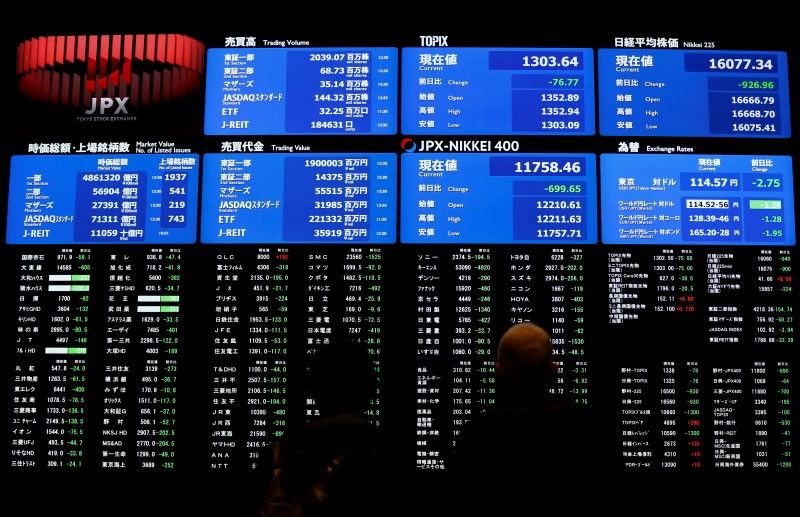


KUALA LUMPUR, Aug 3 — Asian stocks fell the most in five weeks, tracking declines in global equities, as a disappointing Japanese stimulus package and oil below US$40 (RM162) a barrel renewed concern the global economic recovery is faltering.
The MSCI Asia Pacific Index dropped 1.8 per cent, the most since June 24, to 134.48 as of 4pm in Hong Kong. Japan’s Topix index led losses to slide 2.2 per cent after the yen climbed 1.5 per cent against the dollar yesterday following the government’s announcement of ¥4.6 trillion (RM182.3 billion) in extra spending for the current fiscal year. Risk-averse investors pushed US stocks to their biggest decline in four weeks, while European shares also retreated, as oil fell to the lowest level in almost four months.
“After all the build-up, it’s a disappointment,” Shane Oliver, Sydney-based global investment strategist at AMP Capital Investors Ltd, which manages more than US$110 billion, said of Abe’s stimulus package. This will be negative for Asian stocks today, “reflecting the negative response we’ve already seen in the US and Europe overnight,” he said.
Japanese stocks are among the worst developed-markets performers this year as the yen surges and concern grows that the Bank of Japan’s unprecedented easing and the Abenomics growth programme are struggling to deliver economic benefits. The cheaper oil prices are having a flow-on effect to commodities with a Bloomberg raw-materials gauge at the lowest level since early May, hurting many Asian share measures.
Regional gauges
Australia’s S&P/ASX 200 Index dropped 1.4 per cent as banking stocks slumped after the central bank cut borrowing costs to a record low and New Zealand’s S&P/NZX 50 Index decreased 0.7 per cent.
Singapore’s STI Index lost 1.6 per cent as commodities trader Noble Group Ltd plunged as much as 22 per cent, prompting a query from the Singapore exchange. South Korea’s Kospi Index fell 1.2 per cent, the most in four weeks. The benchmark Philippine gauge declined 1.9 per cent.
India’s S&P BSE Sensex dropped for a fourth day, falling 1 per cent and heading for the longest losing streak in more than a month. The nation will present a new consumption tax bill in parliament later today, ending a decade-long wait for the passage of India’s biggest tax reform.
Casio Computer Co fell 14 per cent to a two-year low in Tokyo after quarterly earnings missed estimates. Philippine Long Distance Telephone Co dropped 4.9 per cent, set for its biggest two-day drop since March after it cut its dividend payout yesterday.
Hong Kong’s Hang Seng Index slumped 1.7 per cent, led by a retreat in property developers, as trading resumed after the market was shut yesterday due to typhoon Nida. The Hang Seng China Enterprises Index of mainland companies listed in the city lost 1.6 per cent. The Shanghai Composite Index advanced 0.2 per cent amid speculation the nation’s futures exchange is planning to relax trading restrictions on stock-index contracts that sparked a plunge in volumes last summer.
Futures on the S&P 500 Index lost 0.3 per cent. The US equity benchmark index dropped 0.6 per cent yesterday after lacklustre consumer spending data in the world’s largest economy. — Bloomberg


