




SINGAPORE, May 20 — Most emerging Asian currencies were off lows today as traders adjusted positions ahead of the weekend, while regional units were set for a third straight week of losses on growing views of a US interest rate increase as early as June.
China’s yuan edged up as the central bank set its daily guidance rate slightly firmer. The South Korean won rose on exporters’ demand for settlements.
Still, traders and analysts played down such rebounds, given increasing expectations that the Federal Reserve may raise borrowing costs soon.
New York Fed President William Dudley, a permanent voting member of the central bank’s rate-setting committee, said yesterdat there was a strong sense among Fed officials that markets were underestimating the probability of tightening and that the central bank was on track for a rate hike in June or July.
The comments came after minutes of the Fed’s latest policy meeting suggested an imminent increase in interest rates.
“It is now very clear that we are back into the regime of Asia FX weakness,” said Heng Koon How, a senior currency Strategist for Credit Suisse Private Banking Asia Pacific in Singapore.
“The latest FOMC minutes and comments from Fed presidents reminded the market that June is still a ‘live’ FOMC date. The April high frequency economic figures from China all turned out to be weaker than March and weaker than consensus forecast,” Heng said, referring to the Federal Open Market Committee.
China’s investment, factory output and retail sales all grew more slowly than expected in April, while exports and imports declined more than predicted.
With hopes for recovery in the world’s second-largest economy waning, most emerging Asian currencies already slid in the previous two weeks.
Rupiah leads
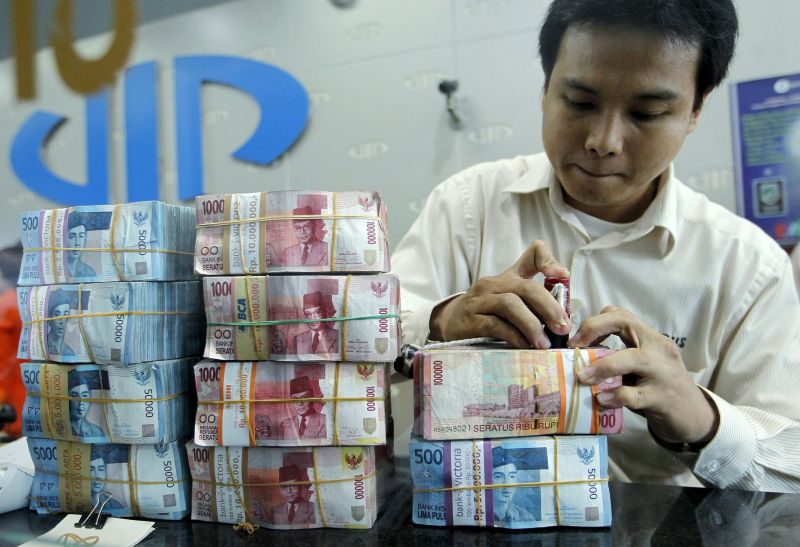
Indonesia’s rupiah today slumped to its weakest in more than three months on bond outflows, leading regional weekly losses.
The rupiah fell to 13,590 per dollar, its weakest since February 9, with its loss at 1.9 per cent so far this week. That would be the largest weekly slump since late September 2015, according to Thomson Reuters data.
Foreign investors have cut holdings in Indonesian government bonds this month as the country is seen more vulnerable to the Fed’s rate hike due to fiscal and current account deficits.
Such concerns prompted offshore funds to take some profits after increasing holdings of the country’s debts over the previous seven months. Standard & Poor’s, which raised its outlook on Indonesia’s speculative-grade sovereign rating to positive from stable last year, is expected to announce the results of its rating review for the country this month.
The rupiah recovered some of its losses on growing caution over possible intervention by the central bank to stem its slide. It was suspected of stepping into the market yesterday, traders said.
“BI should maintain the rupiah between 13,000 and 13,500 as the levels are good for both importers and exporters,” said a Jakarta-based currency trader, referring to Bank Indonesia.
The won has fallen 1.5 per cent against the dollar so far this week as expectations of an interest rate cut stayed alive.
Some analysts saw risks of a delay in easing by the South Korean central bank, however, saying a possible US rate hike could spur capital outflows.
Malaysia’s ringgit has slid 1.2 per cent so far this week, as offshore funds dumped the currency, with the Fed seen as hawkish.
The Indian rupee has lost nearly 0.9 per cent so far this week, while the Thai baht fell 0.8 per cent.
Singapore’s dollar and the Philippine peso have both slid 0.5 per cent so far this week. The yuan has eased 0.2 per cent. — Reuters


