




NEW YORK, Sept 26 — Emerging-market stocks ended a four-day decline as Federal Reserve Chair Janet Yellen boosted confidence in the outlook for global growth.
The MSCI Emerging Markets Index gained 0.4 per cent to 789.15.
A gauge of 20 developing-nation currencies fell 0.1 per cent as declines in Brazil’s real and the South African rand offset gains in Russia’s ruble and the Colombian peso.
The Micex Index jumped for the first time in seven days in Moscow.
Software company Infosys Ltd led a 0.2 per cent gain in India’s equity benchmark.
Chinese stocks slumped as concern grew that the country’s economic slowdown is worsening.
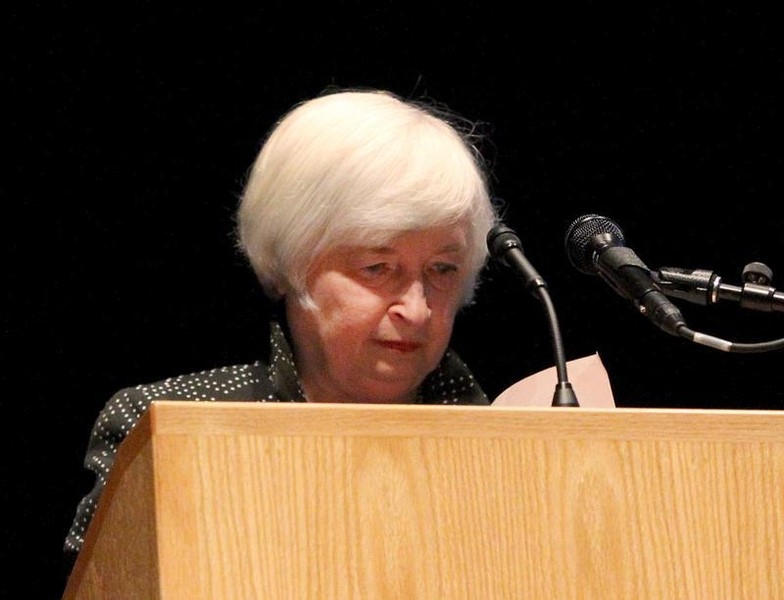
Yellen, in a speech after markets closed Thursday, said the US economy is strong enough to support an increase in borrowing costs this year.
The remarks came a week after the Fed maintained its federal funds target near zero, saying “recent global economic and financial developments” might damp growth.
Price volatility in developing-nation stocks has surged to the highest level in four years as traders weighed the potential timing of an increase in US interest rates against signs of a faltering global economy.
The Fed chair’s remarks “boosted confidence in the overall outlook for global growth,” Societe Generale emerging-markets strategist Bernd Berg said by e-mail from London.
Valuation discount
While higher US borrowing costs would probably draw money away from riskier assets in developing nations as the dollar strengthens, stocks rebounded as some investors had seen the Fed’s decision to further postpone its first increase since 2006 as a sign of weakness in the world economy.
Yellen’s reassurances about growth and her clarification of the potential timing of the start of the tightening cycle helped equities because it took away some of the uncertainty, according to Tony Hann, a London-based money manager at Blackfriars Asset Management, which oversees about US$350 million (RM1.54 billion).
“Markets prefer clarity, even if it means a rate rise,” Hann said by e-mail. “Rates will still be extremely accommodative.
These comments are being seen as reassuring in as much as Yellen seems to be implying that the tribulations elsewhere in the world will not derail the US”
The developing-nation stock benchmark has tumbled 17 per cent this year with losses accelerating after China unexpectedly devalued the yuan on August 11.
The index trades at 10.5 times the projected earnings of its constituents, a 29 per cent discount to advanced-nation shares in the MSCI World Index.
The Micex Index climbed 1.1 per cent, its steepest increase in three weeks. The ruble strengthened 0.9 per cent against the dollar. Infosys jumped 2.2 per cent, contributing the most to the 0.2 per cent gain in the S&P BSE Sensex Index, which rose for a second day.
The Ibovespa extended its decline to a seventh day, dropping 1 per cent. The real weakened 0.6 per cent against the dollar. Brazilian assets have slumped amid mounting concern that political turmoil is preventing the government from shoring up the budget and avoiding further credit-rating reductions. Standard & Poor’s reduced the country to junk on Sept. 9.
China Life Insurance Co rose 1.7 per cent in Hong Kong, helping the Hang Seng China Enterprises Index climb the most in a week.
The Shanghai Composite index fell 1.6 per cent, capping a second week of declines, after capital outflows hit a record and concern grew the nation’s economic slowdown is worsening and the government is scaling back support for equities.
Colombia’s peso rose 1.1 per cent against the dollar, the best performance among emerging-market currencies.
The gains came after the central bank said it will make an “important announcement for the country” after yesterday’s policy meeting.
South Africa’s rand fell 0.5 per cent, pushing its decline for the week to 4.2 per cent.
The FTSE/JSE Africa All Share Index slipped 0.1 per cent. Mining company Anglo American PLC contributed the most to the stock benchmark’s drop, tumbling 5.8 per cent.
The premium investors demand to own emerging-market debt over US Treasuries narrowed seven basis points to 408 basis points, according to JPMorgan Chase & Co indexes. — Reuters


